Finding Confidence Across Borders: A JDP Fifth-Cohort Student Reflects on Four Years of Growth in Japan and the United States
HIROSE Alex Aoi
Fourth-year Joint Degree Program (RU-home)
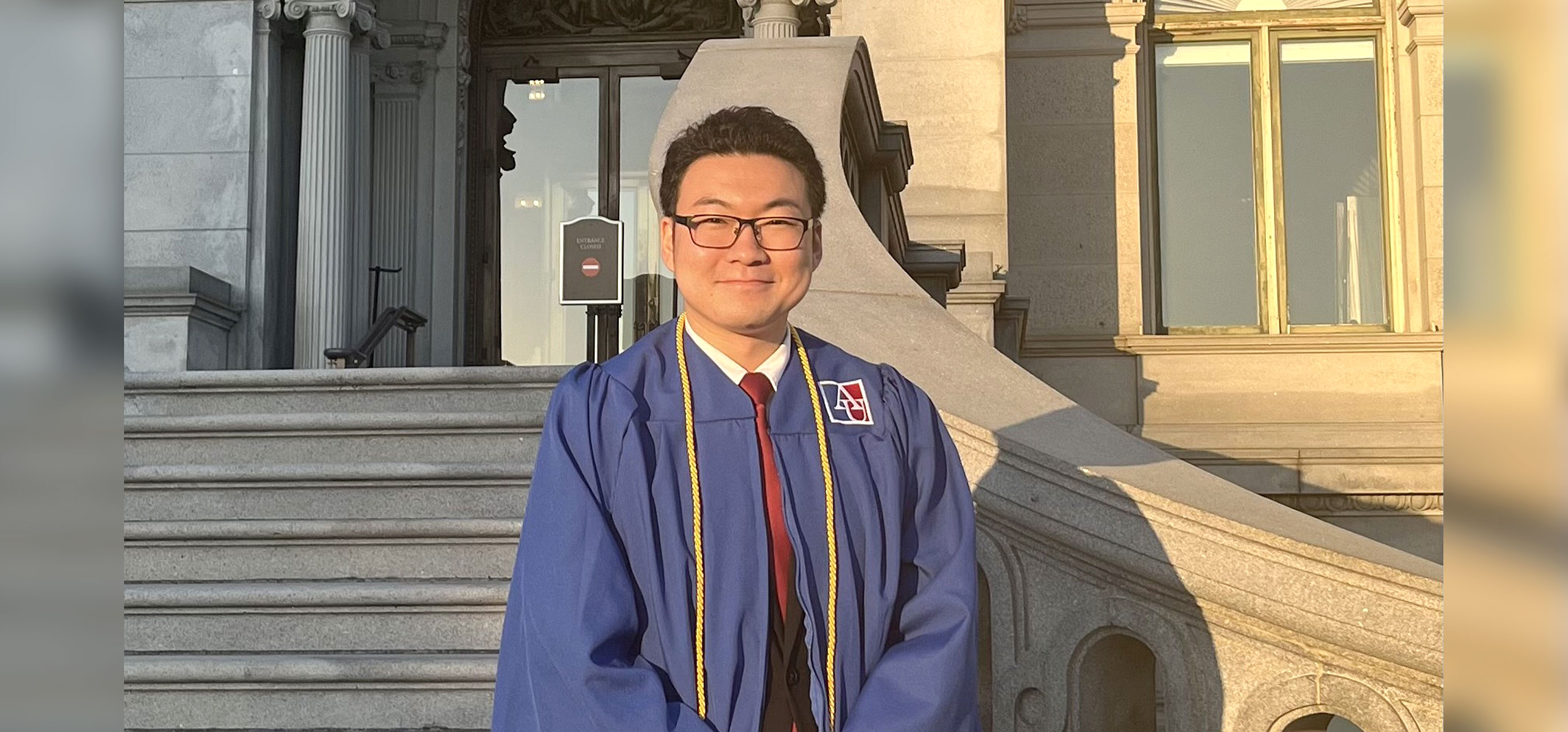
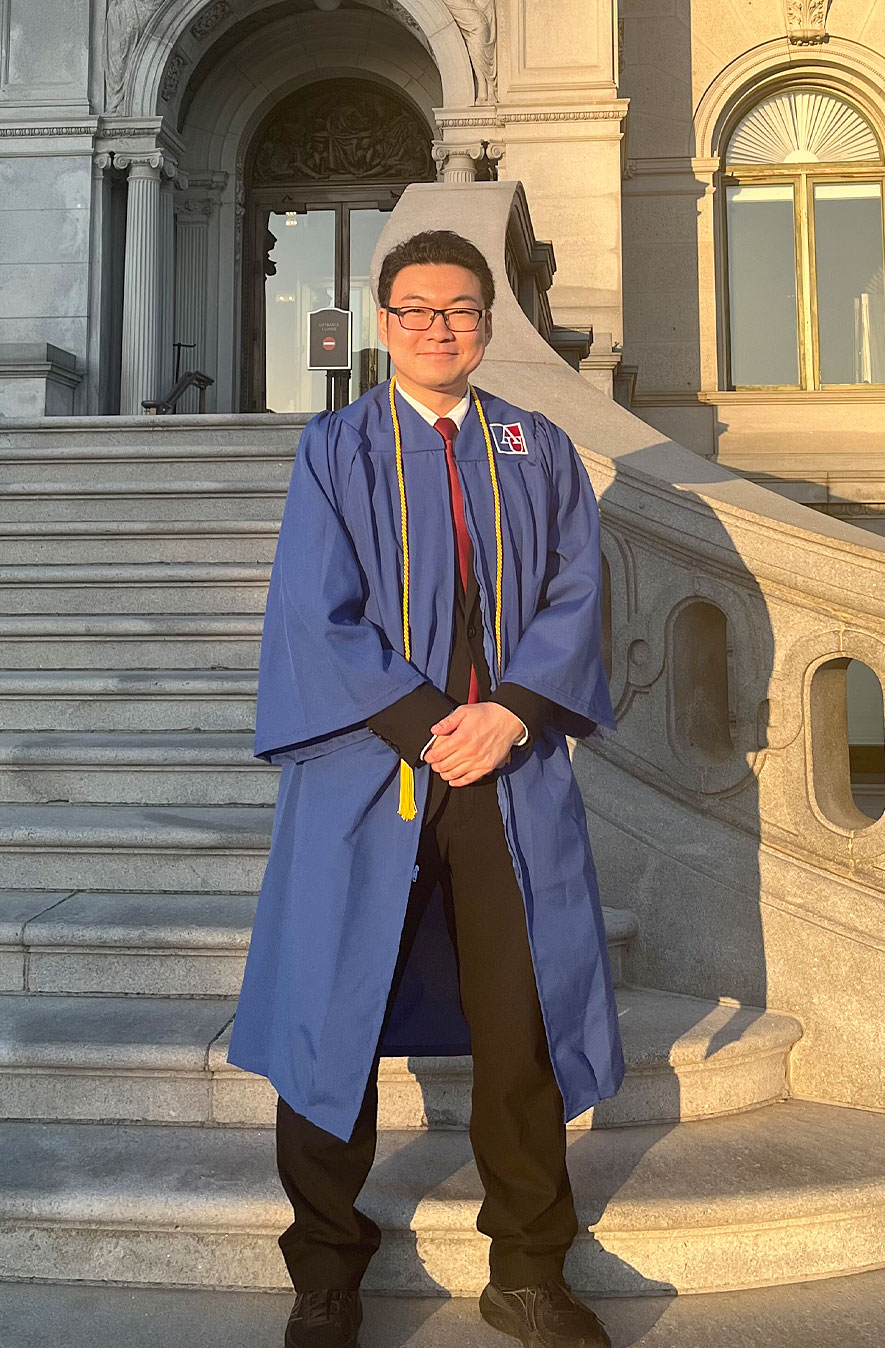
As a student in the program’s fifth cohort of the American University-Ritsumeikan University Joint Degree Program (JDP), HIROSE Alex Aoi is set to graduate in March 2026. Looking back on the past four years, we asked him to reflect on his journey.
How did you find your two years of study at American University?
HIROSEThe first year at American University felt very slow as I only focused on my courses and did not commit myself to any extracurricular activities and I did not have many friends outside of those who were a part of the Joint Degree Program. I believe that this was the case as most friend groups at American University were formed during freshman year, and joining as a sophomore made it difficult to mix in with the students of the same year. This difficulty in forming new friendships in university also impacted my performance in classes as American University relied heavily on discussion-based education to deepen understanding of concepts and theories. Being unable to have close peers led to difficulties in group projects and I also had difficulty asking my peers for help on class content.
This all changed during the second year of studying at American University. At the end of the first year, I joined an internship program that worked alongside the U.S. government, which helped me gain confidence in myself and made me lose the shyness that I had always had throughout my life. This newfound courage allowed me to move out of my comfort zone and helped me actively engage in class discussions, attend networking events and even join the Japanese Cultural Exchange Club. These extracurricular activities and coursework kept me occupied for most of my days at American University and I was able to enjoy my experience there.
During your two years in the United States, what did you focus on outside of your coursework?
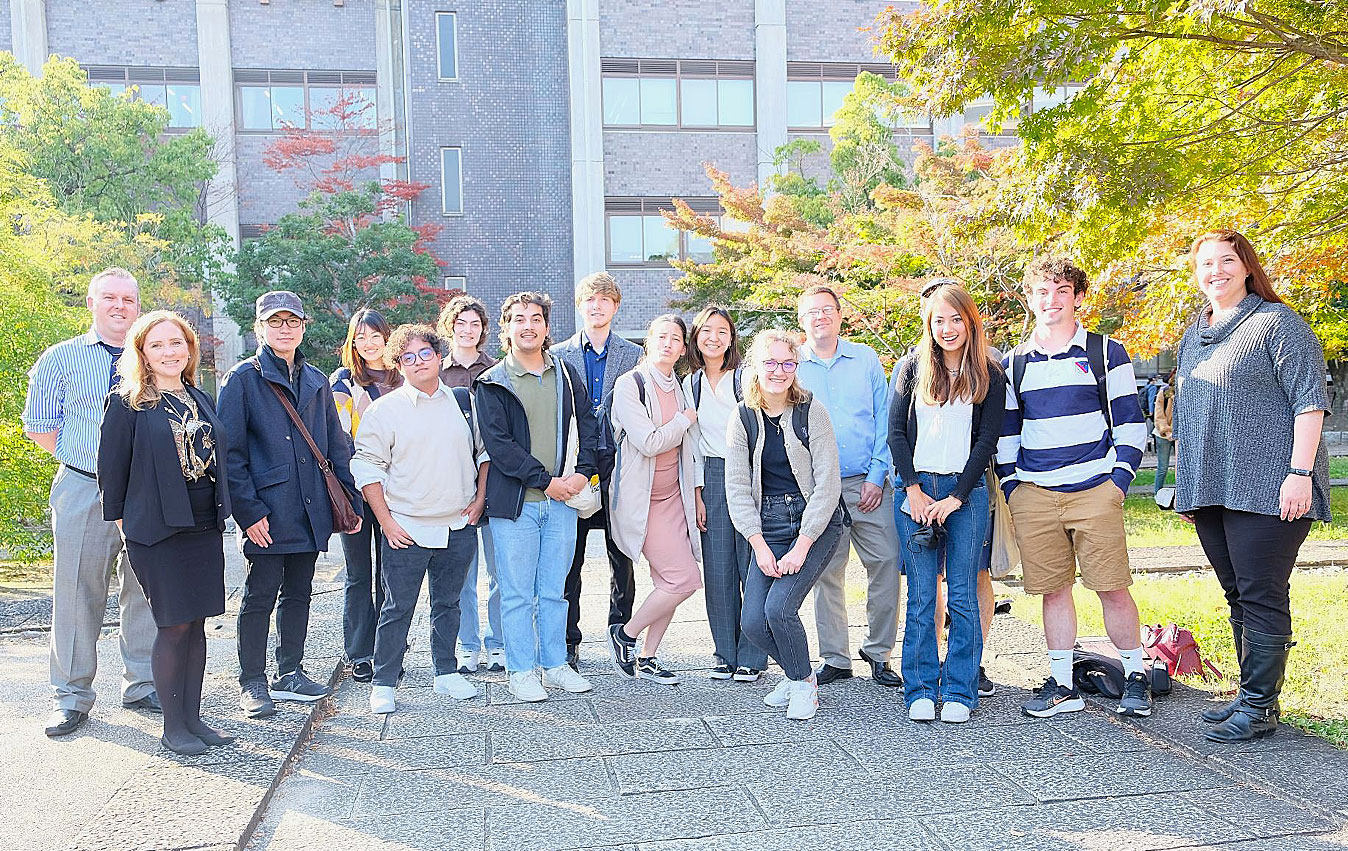
HIROSEDuring my time at American University, I focused on networking and building foundations for my career by looking for internships. The university was a great environment to foster my aspirations as it hosted career fairs and networking events that allowed for engagements with company and government representatives. This provided me with opportunities to gain insights into the broader career paths that I wished to take and gave me a practical understanding of the hiring processes.
Outside of career related topics, I also joined the Japanese Cultural Exchange (JCX) Club at American University to promote Japanese culture at the university. This club focused on improving Japanese language skills and hosted events based on traditional Japanese holidays. Within this club, I had the role of vice president, where I was responsible for assisting the club president and other club members in coordinating various events.
What did you write about in your graduation thesis?
HIROSEMy graduation thesis was on the use of the Three Warfares strategy by the People’s Republic of China in Okinawa, Japan. The Three Warfares is a Chinese strategy that focuses on use of non-kinetic warfare tactics to disrupt the military capabilities of their adversaries. The concept consists of legal warfare, media warfare and psychological warfare. The intent behind the thesis paper was to provide evidence to the presence of the Three Warfares in Okinawa and understand the methods of its manifestation. The research discovered that the Three Warfares primarily manifested in the form of media warfare, where Chinese actors used social media to create favorable narratives that incite anti-base movements in Okinawa. This was exemplified by the X post by Chinese Consul General Xue Jian made on May 3rd, 2025, where he commented on the disparity between the territorial usage of the American bases in comparison to the Japanese population using a severely outdated photograph that does not match the contemporary context of the location.
Reflecting on your four years in the JDP, what do you feel has been your greatest area of growth?
HIROSEDuring my four years of being part of this program, I believe that being able to strengthen my communication skills was the greatest growth that I have undergone. Before I joined university, I was heavily dependent on my parents and had never lived outside of my hometown, which contributed greatly to my shy nature. Being in university and engaging with students of varying backgrounds as well as collaborating with peers on various assignments taught me how to communicate well with both my peers and professionals who are working in international relations.
What are your plans after graduation?
HIROSEI do not have concrete plans for my future; however, I would like to work on diplomatic fields related to aerospace in the United States. Originally, I would have liked to work for government organizations such as NASA, but due to budget cuts and high competition, the programs and positions I planned to apply to were cancelled. I will most likely work in consulting or think tanks while I search for more job opportunities.
Do you have a message for prospective students who are interested in the JDP?
HIROSEThe Joint Degree Program is a very challenging program that requires adaptability, flexibility and sophisticated critical thinking skills. This is because being in changing environments and learning in different academic styles can easily overwhelm people, and the variety in topics within international relations necessitates critical thinking skills to be able to understand complex topics; however, being in such situations can benefit your growth and preparation for the future.
To make the most of your time in the program, it is highly recommended to step outside of your comfort zone and do lots of extracurricular activities such as clubs, internships, attending networking events and going to conventions in both Japan and the United States. These extracurricular activities will not only serve as a break to your studies but also experiences that could be integrated into your education.
March 2026
MORE INTERVIEWS
-
Finding Confidence Across Borders: A JDP Fifth-Cohort Student Reflects on Four Years of Growth in Japan and the United States
HIROSE Alex Aoi
Fourth-year Joint Degree Program (RU-home)2026.3.16
studentlife|academics|jdp|
-
From Language Learning to Peacebuilding: Growing Through Global Engagement
PHAM Nhat Linh
Second-year Global Studies Major2026.3.9
studentlife|academics|gs_major|
-
International collaboration is not merely an ideal, but something that is both achievable and essential
Tran Duc Tuan (Steven)
Honda (Graduate School of International Relations Alumnus 2015)2026.2.13
alumni|
-
Zemi Research Convention 2025 “Where do we find the laughter?”
JDP Team
(Team name: The Japarican: Trans-Pacific Humor Accord)2026.2.3
academics|jdp|openseminar|
-
Diversifying opportunities and improving oneself by crossing borders
Jameel Mikaheel Yamaguchi
Fourth-year Global Studies Major2026.1.26
studyabroad|international|gs_major|
-
I participated in the Peace Studies Seminar and engaged in meaningful discussions with peers who shared a commitment to deepening our understanding of peacebuilding and broadening our perspectives.
ONG Kristen Valeria
Second-year Global Studies Major / International Student from Singapore2025.11.5
studentlife|academics|gs_major|