
International Economics
Using Economics to Predict the Next Moves of People and Nations
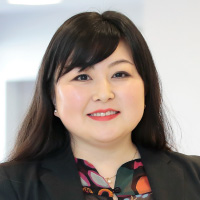
YANE HarukaAssociate Professor,
College of International Relations
Every Action Comes with an Invisible Cost Called ‘Opportunity Cost’
What does it mean to “predict behavior using economics”?
YaneSome people may think of economics as the study of money, but that is not what it really is. Economics is the study of decision-making: by exploring why a person acted as they did, it tries to predict what they will do next. You could even say that economics is the discipline that sets out to explain every kind of human behavior.
On the back of a Japanese health insurance card there is a section for recording your wishes about organ donation, where those willing to donate circle the relevant item and sign. If you look at this in economic terms, since donation is unpaid, people have little reason to go out of their way to act, and supply inevitably falls short. Then what would happen if a price were put on organs? Or if the system changed so that only those who do not wish to donate had to sign and opt out? Thinking about such questions by using various concepts that explain human decision-making, such as ‘supply and demand,’ ‘incentives,’ and ‘status quo bias,’ is what economics does.
In terms of human rights and morality, the way things are done now may well be “right.” However, behind this “right” principle that organs should be given without payment lies a real cost: because supply falls short, many people are unable to receive a transplant. In economics, the value you give up when you choose one thing over another is called an ‘opportunity cost.’ The view that every action comes with this opportunity cost shows you a world that looks a little different from the one common sense presents. That, too, is part of the appeal of economics.
In today’s globalized society, economics is already built into international relations. The way people build relationships through an accumulation of individual decisions and actions overlaps with the process by which countries build relationships with one another. Therefore, economics is a useful tool to analyze international relations. I believe anyone interested in human behavior and human relationships can find their way into economics and into international relations as well.
Becoming a Researcher After Experience at University of Florida’s Public Utility Research Center and the OECD
Could you tell us about your research?
YaneMy research theme is international trade and labor markets. In recent years, the international fragmentation of production process for goods and services – what are known as global value chains, or GVCs – has advanced, and the patterns of trade have evolved with it. My research asks how that affects wages, unemployment rates, and labor demand of workers in each country and region. The effects of GVCs on labor markets are not straightforward. They differ from country to country, and also according to an individual worker’s skill level and demographic attributes. I mainly use two methods together: econometrics to estimate the relationships between variables, and modeling the world economy to run simulations, in an effort to measure and forecast in ways that stay closer to actual conditions. In time I hope the results can be put forward as policies, such as improving working conditions in developing countries, and providing a basis for Japan’s deliberations on international regional cooperation agreements.
You have studied and worked in both Japan and the United States?
YaneI was born in Japan, grew up in America, and returned to Japan when I was in middle school. I studied in an international environment at a Japanese university, did an exchange in the US, and then did job hunting in Japan. I applied to a hundred companies and did not receive a single offer. So I spent a year as a research assistant at the Public Utility Research Center at University of Florida, an institute that conducts research on public utilities and makes policy recommendations jointly with the World Bank. Working among many economists there helped me discover how absorbing the field was, and that led me to graduate school.
What set me on the path to further research was an internship at the Organisation for Economic Co-operation and Development (OECD) during my master’s program. It was an environment in which you could pursue research freely while discussing with people from various backgrounds and different countries. My failed job hunting experience had always left me curious about how labor markets differ from one country to another, so I began to bring labor-market questions into international trade, the topic I had been working on, and subsequently decided to continue into the doctoral program. After completing my degree, I worked on economic forecasting at the Japan Center for Economic Research (JCER), where I gained valuable experience that feeds into my research today. Where I am now is the result of moving, at each stage along the way, toward whatever I found interesting at the time.
The Originality of Our International Relations Students: Resourcefully Combining Their Own Interests with Their Studies
What is your seminar course like? And what impression do you have of students at the College of International Relations?
YaneIn my seminar, students are free to choose their research topic; anything at all is welcome. We practice carrying out data analysis using statistical software R. My students’ topics really do range widely: US-China relations, environmental issues, cryptocurrency, technology, and more.
And this is not only true of my own seminar. Across the College of International Relations, in both Global Studies (GS) and International Relations (IR), I find many students who broaden their learning on their own initiative. I have been pleasantly struck by how skillfully students combine what they study in the College with some seemingly different field that interests them, and by how unique the work they submit can be. They must put a great deal of their own thinking and effort into it.
That said, one thing I would like to tell students is to try not to be bound by big dreams such as “I will work for a major company” or “I will become a diplomat.” If you have been working toward a goal and come to feel that it is not what you want to do after all, do not hesitate to take on something else you now care about. You may feel that the time and effort you have already invested would go to waste. But in economics that is a sunk cost, which cannot be recovered and therefore is not something you should be factoring into your decision-making.
For Those Interested in International Economics:BOOKS
Russell Roberts
The Invisible Heart: An Economic Romance
The MIT Press (2002)
Steven D. Levitt and Stephen J. Dubner
Freakonomics: A Rogue Economist Explores the Hidden Side of Everything
William Morrow Paperbacks (2009)
Daniel Kahneman
Thinking, Fast and Slow
Farrar, Straus and Giroux (2011)
For Those Interested in International Economics: MOVIES
Movie
Seven Samurai
1954, Japan
Movie
It's a Wonderful Life
1946, United States
Movie
Moneyball
2011, United States