
Pursuing International Justice Across Borders: Academic Growth, Moot Court Experience, and Future Legal Aspirations
Thet Htar San
Fourth-year Global Studies Major / International Student from Myanmar
We interviewed Thet Htar San, a Fourth-year Global Studies major in the College of International Relations, who discusses her growth in international law, Moot Court involvement, and aspirations for a legal career.
What attracted you to apply to the College of International Relations at Ritsumeikan University?
THET HtarHaving been born and raised in Myanmar, I developed a strong interest in international affairs at an early age, shaped by the political circumstances in my home country. Although I was eager to deepen my understanding of these issues, access to quality education was limited, and I was uncertain about how to pursue higher education.
With this in mind, I began searching for universities that offer international relations programs. During this process, I came across the College of International Relations at Ritsumeikan University. As I explored the Global Studies major (GS) in detail, I became convinced that it was the right place for me.
What particularly resonated with me was the program’s inclusive and supportive environment. For someone like me, who felt disadvantaged due to circumstances beyond my control, the GS program offered not only accessibility but also a clear academic pathway. I was especially impressed by its thoughtfully structured curriculum, which guides students step by step through their four years, including courses such as Introductory Seminar, Academic Skills, Global Simulation Gaming, and Advanced Seminar.
The program’s commitment to “education for all” while maintaining a high standard of academic excellence further strengthened my decision. Looking back, choosing this program was a turning point in my life. Over the past three years, I have grown tremendously, gaining invaluable knowledge not only in my studies but also in my personal development.
What fields or areas are you interested in studying?
THET HtarI am broadly interested in how social issues are addressed across different levels of society, from individuals to states. Through my studies at the College of IR, my academic focus has gradually become more defined, particularly in the areas of international justice, peace studies, and international law.
Currently, I am a member of Professor Megumi Ochi’s Advanced Seminar, where I have been able to deepen my academic interests under her guidance, alongside the support of my peers. This experience has allowed me to move beyond initial curiosity and develop a more rigorous and analytical approach to research.
Throughout my coursework, I have examined various dimensions of international law and gained an understanding of how its interpretation can vary depending on perspective and context. As a result, I have developed the ability to actively contribute to academic discussions and apply theoretical frameworks to real-world cases.
For my undergraduate thesis, I am focusing on the legality and legitimacy of vigilante justice in Myanmar. My research examines how and why such forms of justice emerge, as well as how they are understood within the frameworks of international criminal law and international humanitarian law.
Please tell us about an experience that left a strong impression on you during your student life.
THET HtarAs my interest in international law deepened, so did my determination to pursue a career in this field. Motivated by this goal, I actively sought opportunities to expand my experience—whether through academic reading, networking, or practical engagement.
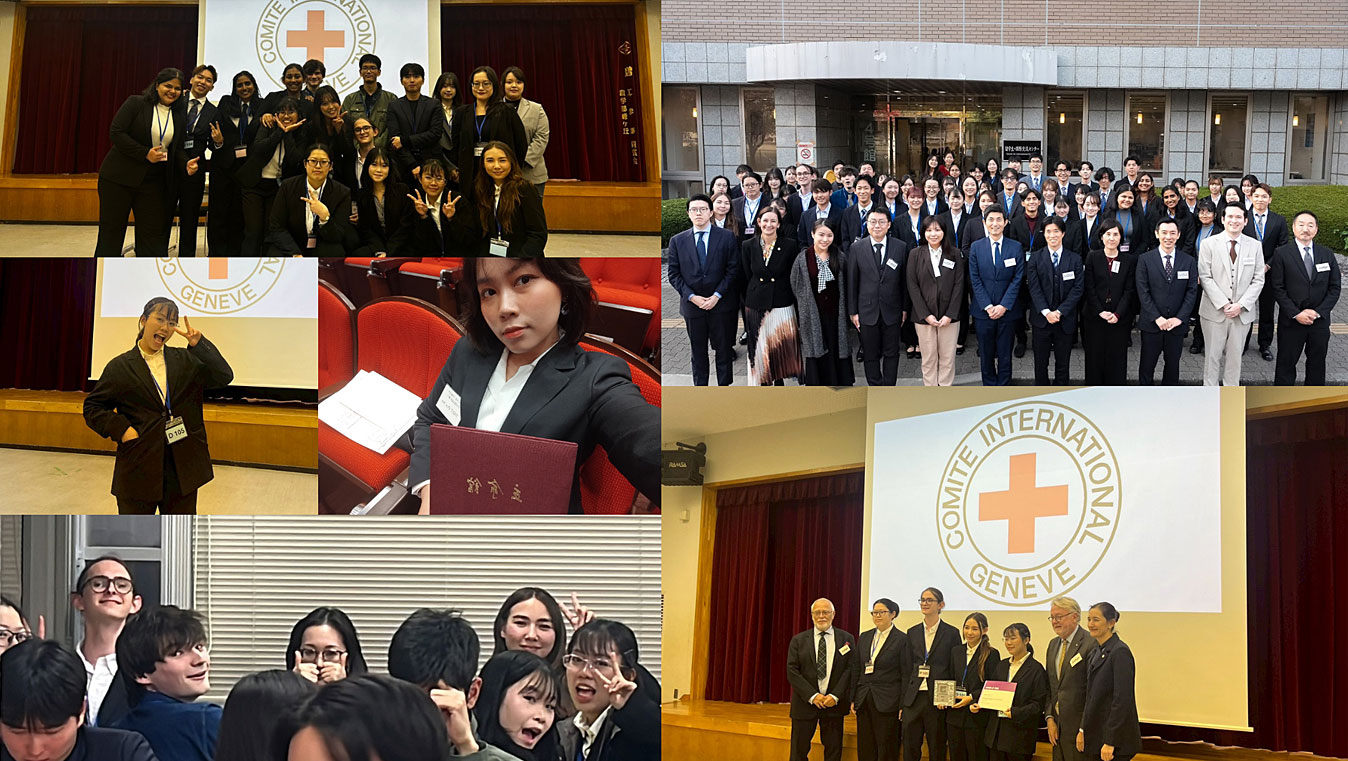
In my third year, I joined the Moot Court team at Ritsumeikan University. Despite being a small team of fewer than seven members, it was driven by remarkable dedication and passion. As a new member, I had the opportunity to observe senior students preparing intensively for competitions against top universities.
What left a particularly strong impression on me was the team’s ability to achieve outstanding results despite its size. The Ritsumeikan Moot Court team consistently advanced to final rounds in numerous competitions, demonstrating that determination and teamwork can overcome limitations.
Inspired by the efforts of my seniors, I challenged myself to step out of my comfort zone. I worked to deepen my understanding of international tribunal cases and refine my legal reasoning and advocacy skills. While the experience was demanding, the sense of accomplishment and the opportunity to contribute to the team’s success have been incredibly rewarding, motivating me to continue my involvement in Moot Court activities.
What aspects do you think you were able to grow through your student life?
THET HtarWhile my academic development has been significant, my growth during university extends far beyond the classroom. I have also developed strong interpersonal, organizational, and practical skills.
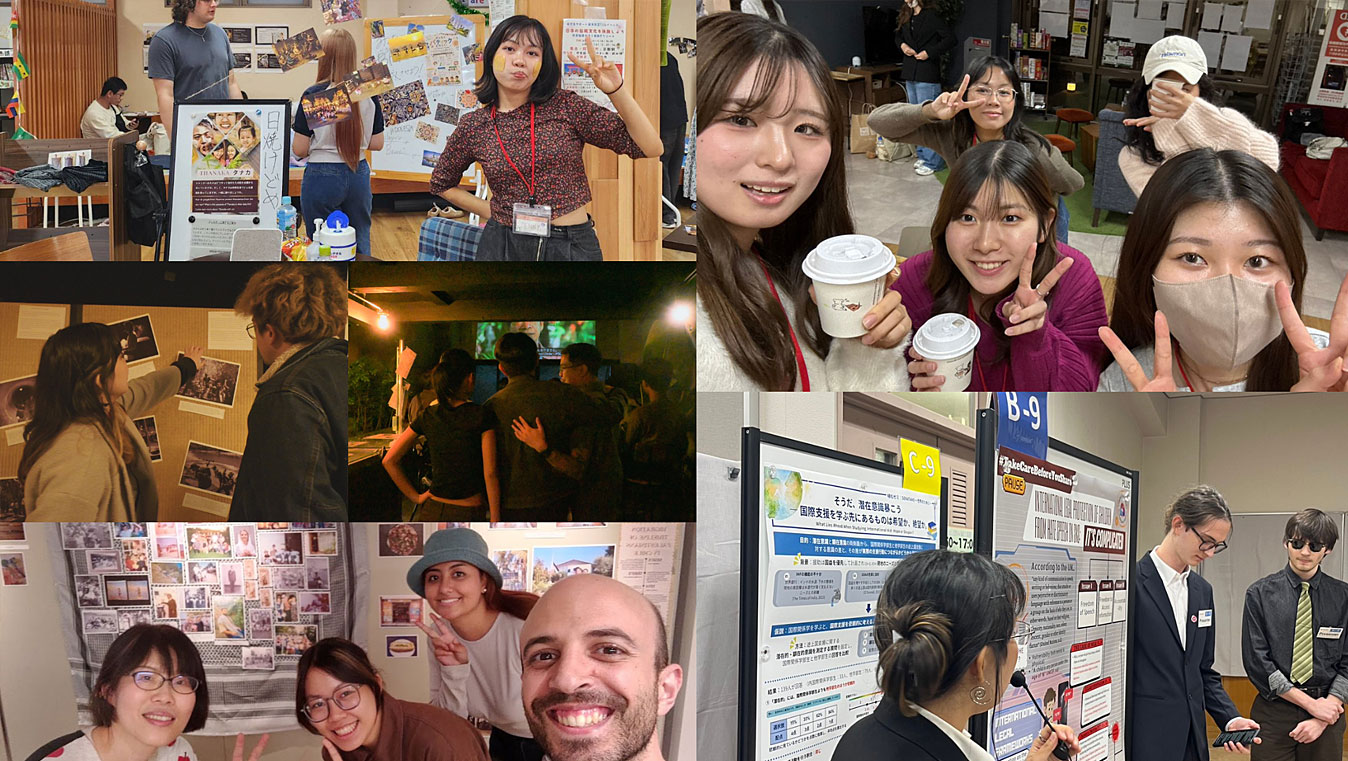
Through my roles as a project team member and management staff member at Beyond Borders Plaza (BBP), I have gained valuable experience in cross-cultural communication, project coordination, and administrative work. These skills have been further reinforced through volunteer activities, such as supporting exhibitions at the Kyoto Museum for World Peace.
Equally important has been the community I have found at Ritsumeikan. The friendships and connections I have built have enriched my perspective and provided me with meaningful opportunities for cultural exchange and personal reflection.
Moreover, my studies have taught me how to apply academic knowledge to everyday life. Whether analyzing current events, engaging with new people, or navigating daily situations, I have developed a more critical and globally aware mindset. This shift in perspective has been one of the most transformative aspects of my university experience.
What are your plans after graduation?
THET HtarAfter graduation, I plan to pursue graduate studies in international law, either in Japan or Europe, in order to further deepen my expertise. At the same time, I hope to engage in remote work that allows me to apply and expand my research skills.
Looking ahead, I aspire to work in international tribunals and, eventually, to pursue a career in academia as a researcher. Achieving these goals will require advanced degrees, such as a master’s and potentially a PhD. As someone who is passionate about learning, I am excited to take on this next challenge and continue growing both academically and professionally.
June 2026
MORE INTERVIEWS
-
Pursuing International Justice Across Borders: Academic Growth, Moot Court Experience, and Future Legal Aspirations
Thet Htar San
Fourth-year Global Studies Major / International Student from Myanmar2026.6.12
studentlife|gs_major|
-
Finding Confidence Across Borders: A JDP Fifth-Cohort Student Reflects on Four Years of Growth in Japan and the United States
HIROSE Alex Aoi
Fourth-year Joint Degree Program (RU-home)2026.3.16
studentlife|academics|jdp|
-
From Language Learning to Peacebuilding: Growing Through Global Engagement
PHAM Nhat Linh
Second-year Global Studies Major2026.3.9
studentlife|academics|gs_major|
-
International collaboration is not merely an ideal, but something that is both achievable and essential
Tran Duc Tuan (Steven)
Honda (Graduate School of International Relations Alumnus 2015)2026.2.13
alumni|
-
Zemi Research Convention 2025 “Where do we find the laughter?”
JDP Team
(Team name: The Japarican: Trans-Pacific Humor Accord)2026.2.3
academics|jdp|openseminar|
-
Diversifying opportunities and improving oneself by crossing borders
Jameel Mikaheel Yamaguchi
Fourth-year Global Studies Major2026.1.26
studyabroad|international|gs_major|