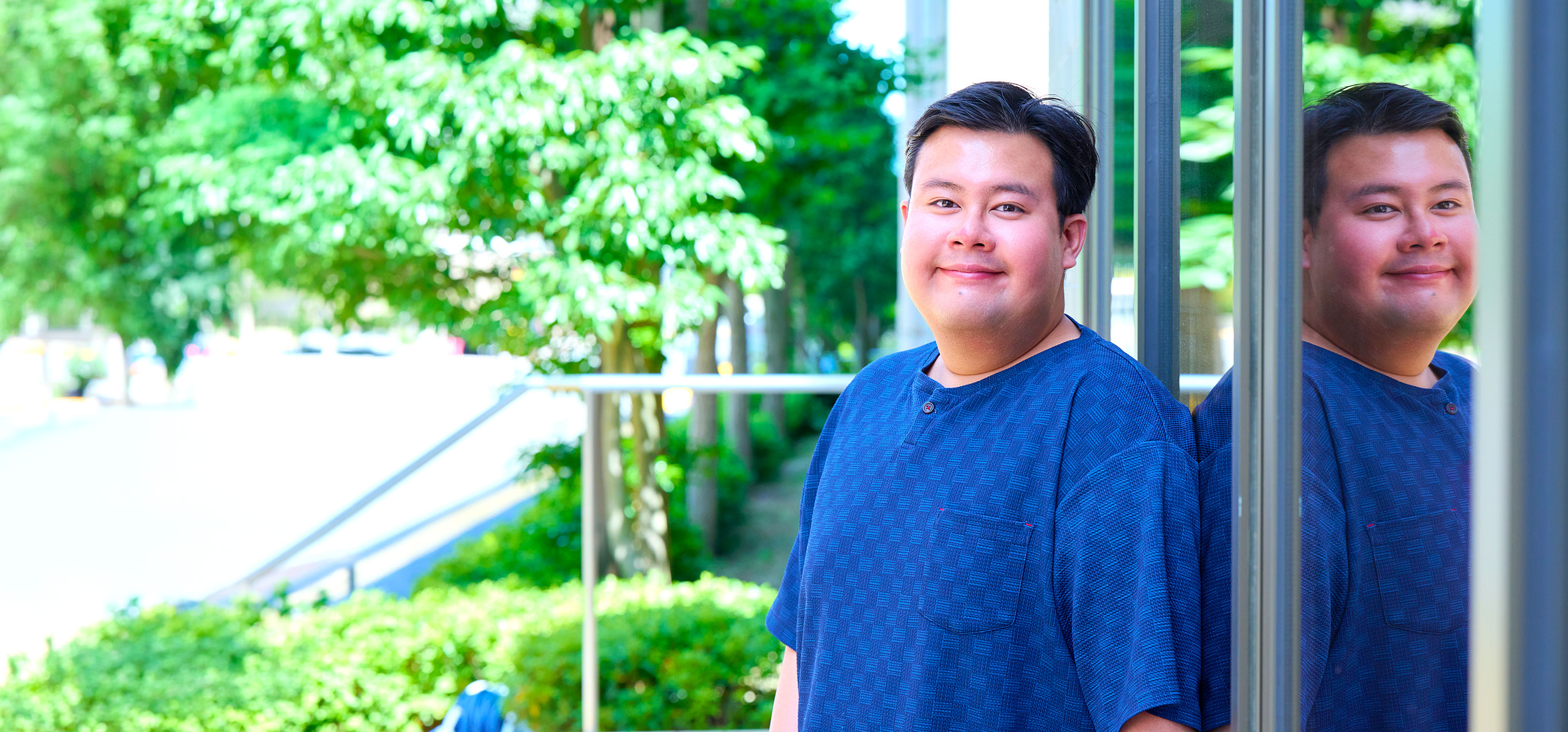
From Theory to Practice: Exploring International Relations through Global Simulation Gaming at Ritsumeikan University
SIHITE Elian Elian
Third-year Global Studies Major / International Student from Indonesia
We spoke with SIHITE Elian Elian, a third-year student in the Global Studies major, about his academic interests, research, and his experience in the Global Simulation Gaming (GSG).
Why did you choose Ritsumeikan University and the College of International Relations?
ElianGrowing up in a multicultural environment, I have always been fascinated by questions of identity, cultural diversity, and how different societies interact. I developed a strong curiosity about why the world looks the way it does today.
I chose to study at Ritsumeikan University because I wanted to explore the historical and cultural connections between Japan and my home country from a fresh perspective. I was particularly interested in understanding how cultural values and social structures shape societies and influence global relationships.
The College of International Relations appealed to me because it offers an interdisciplinary environment where history, the humanities, and creativity intersect. At the same time, it provides the academic flexibility to explore global issues through unique perspectives, including culture, identity, and the arts.
How has your impression of the College of International Relations changed after enrollment?
ElianBefore enrolling, I assumed that International Relations was primarily for those aiming to pursue careers in diplomacy or international organizations. However, my perspective changed significantly after joining the program.
I realized that International Relations is an exceptionally broad and inclusive field that welcomes diverse ways of thinking. With the guidance of my professors, I learned that global dynamics can be explored through a wide range of topics, including food, popular culture, and everyday practices. This flexibility has allowed me to approach international issues in creative and meaningful ways.
Please tell us about the topic you are currently researching.
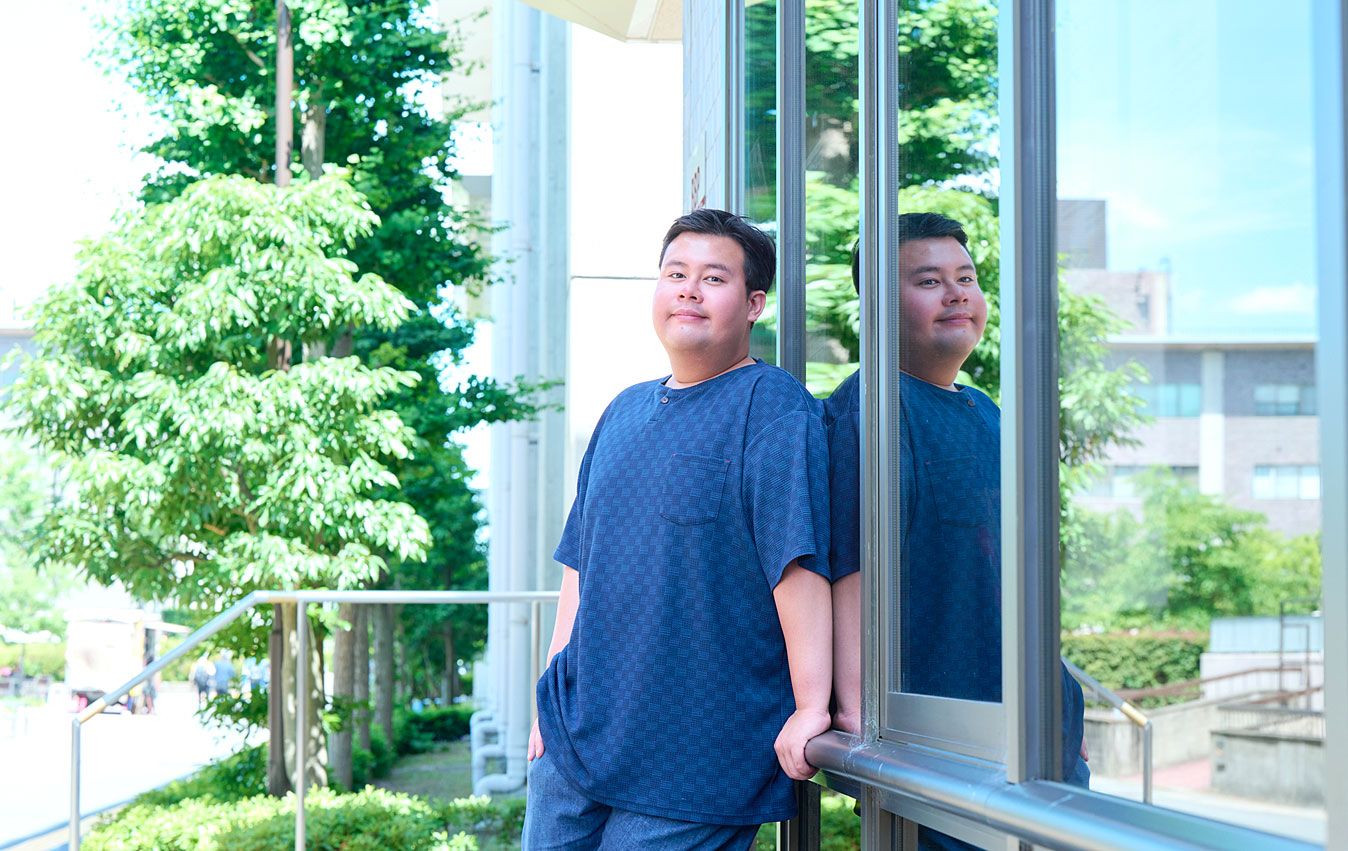
ElianMy academic interests focus on three interconnected areas: food culture, soft power, and gastrodiplomacy. Since my first semester, I have been exploring how food functions not only as a cultural practice but also as a political and diplomatic tool.
In my early research, I examined how halal practices are gradually being integrated into Japan’s food industry as the Muslim population increases. This study highlighted how food can connect communities that might otherwise have limited interaction. I later explored how washoku has been promoted by the Japanese government as a form of soft power, shaping an international image of peace, harmony, and cultural refinement.
In another project, I analyzed the global perception of Japanese cuisine through the example of the California roll, considering whether it represents cultural appreciation or appropriation. I also examined how such fusion cuisine relates to concepts such as Orientalism and cultural adaptation within global food cultures.
Through these studies, I have come to understand that food can play a powerful role in shaping identity, diplomacy, and international perceptions. It is not merely a source of sustenance, but also a symbolic and social practice that carries meaning and influence. I have also been able to apply theoretical frameworks, such as Joseph Nye’s concept of soft power and social constructivism, to real-world cultural phenomena.
In addition, my experience supporting academic events and symposiums on ethnographic and cultural studies in Japan has further deepened my understanding of Japanese society. These opportunities have also helped me develop research ideas, including the role of halal practices as a bridge between cultures.
ElianBuilding on these experiences, I am currently developing a thesis that integrates my three areas of interest. I aim to examine how food functions as a form of soft power in Japan through gastrodiplomacy. One focus is on washoku, which has been promoted globally as a symbol of balance, sustainability, and cultural identity, particularly since its recognition as UNESCO Intangible Cultural Heritage in 2013.
Another focus is Japan’s growing engagement with halal food culture. While often viewed as an accommodation for Muslim residents and visitors, I see this development as an opportunity for expanding soft power. By promoting inclusivity and cultural sensitivity, halal-friendly initiatives can contribute to shaping a positive international image of Japan.
Through this research, I hope to demonstrate that food, as a medium of gastrodiplomacy, embodies power, identity, and diplomacy, while also serving as a bridge across cultures.
Could you tell us about your experience in the Global Simulation Gaming (GSG)?
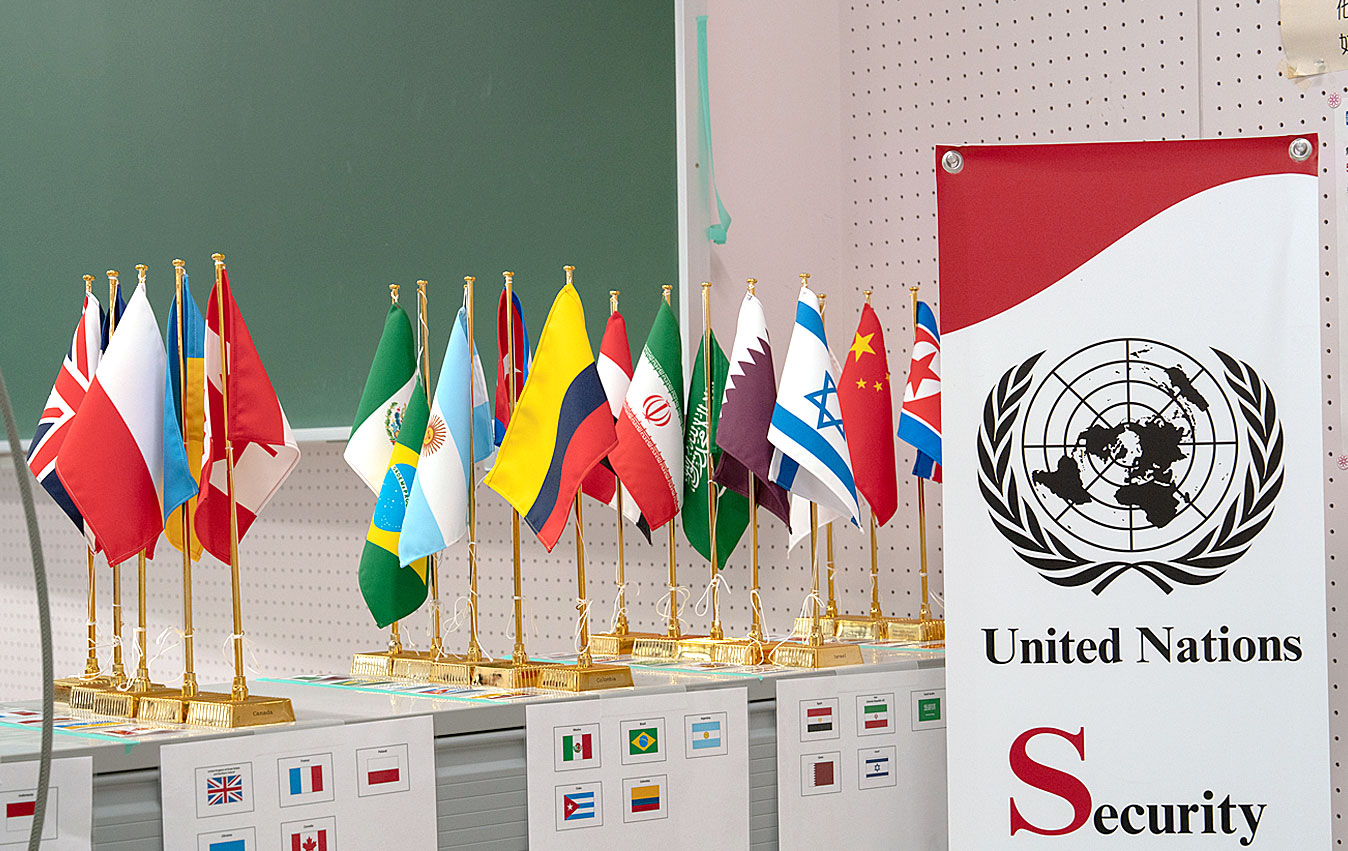
ElianIn the GSG, I took on the role of India’s Defense Minister and focused on addressing regional security challenges, including border disputes with China and Pakistan, as well as maritime security in the Indian Ocean.
I participated in several negotiations, including revising a nuclear policy framework with added international oversight and helping establish agreements on maritime cooperation. I was also involved in drafting and supporting treaties aimed at strengthening regional security and stabilizing border relations.
One of the most valuable aspects of the experience was working with my team. Although we did not know each other well initially, we quickly developed strong collaboration and trust through continuous discussion and preparation. Our teamwork made the entire process both productive and enjoyable.
The simulation itself was highly engaging and realistic. Even observing debates during high-level sessions, such as those resembling the UN Security Council, provided insight into how complex and intense international negotiations can be, while still remaining focused and constructive.
What are the strengths of the GSG, and what would you recommend to future students?
ElianThe GSG course is similar to Model United Nations (MUN), but offers an even more immersive experience. Students are not limited to representing countries; they can also take on roles within international organizations or even non-state actors, such as NGOs and media representatives.
When representing a country, students assume specific high-level roles, such as ministers or heads of state, and work as a team to respond to complex global scenarios. Importantly, participants are not strictly bound to real-world policies. As long as there is a clear justification, they are encouraged to develop creative and innovative solutions to international challenges.
This flexibility makes the simulation both dynamic and intellectually stimulating. It allows students to move beyond theoretical learning and experience firsthand the complexities of international cooperation, negotiation, and decision-making.
Through this course, I learned how interconnected global issues are. Decisions in one area, such as security, can have unintended consequences in others, including trade and diplomacy. This experience taught me to think more carefully, strategically, and holistically when approaching global issues. It also helped me develop the ability to set aside personal biases and engage with complex problems in a balanced and constructive way.
Message for prospective students.
ElianTo those considering applying to the College of International Relations, my advice is simple: do not limit yourself.
International Relations is far more than the study of diplomacy or politics. It is a flexible and interdisciplinary field that allows you to explore your own passions from a global perspective. In my case, I entered the program with an interest in culinary studies, and I was initially uncertain about my path. However, I soon discovered that my interests could be integrated into International Relations in meaningful ways.
Whether your passion lies in food, media, culture, or any other field, the College of International Relations provides a platform to examine these topics through the lens of global dynamics, soft power, and public diplomacy.
Bring your unique perspective, creativity, and curiosity. You will find that this program not only broadens your understanding of the world, but also empowers you to shape your own academic and professional path.
July 2026
MORE INTERVIEWS
-
From Theory to Practice: Exploring International Relations through Global Simulation Gaming at Ritsumeikan University
SIHITE Elian Elian
Third-year Global Studies Major / International Student from Indonesia2026.7.3
academics|international|gs_major|
-
Pursuing International Justice Across Borders: Academic Growth, Moot Court Experience, and Future Legal Aspirations
Thet Htar San
Fourth-year Global Studies Major / International Student from Myanmar2026.6.12
studentlife|gs_major|
-
Finding Confidence Across Borders: A JDP Fifth-Cohort Student Reflects on Four Years of Growth in Japan and the United States
HIROSE Alex Aoi
Fourth-year Joint Degree Program (RU-home)2026.3.16
studentlife|academics|jdp|
-
From Language Learning to Peacebuilding: Growing Through Global Engagement
PHAM Nhat Linh
Second-year Global Studies Major2026.3.9
studentlife|academics|gs_major|
-
International collaboration is not merely an ideal, but something that is both achievable and essential
Tran Duc Tuan (Steven)
Honda (Graduate School of International Relations Alumnus 2015)2026.2.13
alumni|
-
Zemi Research Convention 2025 “Where do we find the laughter?”
JDP Team
(Team name: The Japarican: Trans-Pacific Humor Accord)2026.2.3
academics|jdp|openseminar|