Studying in Japan Taught Me to Look Beyond First Impressions and Understand the World from Diverse Perspectives
ARIAS Coralie De Jesus
Second-year student, Joint Degree Program (AU-home)
We interviewed ARIAS Coralie De Jesus, a student in the American University-Ritsumeikan University Joint Degree Program, about her academic experiences and student life in Japan.
What attracted you to apply to the American University–Ritsumeikan University Joint Degree Program, and what motivated you to study in the program?
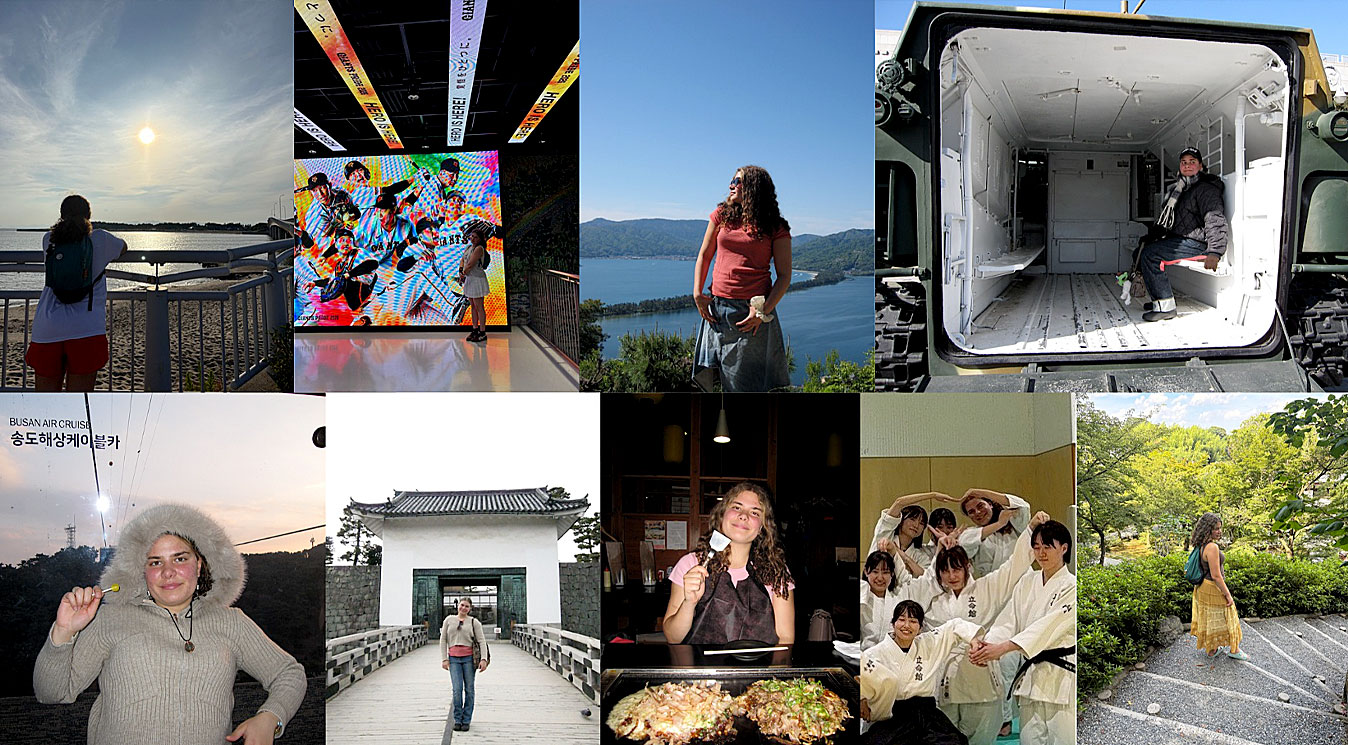
CoralieMy interest in Japan began in high school when I discovered Kyoto through GeoGuessr, a game in which players identify locations around the world. Kyoto's many Shinto shrines and Buddhist temples immediately captured my attention, and I began learning more about Japanese culture and language on my own.
When preparing for university, I knew I wanted to study international relations to deepen my understanding of Japan and Asia while challenging myself to step outside my comfort zone. My goal has always been to develop a truly global perspective on international affairs rather than a solely Eurocentric one.
The American University-Ritsumeikan University Joint Degree Program was the perfect fit because it offers students the opportunity to spend two years at Ritsumeikan University in Japan and two years in Washington, D.C. Through the program, I have pursued concentrations in Global and Comparative Governance (GCG) and Peace, Global Security, and Conflict Resolution (PGSCR). Studying at both institutions has allowed me to explore international relations from different academic and cultural perspectives, greatly broadening my understanding of the field.
What fields or areas are you interested in studying?
CoralieI am particularly interested in international law and international relations.
At both universities, I have enjoyed studying Japanese society through courses on culture, politics, history, and language. At the same time, I have developed a strong interest in international security issues and regional stability in East Asia.
One topic that especially interests me is how the United States, Japan, and South Korea work together to address North Korea's nuclear and missile threats while maintaining regional stability amid China's growing influence. I am also interested in how these countries cooperate in areas such as technological innovation, cybersecurity, defense, and economic interdependence.
What has been the most memorable experience of your student life so far?
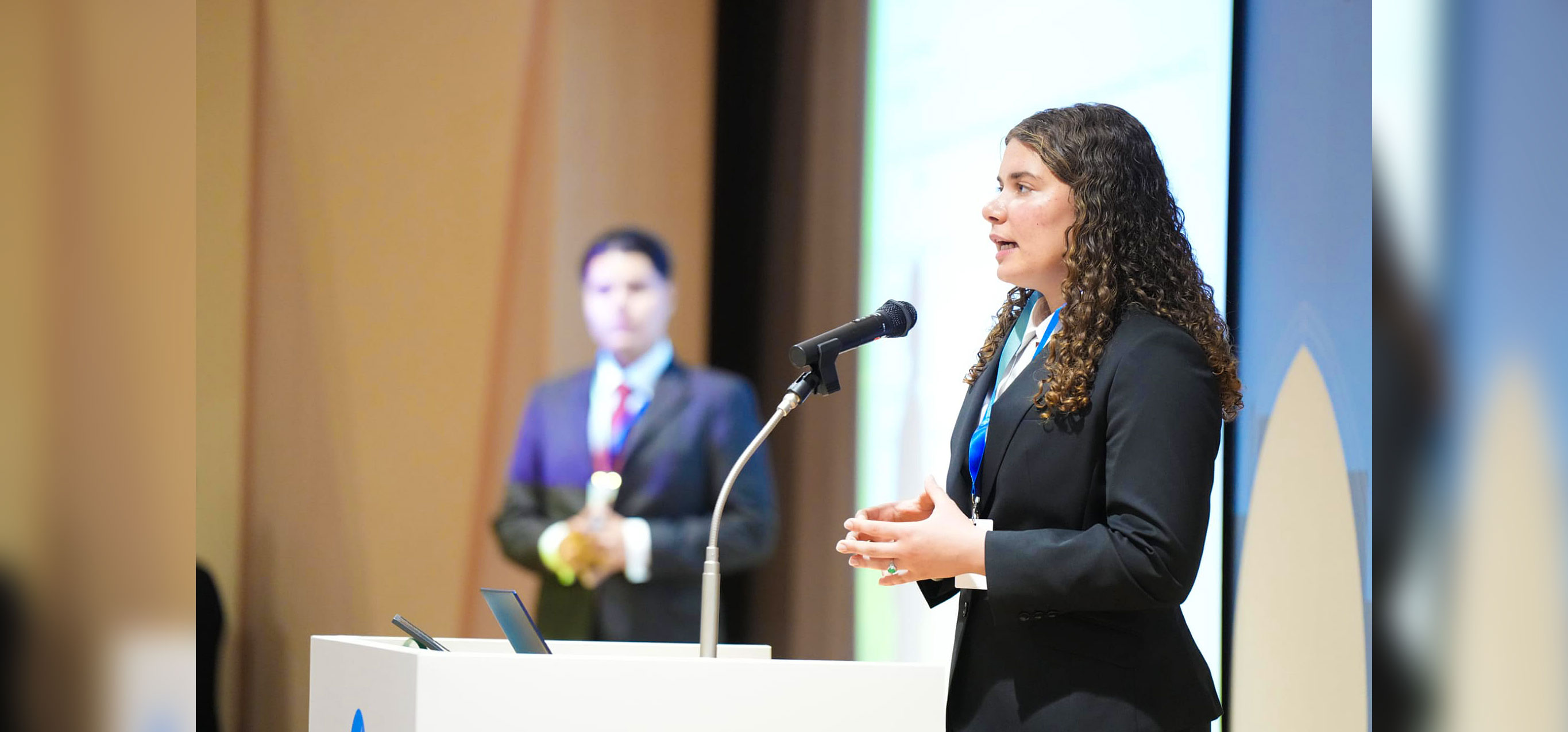
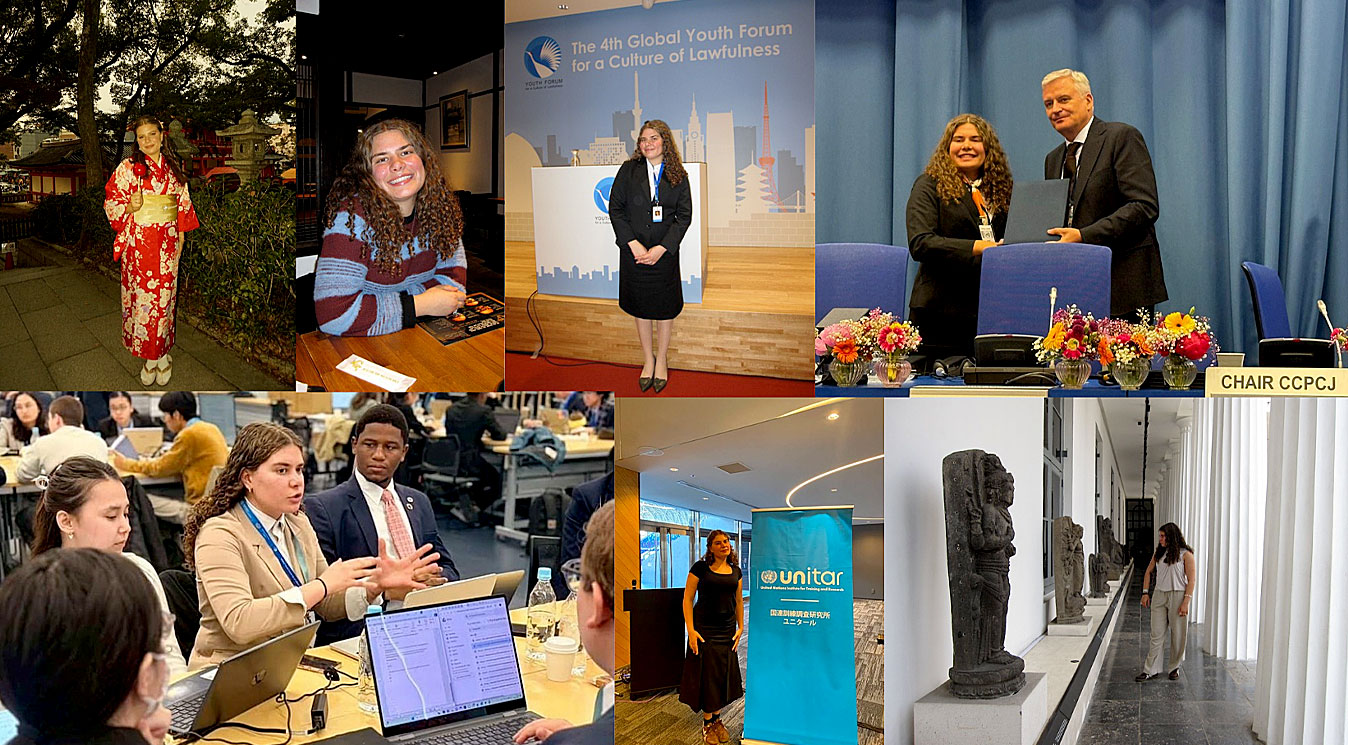
CoralieOne of the most fulfilling and unforgettable experiences during my time at Ritsumeikan University and American University was being selected through a competitive application process to serve as a Co-Chair at The 4th Global Youth Forum for a Culture of Lawfulness, held at Chuo University in Tokyo from March 5 to 7, 2026.
In this role, I facilitated discussions among youth delegates representing 43 countries on preventing recidivism and supporting the reintegration of young offenders into society. Beyond the formal sessions, participants also had opportunities to build friendships and exchange ideas in more relaxed settings, including a memorable visit to a karaoke bar in Tokyo.
Following the forum, I was selected to present the group's final recommendations at the United Nations Congress on Crime Prevention and Criminal Justice (CCPCJ) in Vienna on June 1, 2026 (minute 28). This experience strengthened my leadership and intercultural communication skills while teaching me how to navigate diverse perspectives on complex peace and security issues.
Most importantly, I valued the opportunity to connect with youth representatives from around the world, as well as officials from the United Nations Office on Drugs and Crime (UNODC) and various ministries of justice. It was an experience that allowed me both to learn and to contribute, making it one of the most rewarding moments of my university life.
In your student life so far, how do you feel you have grown, what skills have you developed, and what have you learned?
CoralieAs a multicultural and multilingual individual, I feel that I have grown significantly by serving as a bridge between cultures and strengthening my intercultural communication skills.
I enjoy sharing my Hispanic, European, and American background with people in Japan while learning about Japanese culture from them. For example, I introduce aspects of Dominican culture, such as bachata dance, traditional recipes using lentils and plantains, and the history and religious traditions of the Dominican Republic. Because Caribbean cultures are not often represented in Asia, I have taken every opportunity to share these perspectives through class discussions and presentations. In one Comparative Governance course, I gave a presentation on Christianity, missionary influence, and political power in the Dominican Republic, which sparked meaningful discussions among my classmates and professor.
Living and studying abroad have also helped me become more independent and improve my Japanese language skills. Above all, I have learned the importance of keeping an open mind and understanding issues within their historical and cultural contexts.
A particularly meaningful lesson came during a Peace Studies Seminar in Hiroshima led by Professor Kobayashi. There, I learned how people can make assumptions without fully understanding a situation. One example was the famous photograph The Boy Standing by the Crematory. At first glance, viewers may not immediately understand the tragic reality behind the image. Learning about its historical context revealed the devastating human impact of the atomic bombing of Hiroshima. Experiences like this have taught me to look beyond first impressions and seek a deeper understanding of the people, places, and histories I encounter.
What are your plans after graduation, and what inspired you to pursue this path?
CoralieAfter graduation, I plan to attend law school and specialize in international law.
I believe international law complements my studies in international relations and will allow me to apply the knowledge and skills I have gained to addressing complex global challenges. I hope to continue working on issues related to my areas of concentration, Global and Comparative Governance (GCG) and Peace, Global Security, and Conflict Resolution (PGSCR).
In the future, I would like to help translate academic research into practical recommendations and meaningful action. The intercultural communication skills I have developed through the Joint Degree Program will also be invaluable as I work with people from diverse cultural and professional backgrounds throughout my career.
August 2026
MORE INTERVIEWS
-
Studying in Japan Taught Me to Look Beyond First Impressions and Understand the World from Diverse Perspectives
ARIAS Coralie De Jesus
Second-year Joint Degree Program (AU-home)2026.8.21
academics|jdp|
-
From Theory to Practice: Exploring International Relations through Global Simulation Gaming at Ritsumeikan University
SIHITE Muhammad Elian
Third-year Global Studies Major / International Student from Indonesia2026.7.3
academics|international|gs_major|
-
Pursuing International Justice Across Borders: Academic Growth, Moot Court Experience, and Future Legal Aspirations
Thet Htar San
Fourth-year Global Studies Major / International Student from Myanmar2026.6.12
studentlife|gs_major|
-
Finding Confidence Across Borders: A JDP Fifth-Cohort Student Reflects on Four Years of Growth in Japan and the United States
HIROSE Alex Aoi
Fourth-year Joint Degree Program (RU-home)2026.3.16
studentlife|academics|jdp|
-
From Language Learning to Peacebuilding: Growing Through Global Engagement
PHAM Nhat Linh
Second-year Global Studies Major2026.3.9
studentlife|academics|gs_major|
-
International collaboration is not merely an ideal, but something that is both achievable and essential
Tran Duc Tuan (Steven)
Honda (Graduate School of International Relations Alumnus 2015)2026.2.13
alumni|