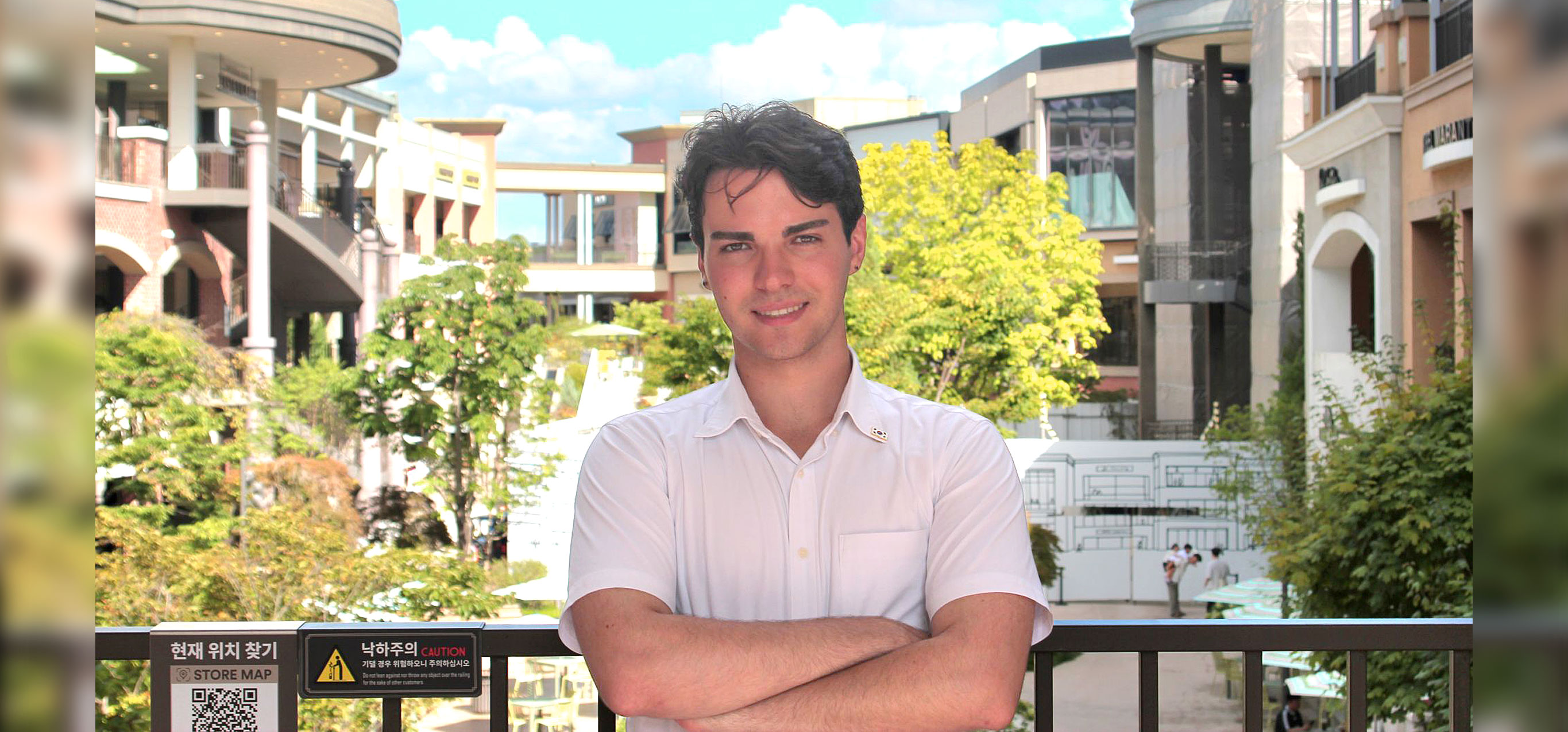
Taking Every Opportunity: How a Semester in Korea Expanded My Horizons and Inspired My Journey Toward Research and Global Understanding
OZGONUL Ruzgar Cinar
Second-year Global Studies Major / International Student from Türkiye
We interviewed Ruzgar, a Global Studies major, to learn more about his studies in the College of International Relations, his student life at Ritsumeikan University, and his exchange experience in South Korea.
Why did you choose Ritsumeikan University and the College of International Relations?
RuzgarFor me, choosing Ritsumeikan University was never simply about its ranking. It was about finding an academic environment where I could question what I learned, develop my own perspectives, and think freely without being told what to think. I ranked among the top 50,000 students in Türkiye’s university entrance examination, and although I was accepted by most established universities in my home country, I ultimately chose Ritsumeikan’s College of International Relations. What particularly stood out to me was the breadth of subjects we can explore here, from sociology and economics to law, peace studies, media studies, and even many more… Unlike a curriculum built around a fixed set of mandatory courses and a predetermined path, Ritsumeikan University gives you the freedom to decide what you want to learn and how you want to approach it.
I chose Global Studies because, for years, I grew up seeing politicians, “IR experts,” and some academics associated with corruption, lies, hostility, and endless arguments, and I did not want to simply accept that this was how the world worked and was going to work. Yes, the world is changing. We live in a world that has become more globalized than ever, but somehow not necessarily more transparent. I chose Global Studies because I believe a more transparent world is possible. And I think the first step toward that is understanding the world well. What makes the College of IR so special to me is that it gives you so many different ways of understanding the world. Sometimes, it is a professor who helps you see things from a new perspective. Sometimes, it is the friend sitting next to you in class. And sometimes, it is simply your own perspective, which you learn to question and reshape.
What fields or areas are you interested in studying?
RuzgarHonestly, if this question had been asked of me two years ago, I probably would have said something vague like “I am interested in politics,” which is what everyone says. But after taking different kinds of courses and completing my exchange semester in South Korea, I became really interested in how sociology helps us understand and change the world, or, in other words, to understand our socially constructed reality. Gender, ethnicity, networks, culture, media, economy, language, and ultimately, the society that builds what we call normal, and I believe this “normal” is worth questioning.
Lately, my attention has shifted toward the economic and social life of the Korean Diaspora—there are about 7.3 million ethnic Koreans living outside the peninsula, and I got fascinated by how differently their stories played out depending on which state they ended up under. I also dig into Japan's Womenomics policies and how gendered labor policy collides with immigration policy in an economy that is currently shrinking.
I was also selected for Professor Tsujimoto Toshiko's advanced seminar on transnational sociology and qualitative research, and I am really looking forward to continuing my research under her supervision all the way through to graduation.
I understand that you participated in an exchange program in South Korea. What made you decide to participate in the study abroad program?
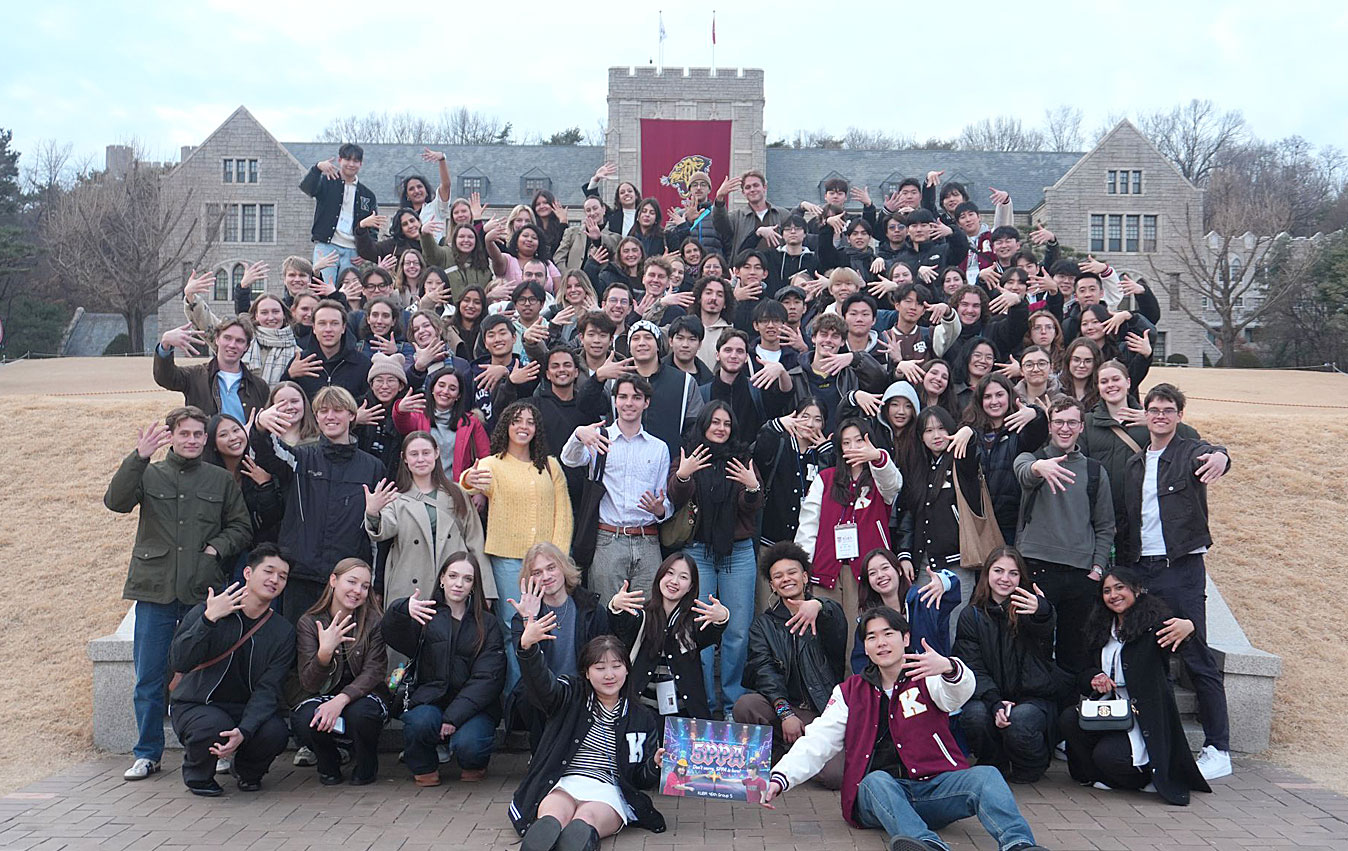
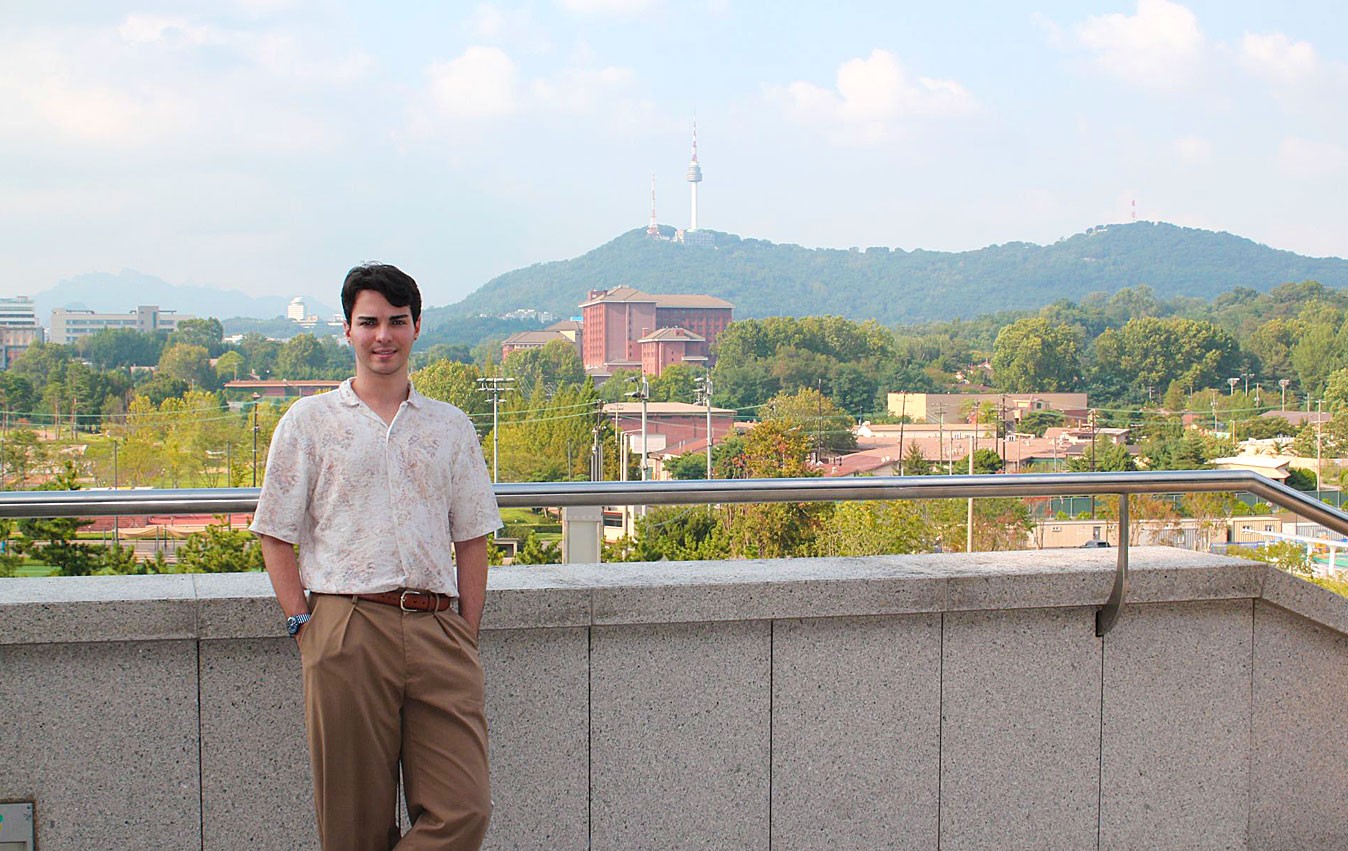
RuzgarYes, I had the chance to attend a one-semester exchange program at Korea University, South Korea. The core reason why I decided to apply is also my motto: “If there is an opportunity, take it.” Ritsumeikan offers so many opportunities that keep you busy, but I personally enjoy that a lot.
Honestly, what ultimately made me decide to go was the Ritsumeikan University Study Abroad Challenge Scholarship. Once I had that support from the university, there was not really a reason to hesitate. Approximately 10 to 30% of students in the GS major study abroad, and once I realized I had the chance to be one of them, the opportunity felt too good to pass up.
At the same time, the idea of going to Korea, learning Korean, and having the chance to make Korean friends was a great pull factor for me. I had always been curious about Korean history, so the opportunity to experience the country firsthand while studying at Korea University made the exchange even more appealing to me.
Could you tell us about the experiences you had and what you learned during your time there?
RuzgarMy time at Korea University extended well beyond coursework. I served as Exchange Student Leader for Türkiye and was later selected as Protocol and Student Liaison for the Turkish Foreign Minister's visit and conference address. I also helped coordinate the Türkiye booth at KU's 46th International Student Festival, and eventually, our efforts were covered by the South Korean newspaper Dong-A Ilbo.
Beyond my responsibilities at the university, I had the opportunity to visit the Korean War Archive Museum and the National Museum of Korea. For me, however, the most memorable experience was visiting the Demilitarized Zone (DMZ) - the heavily fortified border area separating North and South Korea. I also had the chance to speak with a North Korean defector who had escaped through China and eventually sought asylum in South Korea. Hearing her personal experiences allowed me to gain insights into both North and South Korea that I could not have found simply by reading about them online.
What has been the most memorable experience of your student life at Ritsumeikan?
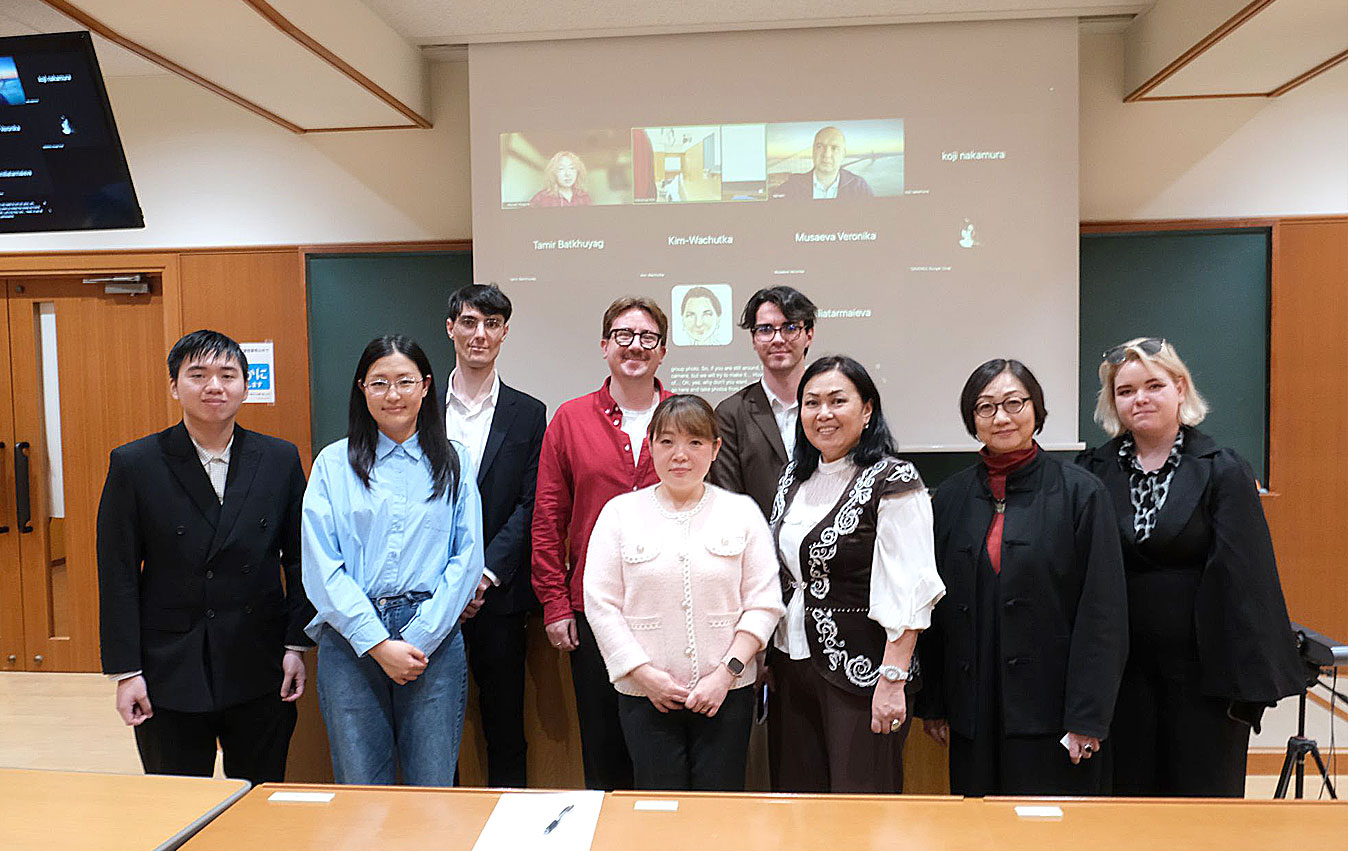
RuzgarThat would have to be my work as a research assistant under Professor Viktoriya Kim on her ethnographic project on the Koryo Saram, specifically the unresolved question of their political rehabilitation in Kazakhstan. I was involved in the qualitative coding of the oral history interviews conducted with Koryo Saram participants, as well as the archival photo restoration work that came with it. It was genuinely fascinating work, and later, I had the chance to present our work at the “Entangled Lives: Roots, Borders, and Inter-Ethnic Relationships in Eurasia” symposium at Ritsumeikan University this past March. That was the moment I realized this is not just a passing academic interest. It motivated me to keep pursuing research and eventually become a scholar someday.
What have you learned and gained through your student life so far?
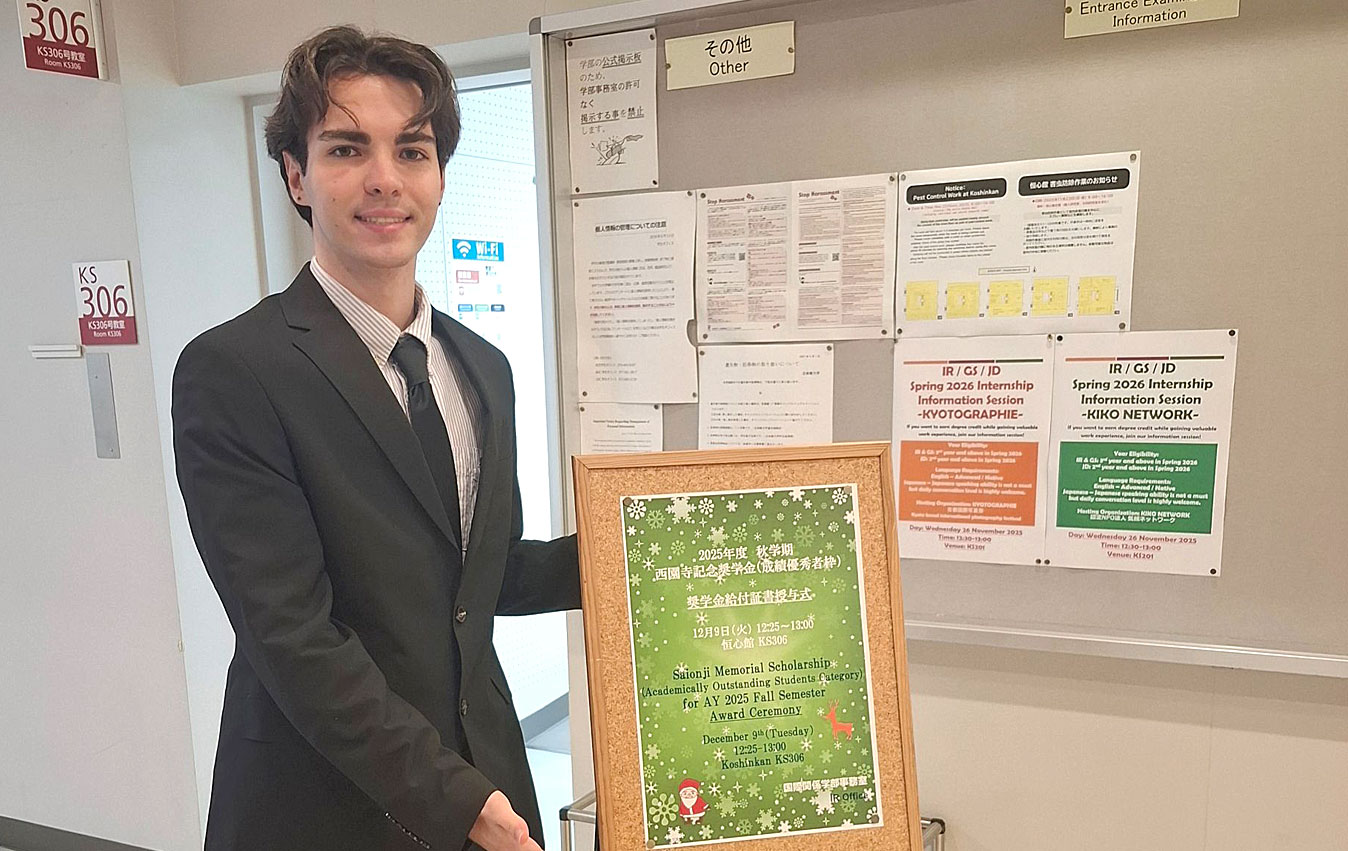
RuzgarDuring my first semester, I struggled to adjust to life in Japan, and my grades fell far short of my expectations. But honestly, that struggle became my biggest motivation. I managed to turn things around, brought my grades up significantly, and eventually earned scholarships like the Saionji Memorial Scholarship and the +R Undergraduate College Scholarship. University life has taught me that it does not always reward every effort you put into it, but as long as you keep moving forward, it keeps moving forward with you.
RuzgarIf I had to name the single biggest skill I have gained, I would say it is learning to question things and think critically. It might sound unusual, but our lives have started to resemble aspects of The Matrix. Devices, AI, and all these new things we have quietly normalized… We are not physically plugged into machines the way people were in the film, but we are plugged into our phones and chargers just to communicate, and increasingly plugged into AI just to make decisions and think. I think university exists precisely to teach us not just to understand things, but to critically analyze, change, and build original ideas.
What are your plans after graduation?
RuzgarAfter graduation, my dream is to pursue graduate school, ideally at an institution that allows me to continue the research I have already begun regardless of disciplinary boundaries. In the long term, I hope to build an academic career, conducting research and eventually teaching at universities around the globe.
August 2026
MORE INTERVIEWS
-
Taking Every Opportunity: How a Semester in Korea Expanded My Horizons and Inspired My Journey Toward Research and Global Understanding
OZGONUL Ruzgar Cinar
Second-year Global Studies Major / International Student from Türkiye2026.8.26
academics|international|gs_major|
-
Studying in Japan Taught Me to Look Beyond First Impressions and Understand the World from Diverse Perspectives
ARIAS Coralie De Jesus
Second-year Joint Degree Program (AU-home)2026.8.21
academics|jdp|
-
From Theory to Practice: Exploring International Relations through Global Simulation Gaming at Ritsumeikan University
SIHITE Muhammad Elian
Third-year Global Studies Major / International Student from Indonesia2026.7.3
academics|international|gs_major|
-
Pursuing International Justice Across Borders: Academic Growth, Moot Court Experience, and Future Legal Aspirations
Thet Htar San
Fourth-year Global Studies Major / International Student from Myanmar2026.6.12
studentlife|gs_major|
-
Finding Confidence Across Borders: A JDP Fifth-Cohort Student Reflects on Four Years of Growth in Japan and the United States
HIROSE Alex Aoi
Fourth-year Joint Degree Program (RU-home)2026.3.16
studentlife|academics|jdp|
-
From Language Learning to Peacebuilding: Growing Through Global Engagement
PHAM Nhat Linh
Second-year Global Studies Major2026.3.9
studentlife|academics|gs_major|