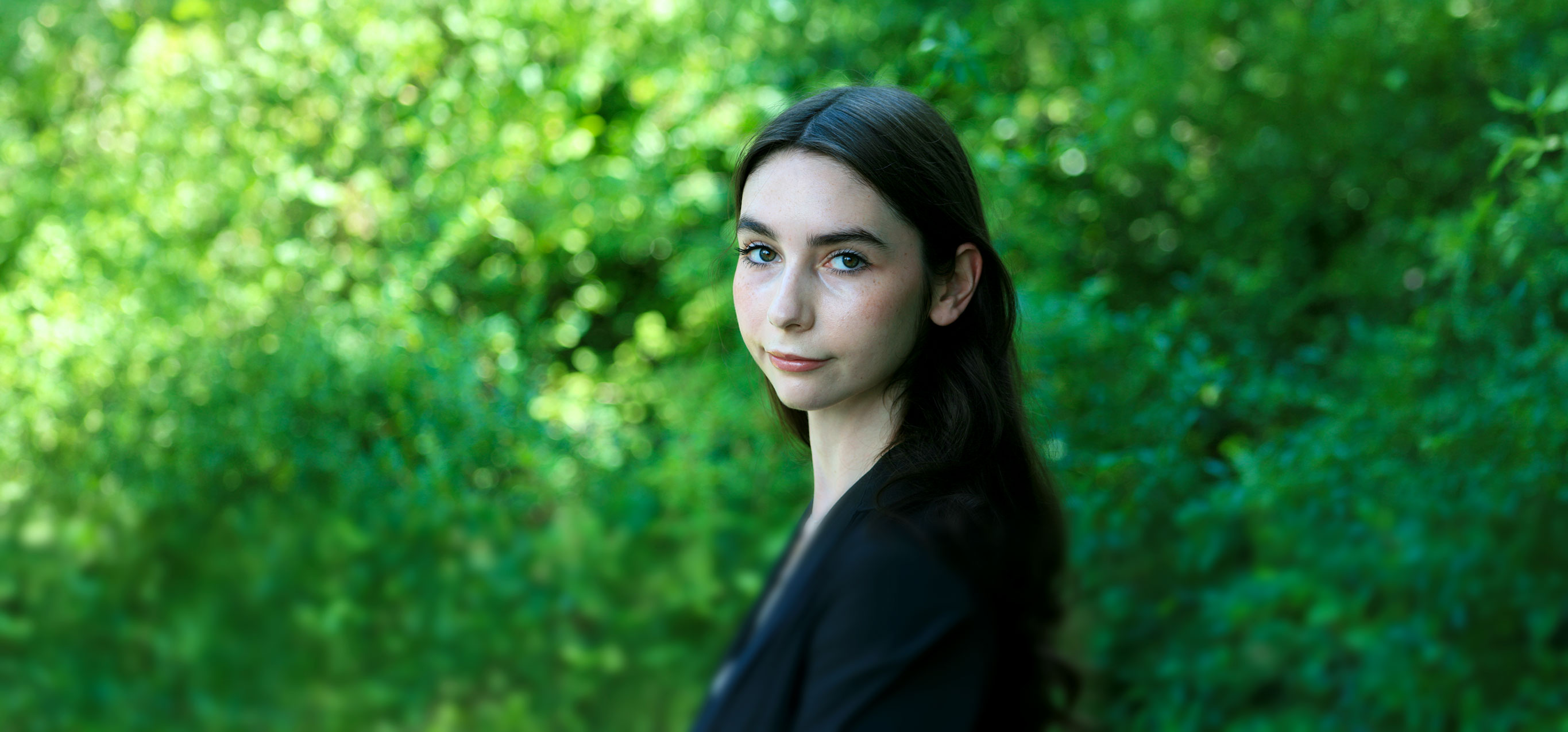
From Peace Studies to Diplomacy: How Experiences at Ritsumeikan Opened Doors to UNITAR and a Future in International Affairs
BRAGGER Lillybel Julitta
Third-year Global Studies Major / International Student from Switzerland
We spoke with Lillybel, a third-year student from Switzerland studying in the College of International Relations at Ritsumeikan University, about her academic journey and student life in Japan.
What attracted you to apply to the College of International Relations at Ritsumeikan University?
LillybelSince childhood, I have harboured a deep desire to live abroad, in an unfamiliar and intriguing environment. Perhaps this drive was cultivated by attending an international school, where I was one of the few Swiss students, surrounded by peers from a diverse range of countries and cultures that I found fascinating. By my senior year, many of my classmates were applying to universities in the United Kingdom, the Netherlands, the United States, and even Singapore. Even though Switzerland boasts world-famous, highly ranked universities, I admit I was a little jealous. Coincidentally, my school’s university counsellor sent an email to all seniors about the International Relations Program at Ritsumeikan University. I already knew that I wanted to study International Relations, primarily out of interest but secondarily because of its relevance to my future career goals (entering diplomacy). I was delighted at this opportunity, since it aligned with a long-standing interest in Japan and fulfilling a personal aspiration.
Ritsumeikan University's College of International Relations particularly interested me. Firstly, because of the interdisciplinary, flexible nature of the courses. While a few mandatory courses exist, most courses are free for students to choose from. This allows students to select classes strategically according to personal interests and, most importantly, to align them with current and future career goals.
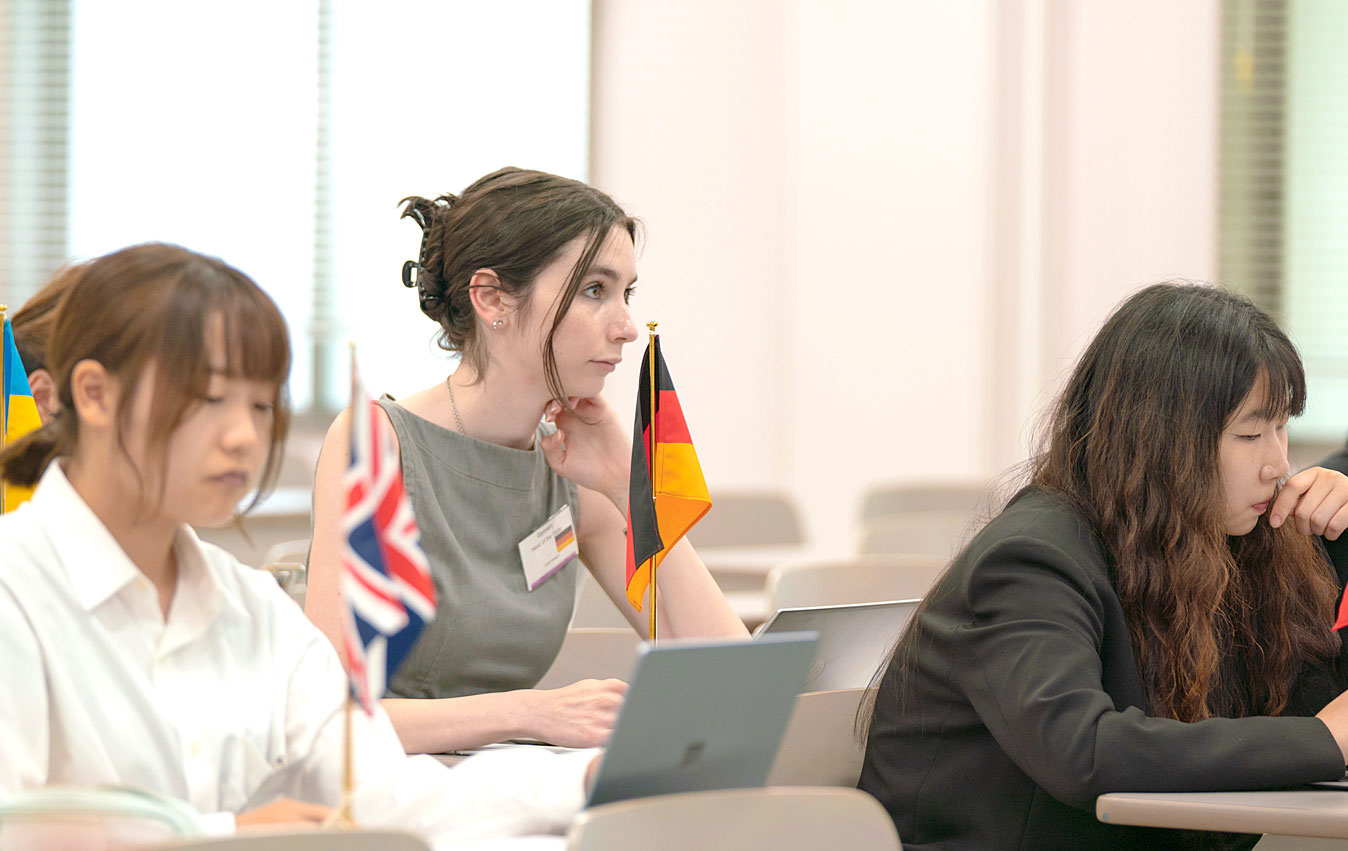
An aspect of the course that attracted me specifically was the Global Simulation Gaming course (GSG). GSG is a simulation of global politics, in which students represent actors, such as nations and international organisations, and participate in bilateral or trilateral meetings, as well as simulations of the United Nations, the European Union, the G7, and other international forums, it was the perfect course – training negotiation skills, compromise, drafting treaties, and gaining invaluable knowledge about geopolitical realities, all through personal experience rather than on paper. Ritsumeikan University appeared to offer unique, rare opportunities that I was eager to leverage.
What fields or areas are you interested in studying?
LillybelMy goal is to examine distinct, diverse fields to satisfy my own broad curiosity as well as to build a multifaceted skill set and well-rounded understanding of international relations and dynamics. Why would I choose to limit myself? Every semester I combine subjects that are of personal interest to me (usually related to political science, philosophy, or current affairs), with a specific focus on Japan (leveraging this rare opportunity to examine the nation through direct, firsthand engagement), with subjects that are imperative for my future goals. Therefore, the fields I am interested in studying are flexible, but always include Asia-specific, law, and economics courses.
What was the most memorable experience during your time at Ritsumeikan?
LillybelPerhaps the most fulfilling experience I have had as part of my studies at Ritsumeikan was participating in the Peace Studies Seminar course.
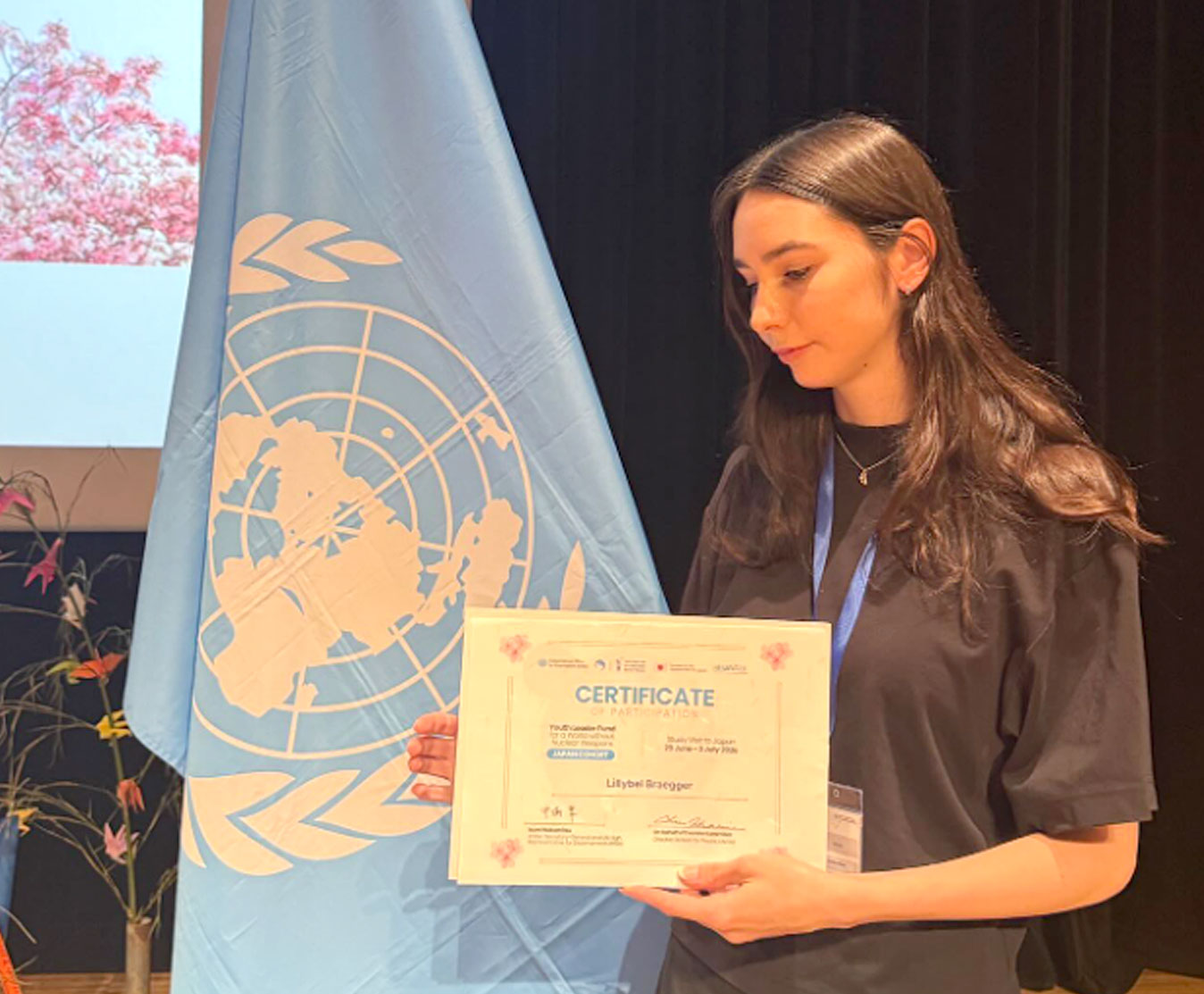
The course included a three-day study trip to Hiroshima around the anniversary of the atomic bombing. Activities included visits to the Hiroshima Peace Memorial Museum, participation in the Peace Memorial Ceremony and Hibakusha testimonies, a lecture on post-war environmental restoration, and a visit to UNITAR.
The trip was particularly memorable because it was an experience that I never would have had had I not decided to pursue my studies in Japan, and specifically, at Ritsumeikan University. So, I knew that I was incredibly lucky to gain knowledge about this historical event that continues to shape the world up to the present moment, from a firsthand, authentic source.
LillybelAttending the Peace Memorial Ceremony allowed me to observe firsthand Japan’s memory politics, allowing me to personally observe the tension between private, ceremonial mourning and active advocacy for nuclear disarmament, how diplomatic and political motivations shape post-war narratives, and how Japan defines its post-war identity. In contrast, hearing the Hibakusha testimonies was moving in a way that transcended the historical and political distance- hearing survivors speak about their own memories felt like a direct connection that neither the museum nor ceremony could fully capture. The guest lecture introduced me to the often-forgotten long-term ecological consequences of the war and another story of resilience and the post-war healing process.
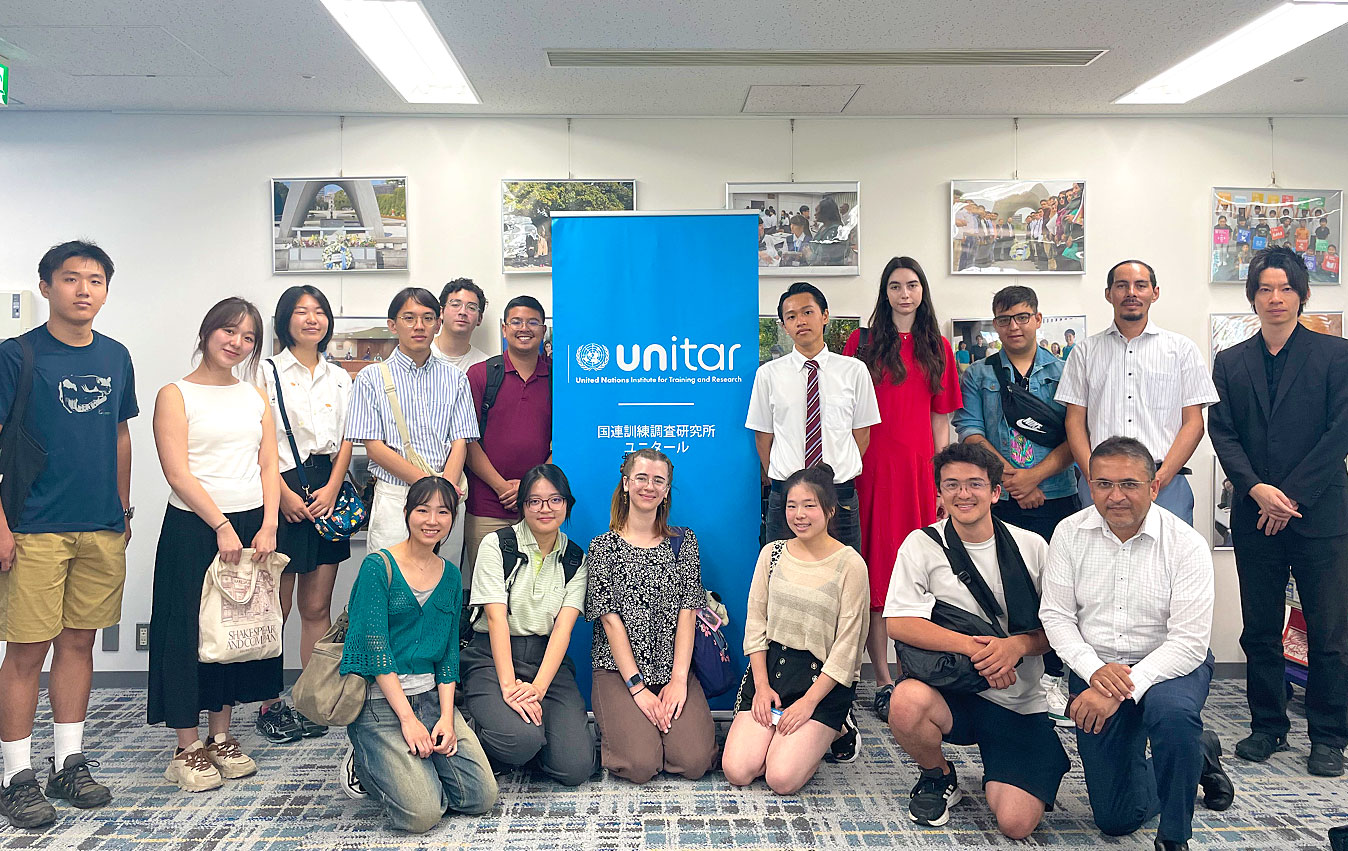
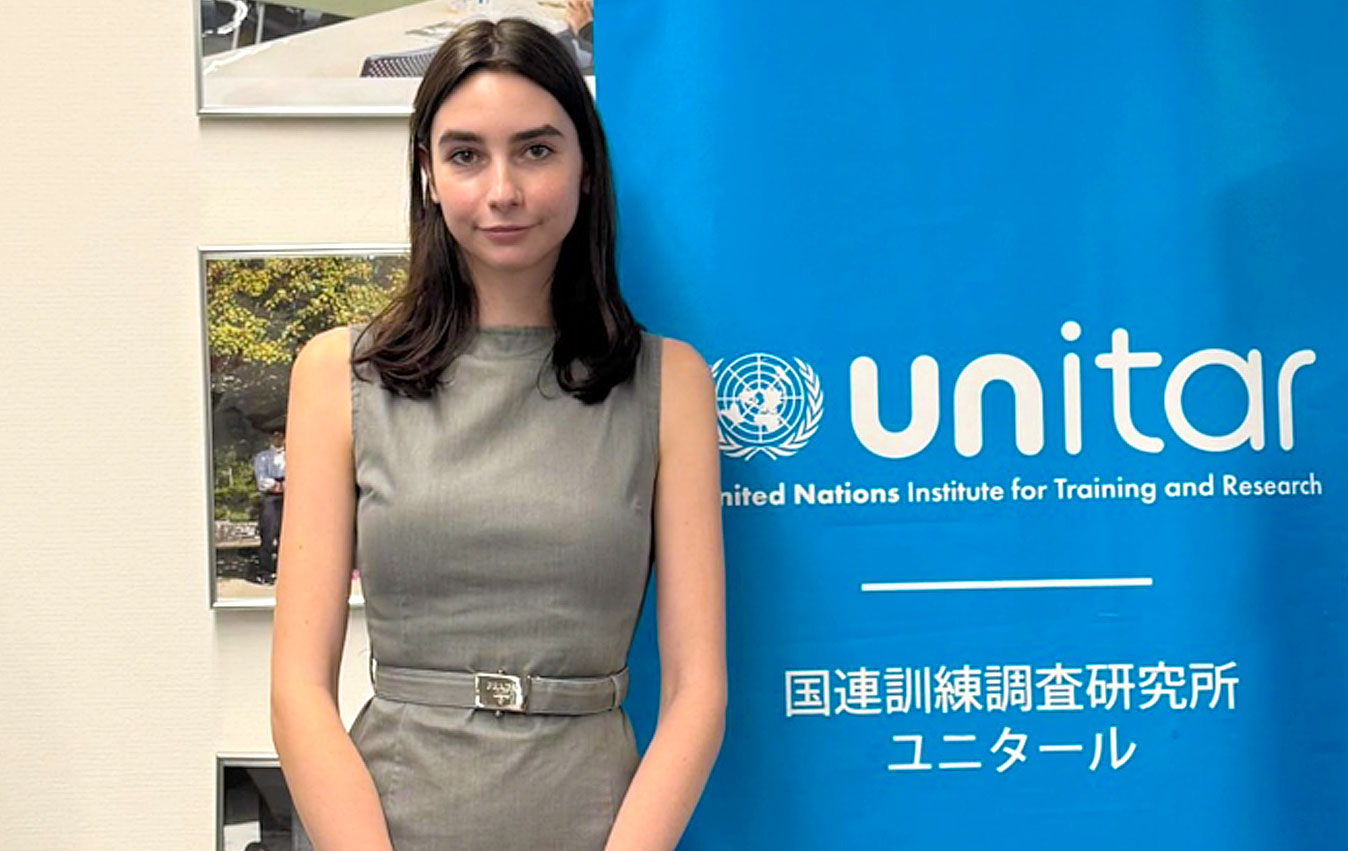
LillybelLastly, it provided me with valuable networking opportunities and connections. I collected a plethora of business cards during the trip and reached out to two members of the UNITAR team a few months after returning to Kyoto. After some correspondence, I was offered an internship at the UNITAR office in Hiroshima. Interning at the United Nations has been one of the biggest, most rewarding projects I have undertaken in my academic and professional journey, and it likely would not have happened if I had not taken the Peace Studies Seminar course.
How have you grown during your time at Ritsumeikan?
LillybelDue to the multi-disciplinary structure of the Global Studies program, I have been able to explore a variety of topics and domains at least to a fundamental level and choose to deepen my knowledge in those of particular interest. This approach has allowed me to understand myself better: what I am interested in, where I can thrive, what skills I have and where they are best applied, what I value, and, generally, what I want for myself. This growth has been supported by some of the faculty at Ritsumeikan University, who have shared their present/past professional and personal experiences. They have helped me understand the reality of what it means to practice or engage with different fields, particularly those of interest, what opportunities they provide and what drawbacks they entail.
I believe that my studies have certainly contributed to my ability and motivation to think critically. They have reinforced my understanding of the need to analyse topics, occurrences, and issues from every angle possible, to continually reassess them, to ask the right questions, and not to come to quick conclusions. The development of this skill became evident when I revisited tasks I had completed in my first year at Ritsumeikan and realised how drastically my approach had changed, how much more flexible I was in my thinking and how hesitant and careful I was now in drawing conclusions, forming opinions, or thinking in absolutes. I also see this in the way that I engage with and view information and opinions presented online, in person, by politicians, by experts, by acquaintances- anyone. Lastly, I have greatly improved my networking skills – something I have always been uncomfortable with. Throughout my studies, I have been presented with many networking opportunities; I have been invited to events by professors, introduced to organisations, training programs, partaken in GSG, etc. This exposure has built my confidence in networking environments and has provided me with many incredibly interesting and valuable connections.
What are your plans after graduation?
LillybelIn the future, I plan to complete a master’s degree at a Swiss university in a related field such as political sciences (University of Zurich), International Affairs and Governance (University of St. Gallen), or in Comparative and International Studies (ETH Zurich). On one hand, because I am still hungry for more knowledge on the topics I am passionate about, on the other because I need to do so for my future diplomatic career. I need to master a deep understanding of Switzerland’s domestic law, economy, and politics, as well as its role in the international community. While I have built a strong understanding of the Indo-Pacific region during my time in Japan, it is also imperative to learn about the European region. During that time, I will also study French to achieve a C1 proficiency level while continuing to study and improve my Japanese language abilities.
Once I have completed my studies, I will be taking the Swiss diplomacy exam and hopefully start my journey towards a career as a diplomat for the government of Switzerland. Additionally, I plan to enrol in a PhD program in Philosophy and use my academic writing skills to author reports and articles for think tanks (as I am already doing now) and journals.
September 2026
MORE INTERVIEWS
-
From Peace Studies to Diplomacy: How Experiences at Ritsumeikan Opened Doors to UNITAR and a Future in International Affairs
BRAGGER Lillybel Julitta
Third-year Global Studies Major / International Student from Switzerland2026.9.7
studentlife|academics|studyabroad|gs_major|
-
Taking Every Opportunity: How a Semester in Korea Expanded My Horizons and Inspired My Journey Toward Research and Global Understanding
OZGONUL Ruzgar Cinar
Second-year Global Studies Major / International Student from Türkiye2026.8.26
academics|international|gs_major|
-
Studying in Japan Taught Me to Look Beyond First Impressions and Understand the World from Diverse Perspectives
ARIAS Coralie De Jesus
Second-year Joint Degree Program (AU-home)2026.8.21
academics|jdp|
-
From Theory to Practice: Exploring International Relations through Global Simulation Gaming at Ritsumeikan University
SIHITE Muhammad Elian
Third-year Global Studies Major / International Student from Indonesia2026.7.3
academics|international|gs_major|
-
Pursuing International Justice Across Borders: Academic Growth, Moot Court Experience, and Future Legal Aspirations
Thet Htar San
Fourth-year Global Studies Major / International Student from Myanmar2026.6.12
studentlife|gs_major|
-
Finding Confidence Across Borders: A JDP Fifth-Cohort Student Reflects on Four Years of Growth in Japan and the United States
HIROSE Alex Aoi
Fourth-year Joint Degree Program (RU-home)2026.3.16
studentlife|academics|jdp|