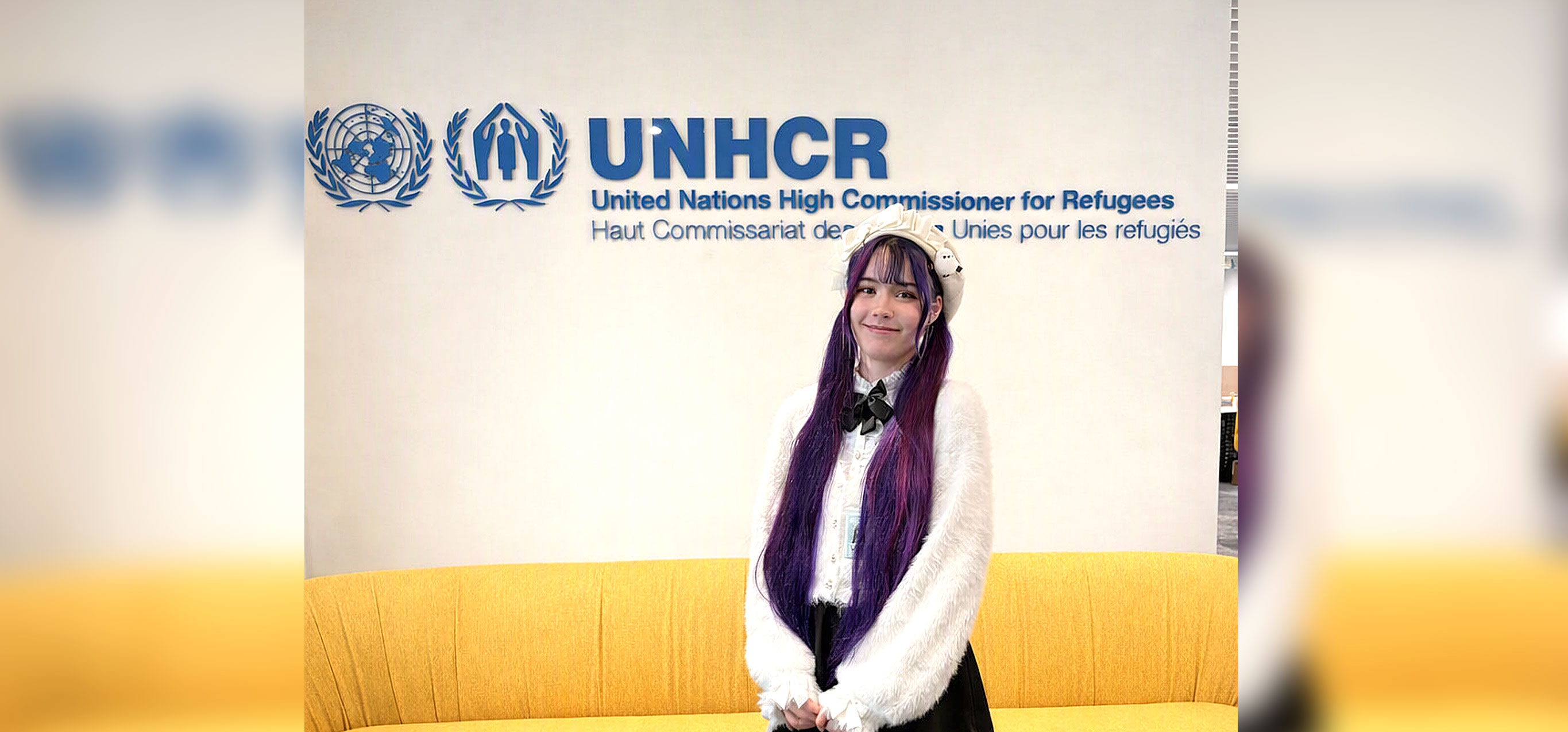
How a Bangkok International Organization Training Program Expanded My Vision of Working at the United Nations and Opened New Pathways for a Future Global Career
CARROLL Katherine Lorraine
Third-year student, Joint Degree Program (AU-home)
We interviewed CARROLL Katherine Lorraine from the American University–Ritsumeikan University Joint Degree Program about her experience participating in the Bangkok International Organization Training Program this summer and how it has shaped her future career aspirations.
What attracted you to apply to the American University-Ritsumeikan University Joint Degree Program, and what motivated you to study Joint Degree program?
KatherineI’ve always known that I wanted to do lots of study abroad in university, but most schools only allowed one semester or one year abroad. That wasn’t enough for me. So, when I came across the American Universty-Ritsumeikan University Joint Degree Program (JDP), where I would be able to study in Japan for two years, I was instantly interested. I already had my sights on studying in Japan, so it really felt like the perfect program for me. When applying, I had never been outside of North America or Europe before, and I had always wanted to go to Asia. Japan would be a hub that would allow me to travel around Asia during summer and winter breaks, helping me complete more of my dreams. In addition, the JDP program is the only one of its kind in all of the United States—While other joint degree and dual degree programs exist between universities in the US and Europe, this program is the only one between the US and Japan. That meant that if I wanted to study in Japan for two years, it would have to be with American University and Ritsumeikan University.
But besides these reasons, one of the main reasons I wanted to study abroad in the first place was to make new friends from other cultures who don’t necessarily speak the same language as me. I wanted to be introduced to new cultures first-hand from people who actually live in them, and potentially make life-long connections. Hearing about the many clubs and circles Ritsumeikan had to offer further motivated me to apply, and I’m happy to say that I’m a part of one now!
What continues to motivate me to study are the very same people that unknowingly encouraged me to apply in the first place. The friends I’ve made and the professors I’ve met inspire me to push my studies further and improve my language skills every day. Spending time with my Japanese-speaking friends encourages me to practice the language and motivates me to study it more in the classroom. Conversing with my professors in and outside of class gives me new insight into what we’re learning, encouraging me to pursue my interests outside the classroom. My advisors and program supervisors in both the US and Japan are amazing people that continue to support my ideas and interests, motivating me to try harder every day.
What fields or areas are you interested in studying?
KatherineThere are so many things I’m interested in, but one of the areas of International Relations (IR) that interests me the most is governance and international organizations. I want to learn more about how international organizations work and what role they play in international politics. Specifically, I’m interested in the United Nations (UN), as they are the largest and most recognized international organization that involves every country around the world. I want to learn about their inner workings, but also how they interact with various countries’ governments, whether that be in positive or negative ways.
This area within IR also brings up really interesting points of debate, such as how involved the UN should be in the affairs of other countries or regions. To what extent should the UN act as a mediator in wars? When does an issue or conflict become severe enough for the UN to intervene? How much power should the UN be given throughout the world? How does the UN encourage (or discourage) power concentration in nations on a global scale? All of these points for debate are questions I would love to learn about and research more.
Please tell us about the most fulfilling activity and the most unforgettable experience you had during your time at Ritsumeikan University and American University.
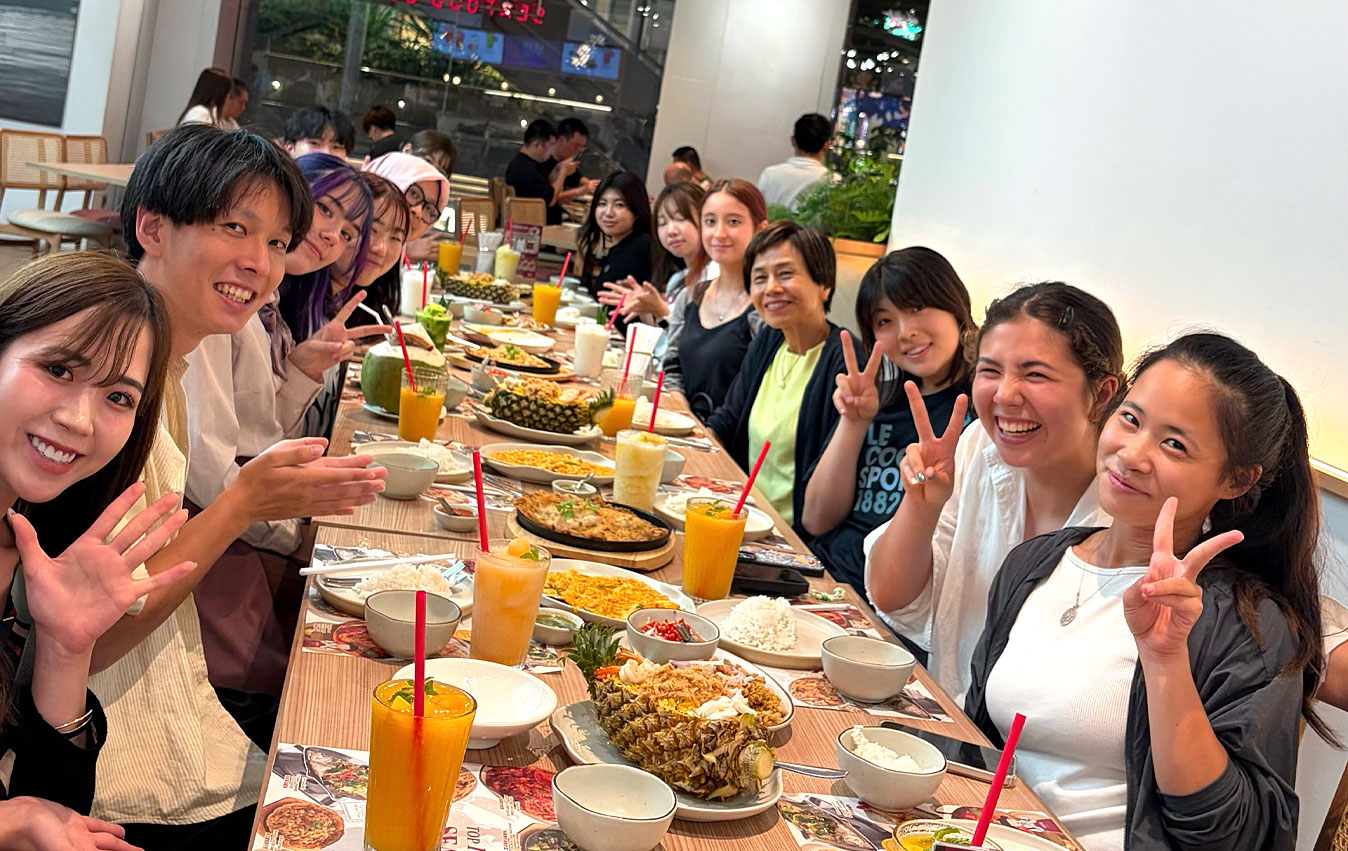
KatherineIt’s so hard to choose! There are so many amazing experiences I had in both the US and Japan that really stand out to me, but if I had to choose one, it would be the Bangkok International Organization Training Program. As someone who is very interested in studying abroad, the idea of doing a study abroad within a study abroad was really fascinating to me (and a little funny). Even though the Bangkok Program wasn’t a typical study abroad in the sense that I was taking classes at a university, I was still able to learn so much throughout my time there and I’ve been left with many unforgettable memories.
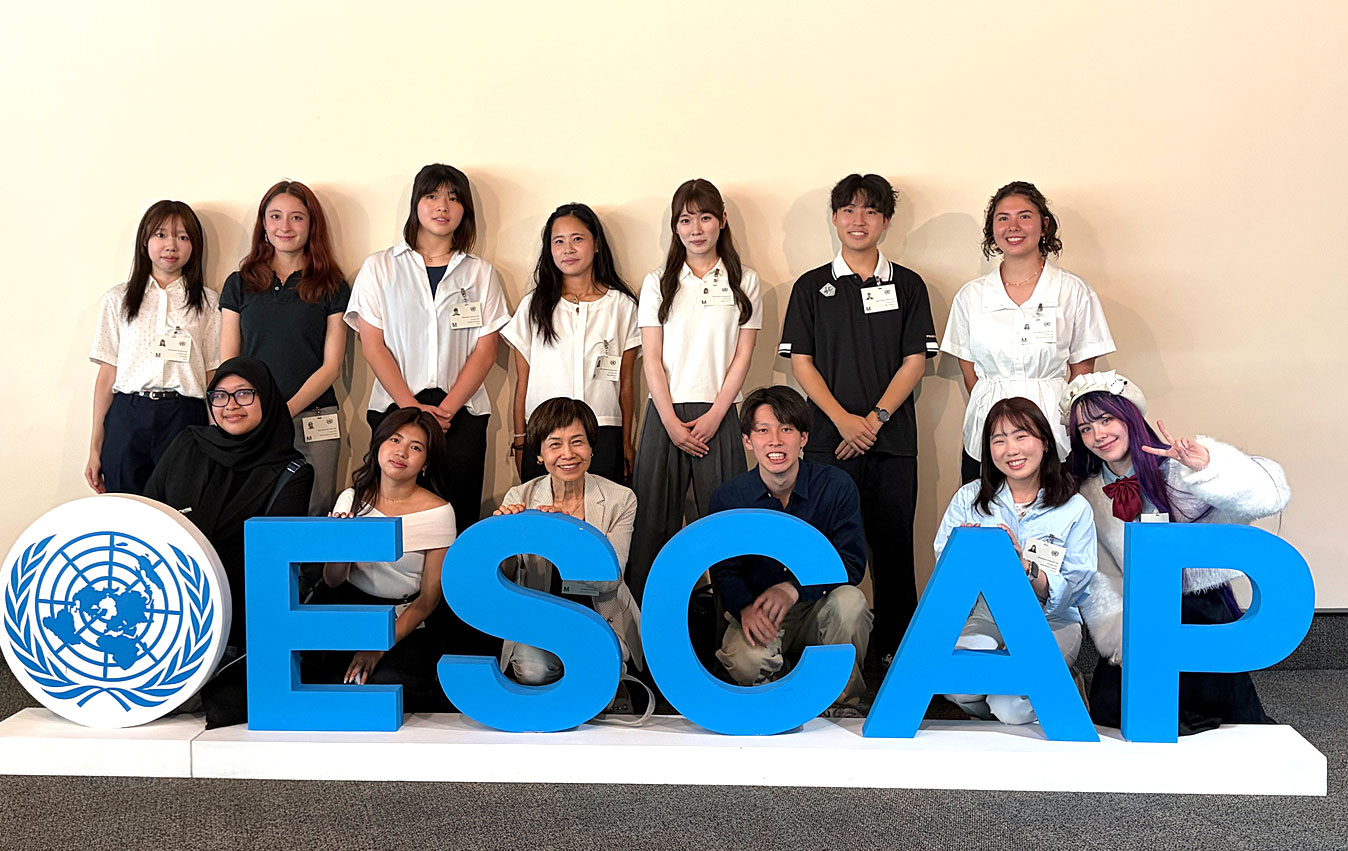
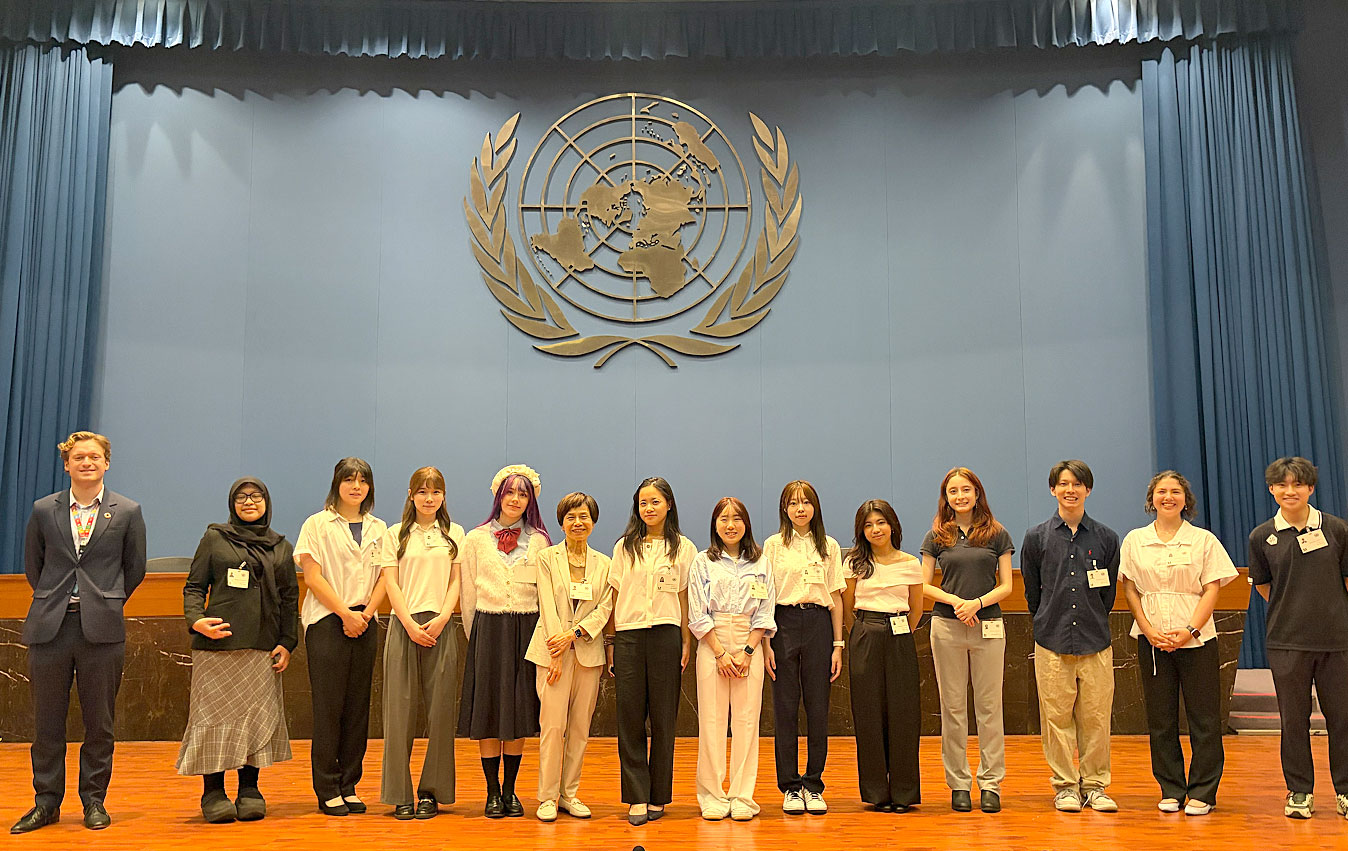
During the trip, we visited various UN buildings, such as ESCAP. Being able to tour the building and speak with the people who worked there was very inspiring. I have already visited the UN building in New York, so before touring ESCAP I thought I knew what to expect, but I was surprised at how different the two places were. ESCAP’s building really reflected Thai culture—everything from the food being sold at the cafeteria to the locally sourced coffee beans from the coffee shop. There were even outdoor seating areas featuring plants and animals native to Thailand. It really showed me how truly multicultural the UN is: they adapt to the local environment and culture, embracing it in their own way instead of pushing a new idea of culture onto the area. I’ll never forget walking through the building throughout the trip and I hope to do so again one day.
Please tell us what motivated you to participate in the 'Bangkok International Organization Training Program'.
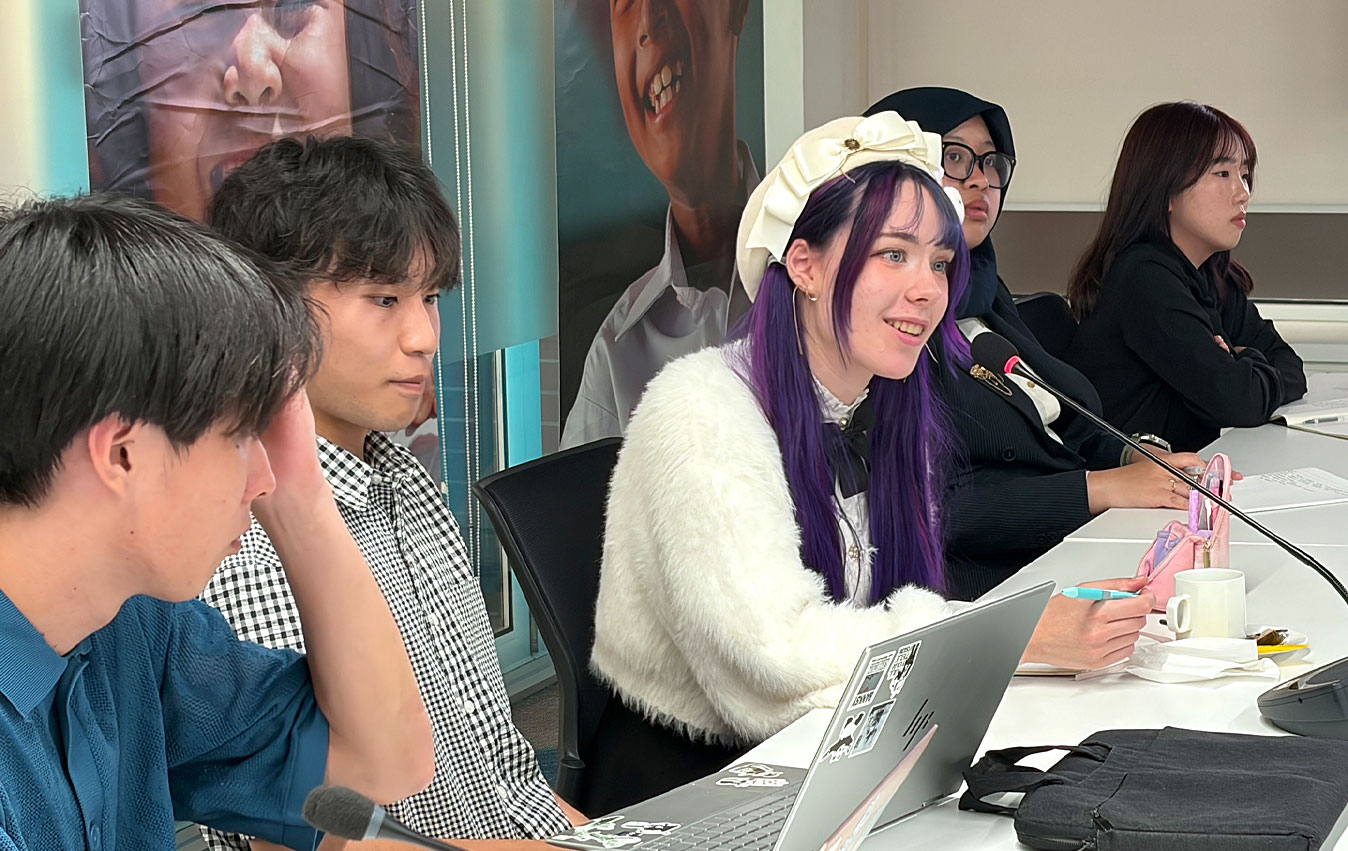
KatherineThere were three main aspects of the program that motivated me to apply: the chance to learn more about my career, being able to travel to Bangkok, and being able to meet students from another university.
The field of International Relations is so broad that it can be very challenging to decide what one wants to do in their future career. One of the options I was juggling in my head was working for the UN. However, when it came to applying for a UN job or building a good resume to work at the UN, I had no idea where to start. I didn’t know if it was something that just seemed cool to me or something that I’d actually be passionate about doing. But, when I heard that the program would give me a chance to speak with current UN staff as well as hiring managers, and be able to see what they do in their day-to-day work, I was extremely interested. First-hand experience is so valuable to me when it comes to deciding my career, but it’s very rare to get that opportunity. When I saw it in this program, I knew I had to apply.
In addition, I was very interested in traveling to Bangkok as I have never been there before. I’m interested in studying abroad because I love experiencing new cultures, and Thai culture is something I have seen before but am not familiar with. Being able to try the food, see the historical sites, and listen to the language was very appealing to me, further motivating me to apply. I was not very familiar with Bangkok, Thailand, or Southeast Asia before this program and wanted to learn more about the region.
And finally, I was interested in one activity of the program where we would be visiting Chulalongkorn University and meeting some of their students. We would be able to learn about university life in Thailand and also have the opportunity to make new friends. For me, this seemed like such a valuable experience I was interested in participating in because learning about a culture from people the same age and occupation as you is a much more personal experience. I was interested in hearing more about the Chulalongkorn students’ lives, from what they study in their classes to how their school schedules work to what they do in their free time. I love meeting new people, and I was eager to make new friends.
Please tell us about some of the key things or highlights that you took away from the program.
KatherineThe main highlight from the program was the wide variety of activities and places we were able to visit. Not only did we see multiple UN organizations, but we also visited JICA’s Bangkok office and toured Chulalongkorn University with some of their students. While the program is specifically about international organizations, that is more than just the UN. It also includes organizations such as JICA, who work alongside the UN, and universities such as Chulalongkorn and even Ritsumeikan. I was originally expecting to only learn about the UN on this trip, but I actually walked away with a wider depth of knowledge about international organizations than I originally expected.
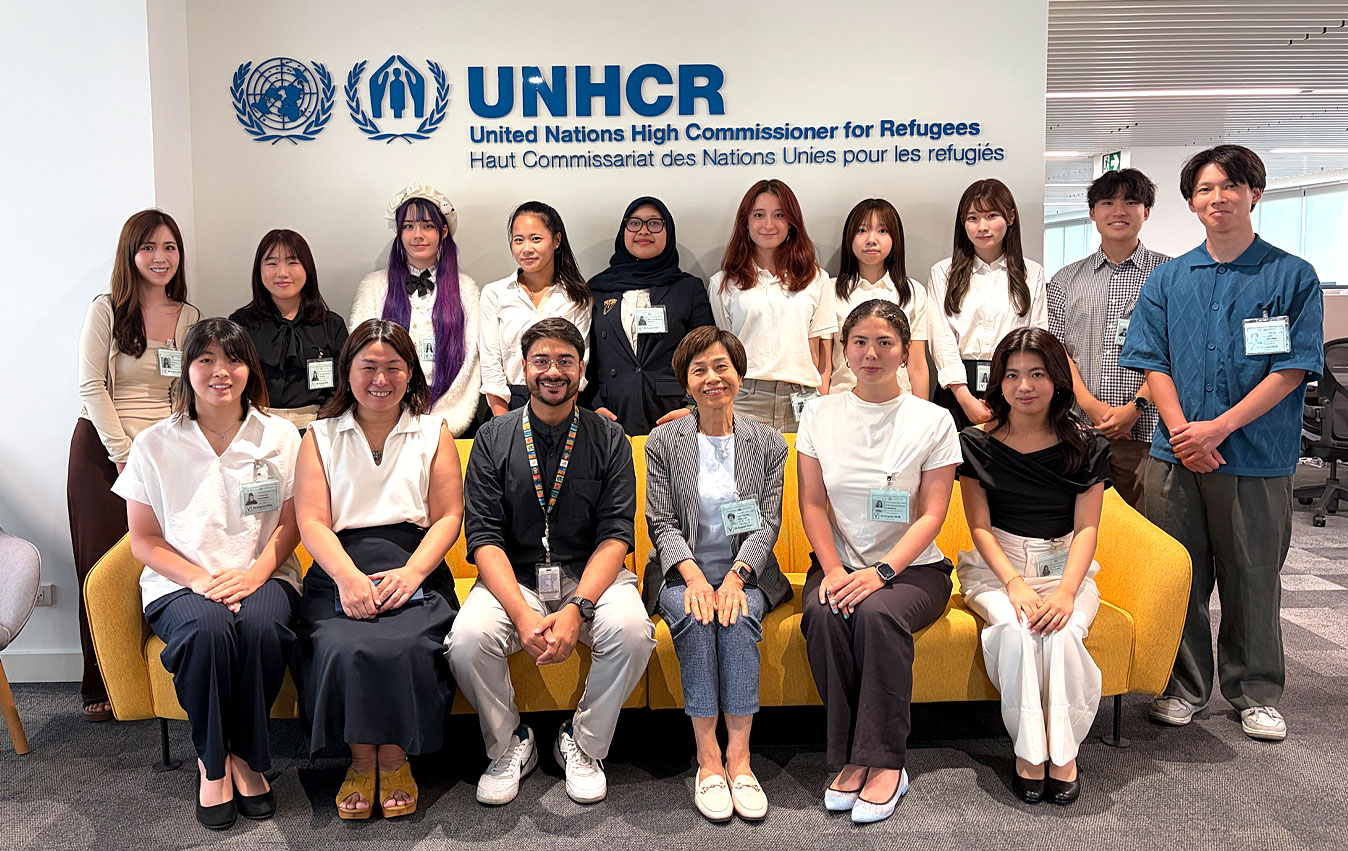
Even within the UN, the specific agencies we visited each covered different areas: we learned about refugees with UNHCR, children and education with UNICEF, science and culture with UNESCO, and leadership and governance with ESCAP. These various organizations highlight the extremely wide variety of work that the UN does. It taught me that there’s no such thing as applying to work “at the UN.” There isn’t really a single, tangible “United Nations” organization to work at. Sure, there’s the main headquarters and assemblies such as the Security Council, but even they are one part of a larger idea. This trip taught me that the UN is only made real by all the moving parts and people working together.
Although they all focus on different areas, they work toward one shared goal: the 17 Sustainable Development Goals (SDGs). We learned about them and how the UN is working toward them in almost every activity we did throughout the trip, which was yet another highlight from the trip. The SDGs were a uniting force that brought the different UN agencies together. However, they do more than just bring the UN together: they bring everyone together. To prepare for the trip, we did research about the SDGs and how Ritsumeikan University is working to support them. Originally, I thought that Ritsumeikan was a special case and not many other universities worked towards the SDGs. But after seeing Chulalongkorn University and how seriously they took them, I saw it was a uniting factor for everyone.
Could you explain how the experience you gained from this program would connect your future?
KatherineI am interested in working at the UN in the future, so the experience learning about the UN on this trip helps improve my chances of getting a job there in the future. One of the activities we did was attending a lecture from a UN hiring agent, who showed us the many pathways one could take to land them a job at a UN agency. This experience taught me far more than I would have learned sitting in a classroom. Having an actual hiring agent speak to us about the process was not only helpful, but reassuring. When I go through that process one day in the future, I won’t feel as intimidated and will know what to expect.
Also, this program helped narrow down exactly what I want to do within the UN. Originally, I only had a loose idea of where I wanted to be within the UN, but this program helped me decide that I would be most passionate about working at UNESCO. Being able to see the various UN agencies throughout the week allowed me to get a little sample of their work, allowing me to make a much more informed decision about where I want to work in the future.
Please tell us about your career path after graduation and your future goals.
KatherineWhile studying a field as broad as International Relations, for the longest time it was really challenging for me to decide what I wanted to do after graduation. There’s so many different paths to take—Do I go into the working field, or do I continue my education right away? What specific aspect of IR do I want to make my specialty? It was really hard to decide.
It was actually my time in Bangkok during this program where I realized my future career path: pursue my Masters degree and a PhD, and then work for an international organization such as the UN. While the many lectures I attended on this program about how to join the UN were very informative and inspiring, it was Professor Sachiko Ishikawa’s story of her own career path that helped me realize my goals. Professor Ishikawa led us through Bangkok and managed the trip, and one night she told a detailed account of her own career. She earned her Masters and PhD, working for UNHCR and JICA, lived in Bangkok for about 20 years, became a professor at Ritsumeikan University, and also got married and started a family. I originally believed that working at the UN required dedicating one’s entire career and was the ultimate “end goal.” But Professor Ishikawa’s story showed me how many things you can accomplish in your career alongside the UN—There’s no path that is more “correct” than another, and you don’t have to dedicate your entire career to working at the UN or other international organizations. It’s good to have multiple goals you can accomplish throughout your life instead of throwing “all your eggs in one basket.”
So when planning my future, I kept this in mind. Because I really love school and learning, I plan to pursue my Master’s degree right after undergrad and then obtain a PhD. I would love to study areas such as global governance or intelligence, with a regional focus in Eastern Europe. Afterwards, I plan to apply for the UN’s various training programs, such as their internships, Junior Professional Officer Program, or Youth Professionals Program. I plan to continue volunteering around the world, perhaps with other international organizations before applying for a job at UNESCO. Some of my long-term goals include publishing a book, becoming a professor and teaching undergraduate students such as myself, as well as traveling around the world. With a long career ahead of me, I am confident that I will accomplish many things.
September 2026
MORE INTERVIEWS
-
How a Bangkok International Organization Training Program Expanded My Vision of Working at the United Nations and Opened New Pathways for a Future Global Career
CARROLL Katherine Lorraine
Third-year student, Joint Degree Program (AU-home)2026.9.30
studentlife|academics|jdp|
-
From Peace Studies to Diplomacy: How Experiences at Ritsumeikan Opened Doors to UNITAR and a Future in International Affairs
BRAGGER Lillybel Julitta
Third-year Global Studies Major / International Student from Switzerland2026.9.7
studentlife|academics|studyabroad|gs_major|
-
Taking Every Opportunity: How a Semester in Korea Expanded My Horizons and Inspired My Journey Toward Research and Global Understanding
OZGONUL Ruzgar Cinar
Second-year Global Studies Major / International Student from Türkiye2026.8.26
academics|international|gs_major|
-
Studying in Japan Taught Me to Look Beyond First Impressions and Understand the World from Diverse Perspectives
ARIAS Coralie De Jesus
Second-year Joint Degree Program (AU-home)2026.8.21
academics|jdp|
-
From Theory to Practice: Exploring International Relations through Global Simulation Gaming at Ritsumeikan University
SIHITE Muhammad Elian
Third-year Global Studies Major / International Student from Indonesia2026.7.3
academics|international|gs_major|
-
Pursuing International Justice Across Borders: Academic Growth, Moot Court Experience, and Future Legal Aspirations
Thet Htar San
Fourth-year Global Studies Major / International Student from Myanmar2026.6.12
studentlife|gs_major|