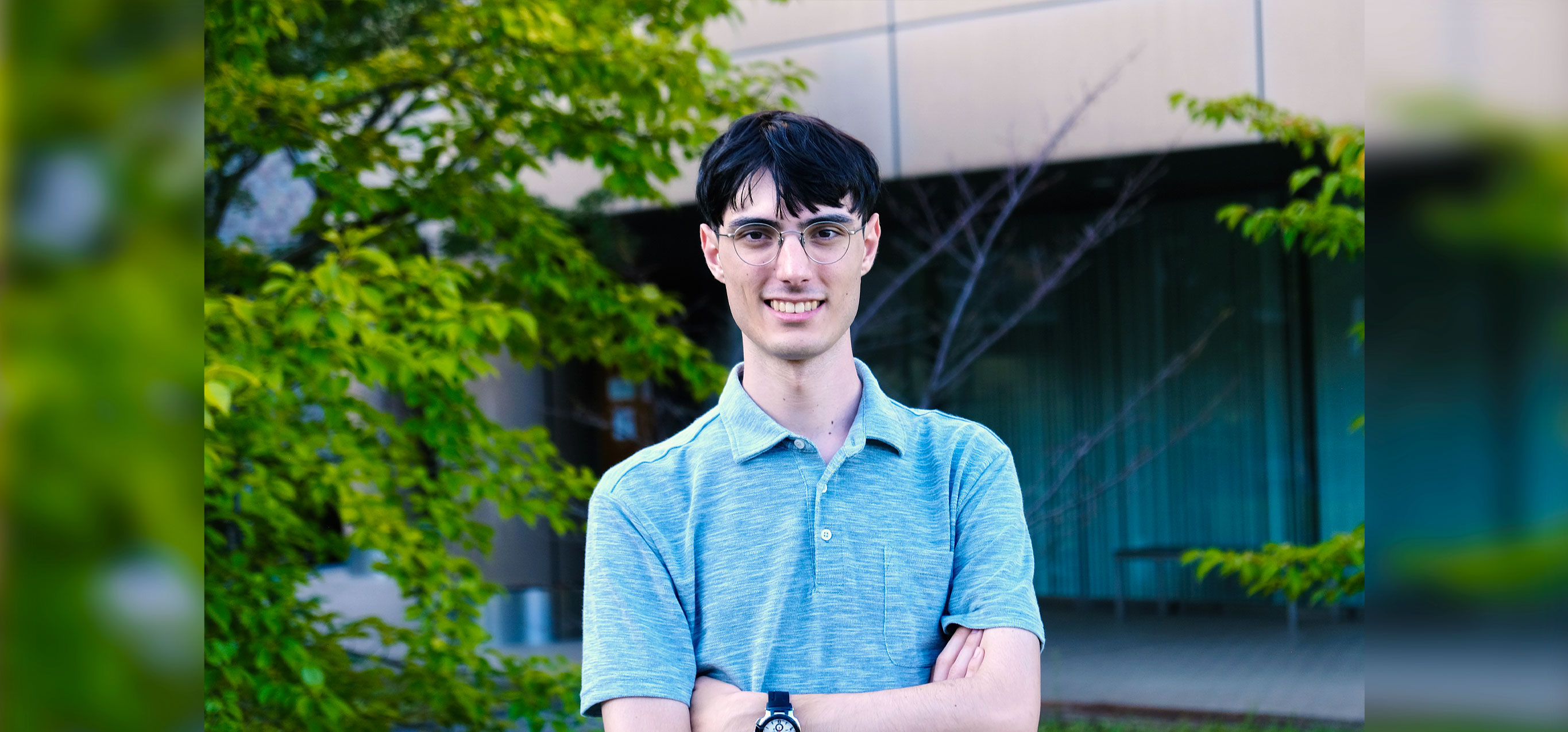
From Global Simulation Gaming to Peace Studies and Research: How Experiences at Ritsumeikan Broadened My Perspectives and Deepened My Connection with Japan
Lorenzo Russo
Third-year Global Studies Major/ International student from Switzerland
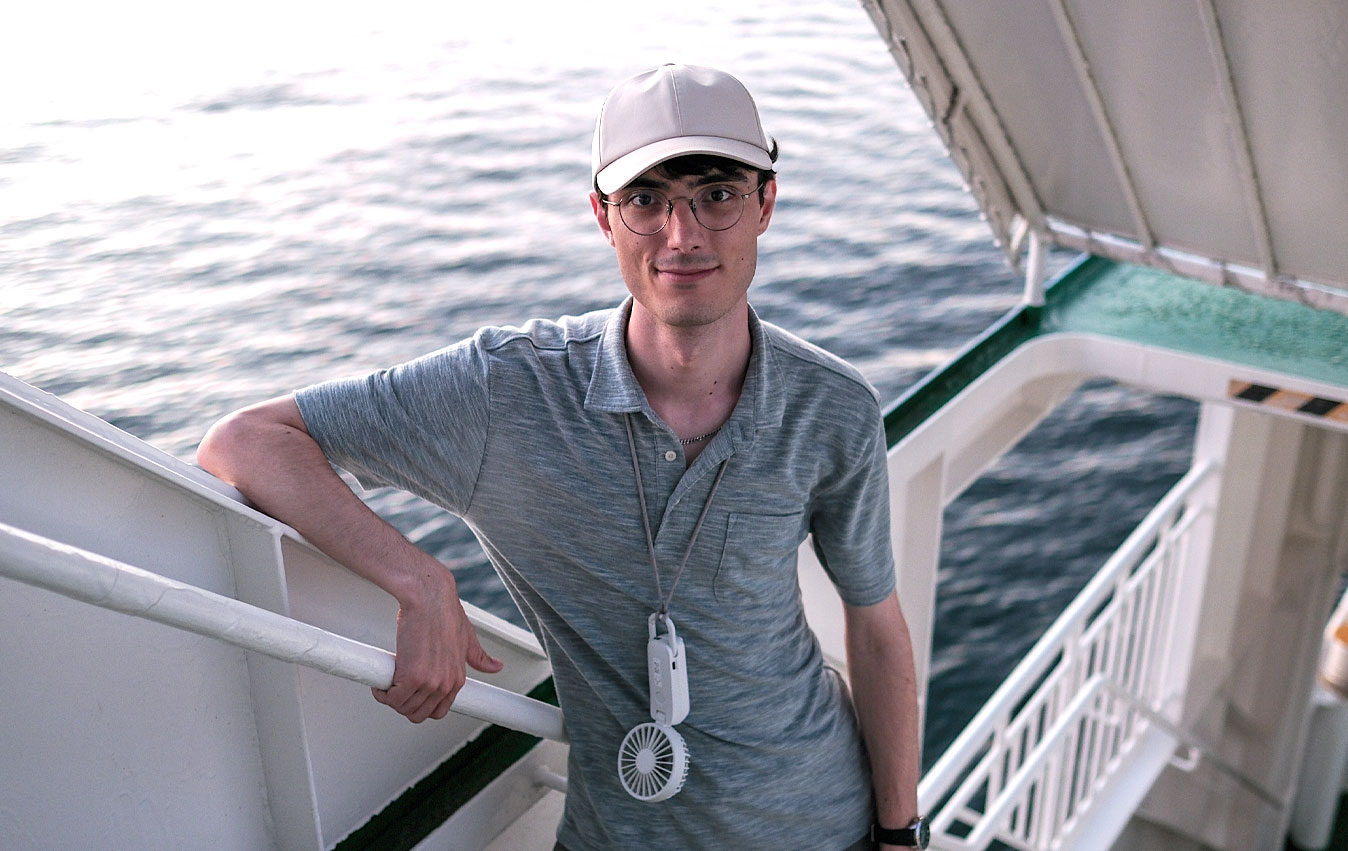
We interviewed Lorenzo Russo, a Global Studies student in the College of International Relations, about how his experiences in international negotiation simulations, peace studies and fieldwork in Hiroshima, and research assistance have shaped his academic interests in history, economics, migration, culture, and global political and economic systems—as well as his aspirations to maintain a long-term connection with Japan through further study or work.
What attracted you to apply to the College of International Relations at Ritsumeikan University, and what motivated you to study Global Studies?
LorenzoIn short, I had two main reasons: I wanted to continue living in Japan, and I wanted to find a programme that aligns with my interests and qualifications. The journey that led me to the College of International Relations at Ritsumeikan University can be traced all the way back to 2018, when I made my first trip to Japan with some of my friends. I had lived my whole life in Switzerland, and this was the first time I had gone abroad with only my friends, so I was very excited. That trip left a deep impression on me. Before then, I had mostly experienced Japan through media such as anime and manga, as well as regional Japanese cultural events. But visiting the country itself sparked a deeper interest, which led me to study Japanese more seriously. After studying independently on and off and taking lessons with a private tutor, I eventually made a long-anticipated study trip to Japan. I lived in Osaka and studied Japanese at a language school. However, due to my commitments back in Switzerland, I had to limit my time at the language school to six months from the outset.
This experience made it clear to me that I wanted to continue living in Japan, particularly in the Kansai region, which I had come to know and love. I also wanted to obtain an internationally recognised bachelor’s degree. For these reasons, I found Ritsumeikan University to be one of the few universities that met my criteria and for which I was eligible to apply. I chose Ritsumeikan University not only for its geographical location in Japan and its good reputation in the region, but also because of the Global Studies Major curriculum and diverse student body.
The Global Studies Major stood out to me for its broad social sciences curriculum. In my prior education, I always enjoyed engaging with history, and I wanted to understand more about how global political and economic systems work, which is why the major seemed fitting to me. What especially stood out to me was the Global Simulation Gaming course (GSG) offered by the major. In this course, students take on the roles of government and non-governmental representatives and negotiate at both bilateral and multilateral levels. They also attend conferences modelled on those of the United Nations, the OSCE, and other international forums, all of which are initiated and led by the students themselves. This seemed unique compared to other undergraduate majors, which is why I chose the Global Studies Major out of the majors offered.
What fields or areas are you interested in studying?
LorenzoI have a wide range of academic interests. While already interested in history and economics, I also got to explore subjects related to culture, migration, media, communication, citizenship, and even the natural sciences. This has allowed me to explore various fields of social science offered at this university. I remember conducting primary and secondary research in my first year on whether foreign nationals and international students feel a sense of belonging in Japan. This research culminated in a paper I wrote for the introductory seminar, which was one of the selected papers published in a booklet given to newly enrolled students. However, I have not settled on a research topic yet; I may explore a different subject or develop this one further for my future studies or bachelor’s thesis.
Please tell us about the activity you found most fulfilling, or the experience that left the strongest impression on you during your student life at Ritsumeikan.
LorenzoThe experiences that have impressed me most have involved pursuing opportunities outside the standard curriculum, whether they were offered by the university or discovered independently. These included the Peace Studies Seminar, which involved fieldwork in Hiroshima City, and the opportunity to travel to Hiroshima through the YLF Programme. The programme was organised by the United Nations Office for Disarmament Affairs (UNODA) in cooperation with UNITAR and supported by the Japanese government.
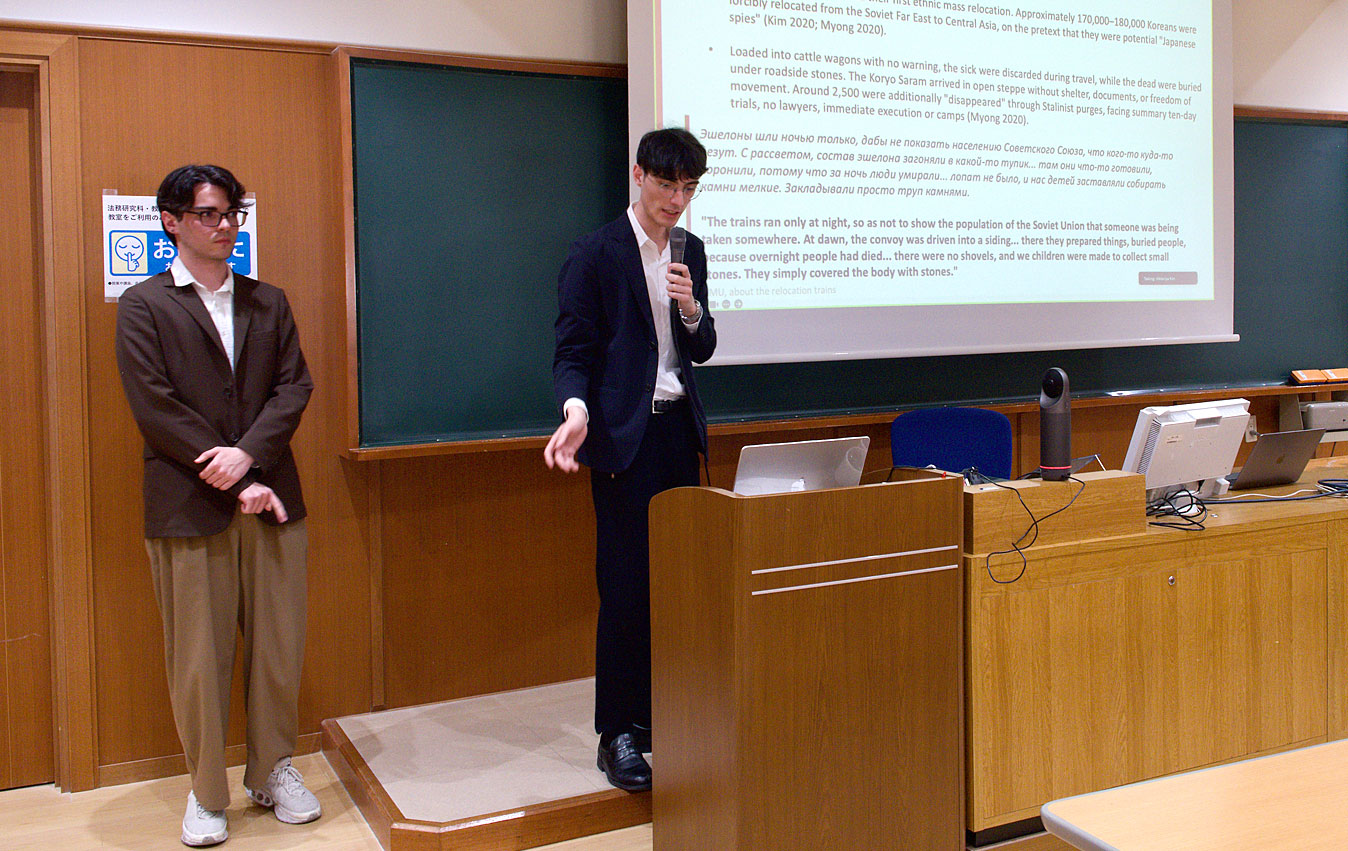
LorenzoBeing hired as a research assistant also gave me a valuable opportunity to experience the university from a faculty perspective. In this role, I actively contributed to research and to the documentation of international symposiums, including the symposium “Entangled Lives: Roots, Borders, and Inter-Ethnic Relationships in Eurasia,” held at Ritsumeikan University’s Suzaku Campus in March 2026.
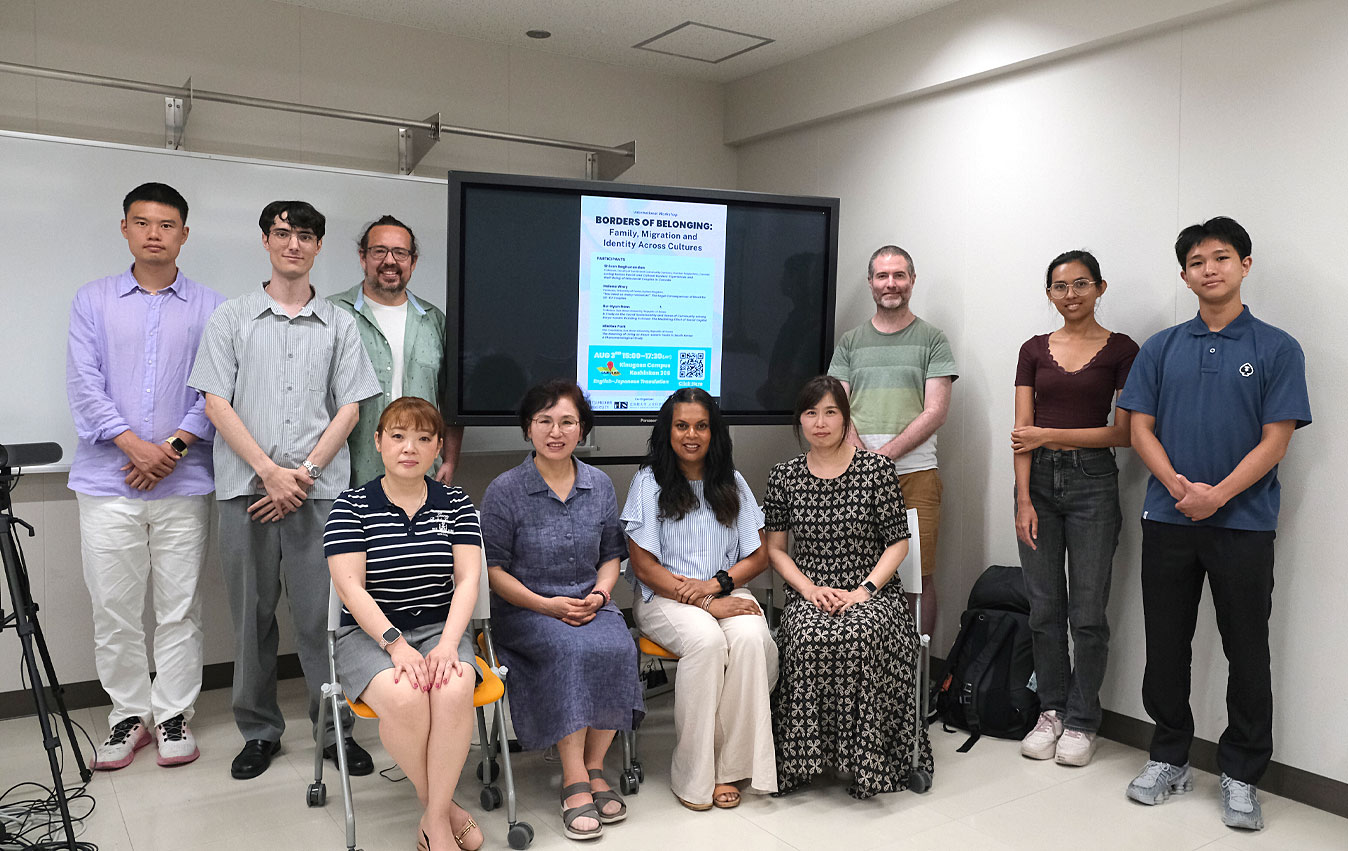
In August, I also had the opportunity to assist with another international symposium, “Borders of Belonging: Family, Migration and Identity Across Cultures,” where I was responsible for photographing and filming the event.
How did you find the “Global Simulation Gaming” course, in which all students in your year took part in a mock international negotiation? What role did you play in the simulation, and what insights or lessons did you gain from the experience?
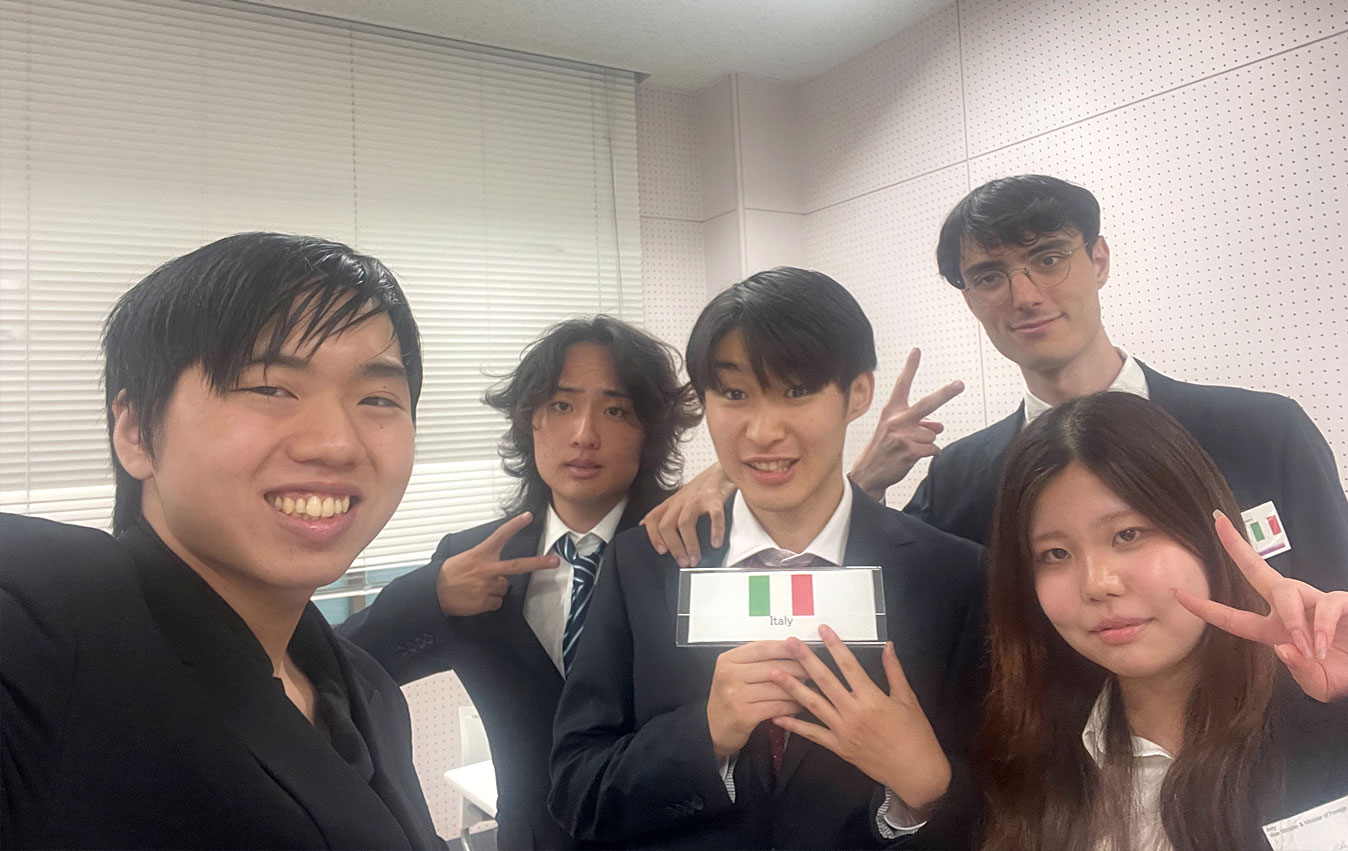
LorenzoAlthough it involved quite a lot of work, the Global Simulation Gaming (GSG) was one of the courses I looked forward to experiencing. I represented the Italian President of the Council of Ministers during the simulation, commonly referred to as the Prime Minister of Italy. This naturally placed me in a leadership role within my five-person team.
While preparing for the GSG day, we learned a lot not only about the countries, organisations, and roles we represented, but also about teamwork. In my case, I had to determine how best to lead each team member, as everyone had a different level of initiative in carrying out the tasks we had been assigned. I also learned the importance of trusting my team members. This became particularly clear on the day of the GSG, when the foreign minister on my team agreed to conclude a multilateral agreement that I had initially planned to conclude myself. This reduced the pressure on me and allowed me to monitor the other events taking place during the simulation.
In your student life so far, how do you feel you have grown, what skills have you obtained, and what do you think you have learned?
LorenzoWhat I have learned most is how to study, work, express myself, and thrive in a university environment that is fundamentally different from the one I came from, especially culturally and linguistically. At Ritsumeikan University, I study mainly in English, which I speak fluently but not as a native language. The university itself operates mainly in Japanese, a language I still have much to learn and understand. This combination, together with the university’s diverse student body of domestic and international students, has taught me how to grow, learn, and adapt to a unique environment. I have also appreciated the fact that the effort I put into different aspects of student life has been recognised and rewarded in various ways. Proactively engaging in classes, coursework, and interactions with others has led to valuable connections, part-time research positions, scholarships, and even tuition reductions. These experiences motivate me to continue investing in the academic fields and personal connections that are meaningful to me.
What are your plans after graduation? What made you pursue them?
LorenzoI am still open to different possibilities regarding what I will do after graduation, and I want to be prepared for a range of outcomes. However, one thing I am certain about is that I want to maintain a connection with Japan. I may do this by continuing my studies in a master’s programme, finding work in Japan, or establishing another form of long-term connection with the country.
Studying at a Japanese university has been part of my dream of establishing a life in Japan. Being enrolled at Ritsumeikan University has shown me several possible paths I could take after graduation, and I look forward to exploring them further and ultimately deciding what is best for me and my future.
November 2026
MORE INTERVIEWS
-
From Global Simulation Gaming to Peace Studies and Research: How Experiences at Ritsumeikan Broadened My Perspectives and Deepened My Connection with Japan
Lorenzo Russo
Third-year Global Studies Major/ International student from Switzerland2026.11.12
studentlife|academics|gs_major|
-
How Studying Global Issues and Engaging with Diverse Communities Expanded My Understanding of Identity and Opened New Pathways toward Research and Education
Abby Liang
Second-year International Relations Major / International Student2026.10.22
studentlife|academics|ir_major|
-
How a Bangkok International Organization Training Program Expanded My Vision of Working at the United Nations and Opened New Pathways for a Future Global Career
CARROLL Katherine Lorraine
Third-year student, Joint Degree Program (AU-home)2026.9.30
studentlife|academics|jdp|
-
From Peace Studies to Diplomacy: How Experiences at Ritsumeikan Opened Doors to UNITAR and a Future in International Affairs
BRAGGER Lillybel Julitta
Third-year Global Studies Major / International Student from Switzerland2026.9.7
studentlife|academics|studyabroad|gs_major|
-
Taking Every Opportunity: How a Semester in Korea Expanded My Horizons and Inspired My Journey Toward Research and Global Understanding
OZGONUL Ruzgar Cinar
Second-year Global Studies Major / International Student from Türkiye2026.8.26
academics|international|gs_major|
-
Studying in Japan Taught Me to Look Beyond First Impressions and Understand the World from Diverse Perspectives
ARIAS Coralie De Jesus
Second-year Joint Degree Program (AU-home)2026.8.21
academics|jdp|