


School Introduction Founding Spirit / Educational Philosophy
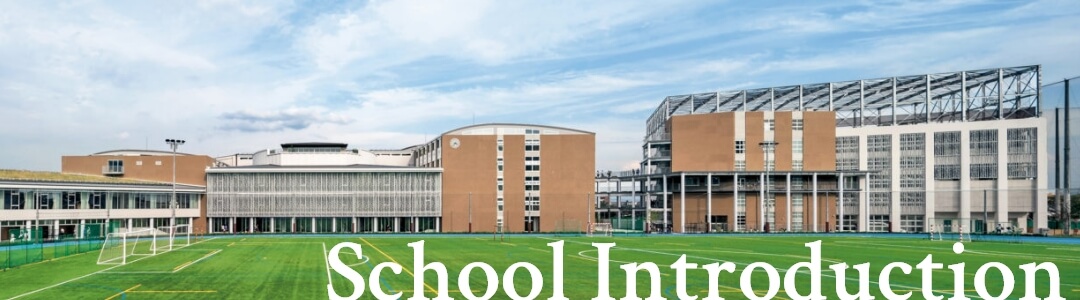
Creating education that maximizes the individuality and abilities of students who will live in the new 21st century
The Ritsumeikan Academy places the educational philosophy of peace and democracy at the center of its integrated primary, junior high, high school, and university education, faithful to the spirit of the Japanese Constitution and the Education Fundamental Law. We believe that true education and research aimed at social progress and the welfare of mankind can only be achieved in a peaceful and democratic society.
Education must be conducted with respect to the personality of each student, aiming for their healthy development. We believe that education is based on trusting in the abilities that students already possess and have the potential to possess, and on trusting in their independence to improve themselves in the face of difficulties. We will continue to take on the challenge of creating education that maximizes the individuality and abilities of students living in the new 21st century, while keeping alive the school's founding spirit and educational philosophy while adhering to the Ritsumeikan Charter.
THE RITSUMEIKAN CHARTER
Ritsumeikan traces its roots to Kinmochi Saionji’s private academy of the same name. It was officially founded in 1900 by Kojuro Nakagawa as the Kyoto Hosei Gakko (Kyoto School of Law and Politics), later taking on the name "Ritsumeikan." The name is derived from a passage in the Jinxin chapter of the Discourses of Mencius and means " a place to establish one’s destiny through cultivating one’s mind." We who gather at Ritsumeikan uphold our founding spirit of "Freedom and Innovation" and embrace "Peace and Democracy" as our educational philosophy.
Ritsumeikan, in light of the painful experiences of World War II and sincerely looking back on history, rejects war and violence, advances democratic academy governance, and continues to pursue the ideal of peace. Ritsumeikan will continuously pursue internationalization, and as a comprehensive private academic institution, we will strive to contribute to society through the freedom to pursue new endeavors and creativity with the participation of students at every level of education, faculty, and staff as well as the support of alums, guardians, and all those involved with the academy.
Ritsumeikan respects diversity. We value the dignity that everyone equally possesses, and we honor the emergent potential that resides within every individual. While being rooted in local communities, we collaborate with a wide range of actors inside and outside of the academy as we strive for self-growth and the realization of an inclusive society through diverse activities such as research, education, culture, art, and sports.
Ritsumeikan, founded on the freedom of academic inquiry and research, will pave the way to the future. Upholding the principles of autonomy, democracy, fairness, transparency, and non-violence, we will boldly take on the challenge of intellectual creation that will bring about new values of harmonious coexistence to be shared far and wide. We will carry on the spirit of "believe in the future and live for the future," and, inscribing in our minds that our respective research and educational activities as both a research university and an inquiry-driven academy will shape the world of the future, we will devote ourselves to the creation of a sustainable society and the realization of world peace.
The Ritsumeikan Trust
Established July 21, 2006
Revised March 27, 2026
Founding Spirit
Ritsumeikan Junior and Senior High School was founded in September 1905 (Meiji 38) as Seiwa Regular School. The school was located across from the Seiwa-in Gate of the Kyoto Imperial Palace, so it was named "Seiwa" after the gate. Later, in 1913, with the establishment of the Ritsumeikan Academy, the name was changed to Ritsumeikan Junior High School, a name that has continued to the present day.
Kojuro Nakagawa, the founder of Ritsumeikan University, established Kyoto Hosei School, an evening law school that was open to working people, in 1900. Five years later, in 1905, he opened an affiliated school based on the idea of "a secondary school that nurtures students without formal constraints in a relaxed manner.”
Kojuro Nakagawa was a secretary to Prince Kinmochi Saionji, who served as prime minister twice. Kinmochi Saionji studied abroad in France at a young age and acquired a liberal spirit and an international outlook. After returning to Japan, he opened a private school, which he called Ritsumeikan, in his home in the Kyoto Imperial Palace to nurture young men with enterprising spirit. Kojuro Nakagawa inherited the name of "Ritsumeikan" and its spirit of freedom and innovation from Prince Saionji and made it the cornerstone of today's Ritsumeikan.
After World War II, with Hiroshi Suekawa as president, Ritsumeikan established a democratic system and characteristics of the academy based on a new academic philosophy of peace and democracy on top of the academic culture of freedom and innovation. Today, Ritsumeikan Academy is one of Japan’s leading educational institutions, consisting of two universities, four affiliated senior high schools, four junior high schools and one affiliated primary school with approximately 40,000 students.
In 2005, Ritsumeikan Junior and Senior High School celebrated its 100th anniversary. On the occasion of the 100th anniversary, the Ritsumeikan Primary School opened in April 2006. This marked the completion of an integrated education system from primary education to higher education, leading to our school playing an even greater role as a core school in Ritsumeikan Academy.
We at Ritsumeikan Junior and Senior High School are determined to continue as a school with a spirt of freedom and innovation while also continuing to take on new challenges and being keenly aware of what is required in the future.