TOPICS
TOPICS
2023.07.14

GSG is a course in which all students take on the role of a real actor in the international community, such as a state, international organization, CSO, business, or media, and experience simulated international negotiations to solve actual international problems through a series of processes including problem setting, policy making, negotiations, and policy implementation.


According to the student's surveys, there were comments such as, ‘I was able to think carefully about how to proceed with the negotiations in order to convince the other countries and international organizations to reach an agreement.’
‘I am glad that we were able to conclude various treaties on what we have been trying to do in preparation for the actual negotiations.’
‘We could not always predict what would happen with which actors (especially during the actual event), but we were able to do what we could to prepare to the best of our ability and to be flexible in our responses.’


The event left students with a great sense of achievement while experiencing and understanding the difficulties of the conflict of interests and forming agreements.


more
Global Simulation Gaming Event Day
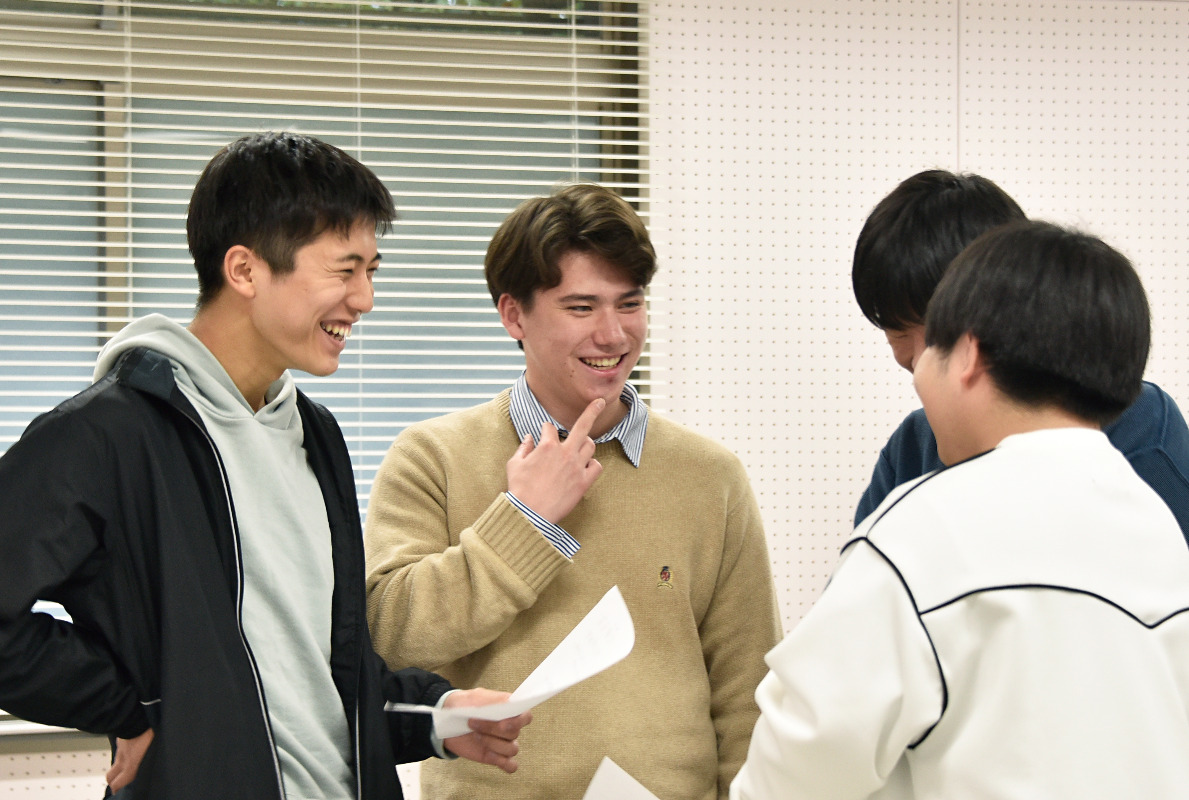
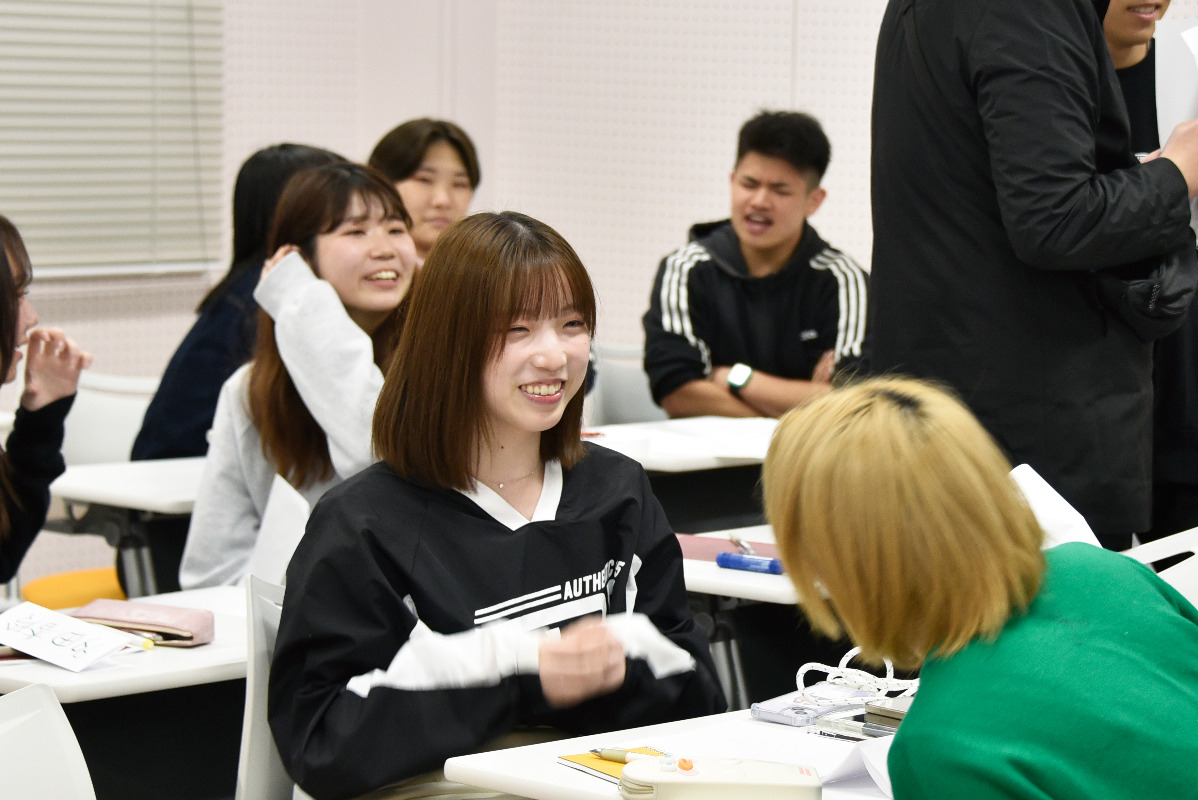
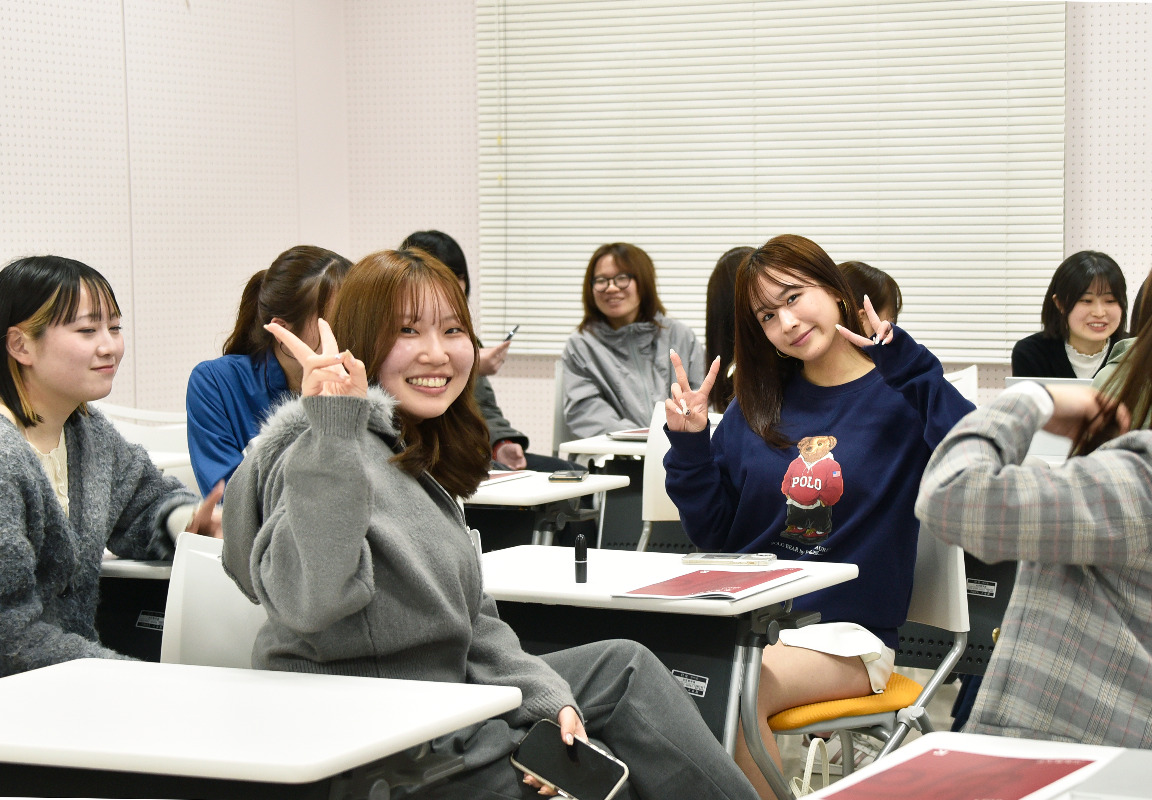
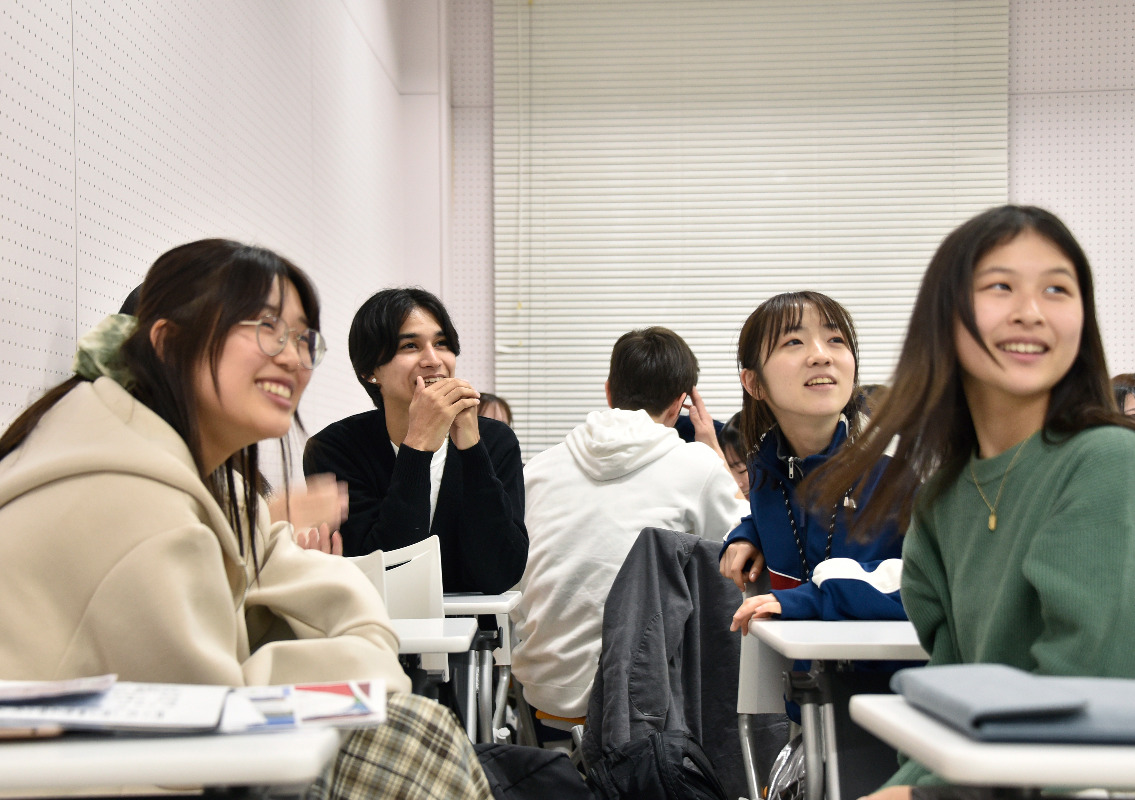
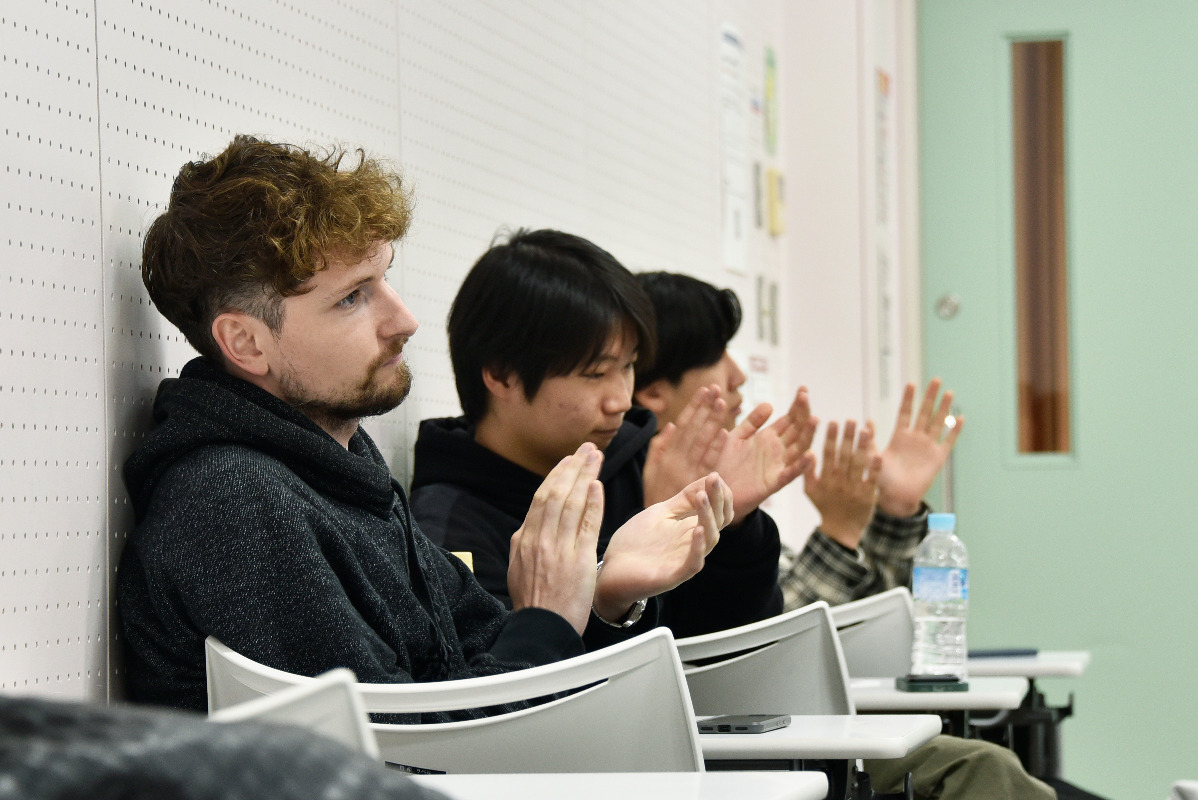
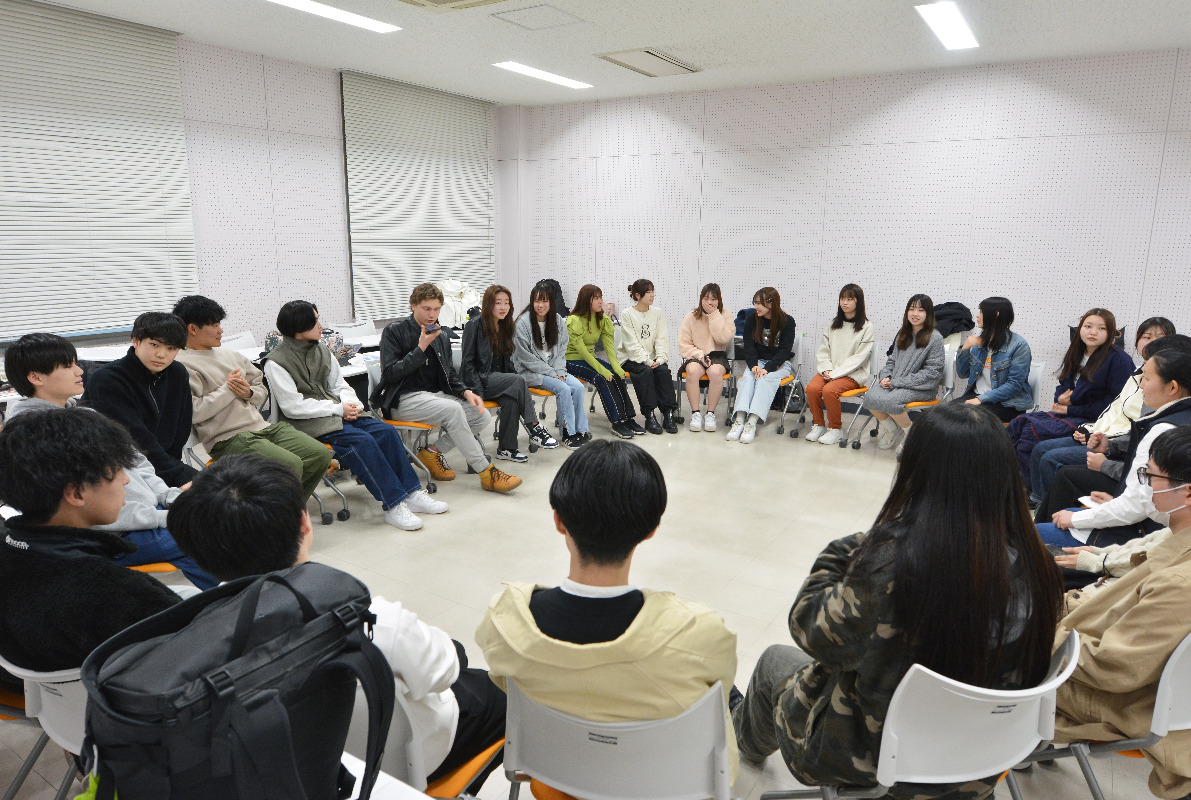
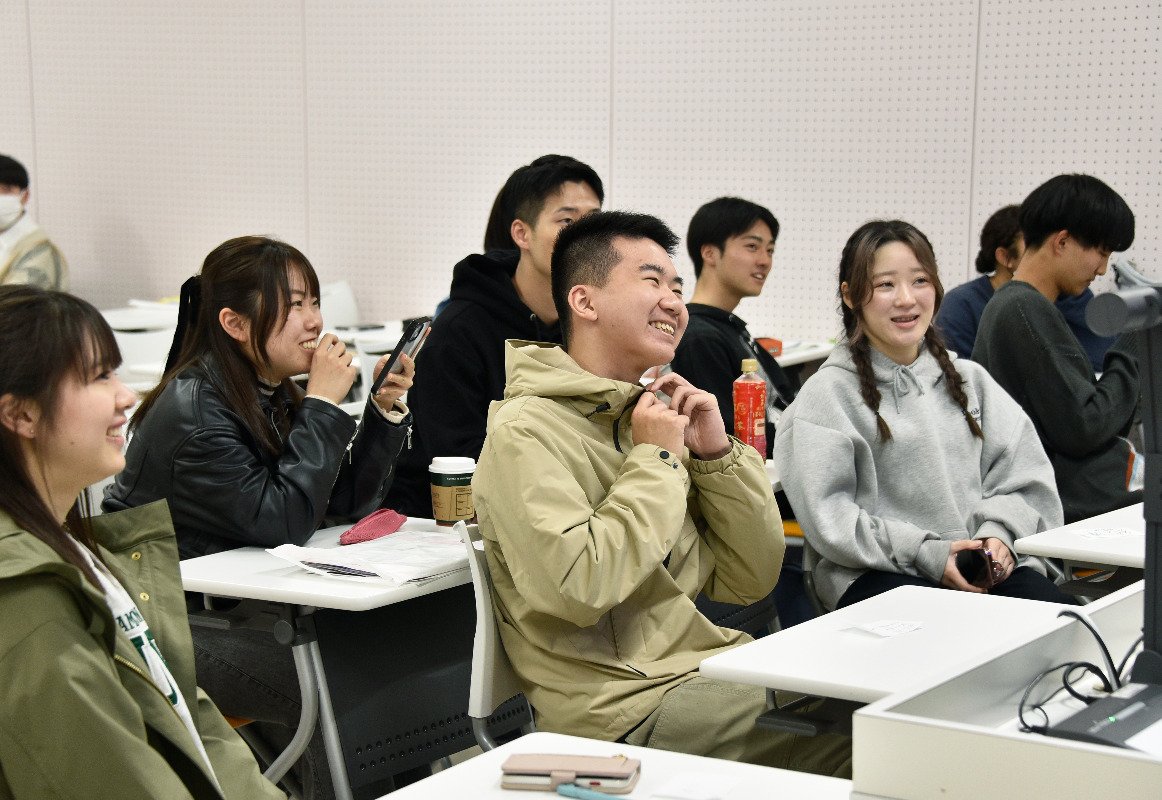
On Saturday, July 1st, the College of International Relations held "the Global Simulation Gaming (GSG) ", one of the main events of the spring semester for second-year students.
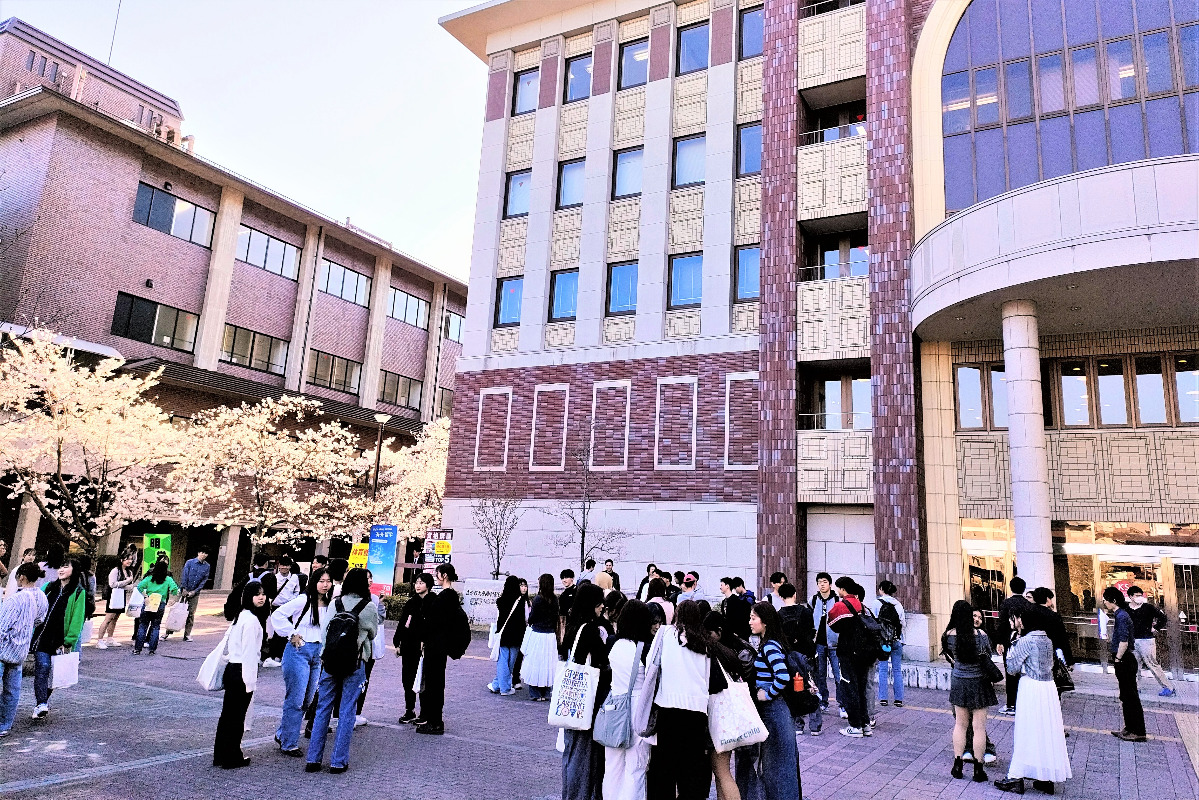
For the past several years, the event has been held in a hybrid format of online and face-to-face sessions, but this year, for the first time in four years, the event was held only face-to-face. Approximately 340 students came together to engage in GSG activities.
(Movie)
This year, the theme was [International Poverty and Sustainable Development].
In preparation for the event, students have been studying in advance from April to June in a combination of class-by-class and student-wide classes.
‘I am glad that we were able to conclude various treaties on what we have been trying to do in preparation for the actual negotiations.’
‘We could not always predict what would happen with which actors (especially during the actual event), but we were able to do what we could to prepare to the best of our ability and to be flexible in our responses.’
2023.6.27
more
Report on the guest lecture (Dr.Aliise Donnere, Lecturer Tohoku Gakuin University.)
The lecture delivered by Dr. Donnere offered a concise historical overview of Buddhism,
accompanied by an analysis of the role and status of women within this religious tradition.
The lecture further introduced various schools of Buddhism prevalent in Japan, delving into the practices of Buddhist monks and the corresponding position of nuns within the religious framework. Additionally, notable transformations enabling monks to enter into the institution of marriage
were also highlighted and discussed. In the concluding segment of the lecture, Dr. Donnere presented a series of in-depth case studies that she meticulously compiled over a span of more than a decade.
These case studies shed light on the multifaceted roles assumed by monks' wives within temple settings, exploring the complexities of their relationships with worshippers, local communities, and the gender perceptions. By delving into these nuanced examples, Dr. Donnere provided valuable insights into the intricate interplay between societal expectations, religious practices, and the lived experiences of individuals involved in Buddhist communities.
Students found the lecture on women in Buddhism to be very informative and thought-provoking.
In their comments, they appreciated learning about the history and culture of Buddhism in Japan,
including the challenges faced by nuns and temple wives. The lecture sparked their curiosity about gender roles in other countries and religions, prompting them to question the relationship between religion and gender inequality.
They also gained insights into the diversity within Buddhism, such as the different perspectives on marriage and the roles of women in temple affairs. Overall, the lecture expanded students’ understanding of Buddhism and inspired them to challenge gender inequalities in religious contexts.
2023.5.30


more
Report on the guest lecture (Ms. Chino Keiko,a journalist and visiting editorial writer for the Sankei newspaper)
Today, Ms. Chino Keiko, a journalist and visiting editorial writer for the Sankei newspaper, visited Ritsumeikan University.
She is also the author of numerous monographs, including 'Journalist of Edo - Katsushika Hokusai'
(designated as the assigned book). Ms. Chino shared her passion for writing, which she has had since childhood, and spoke about the joy of expressing herself through writing.
She also recounted her experiences as a correspondent for a newspaper, where she had the opportunity to visit numerous countries such as Indonesia, Cuba, Nicaragua, the Philippines, and Peru, and interview the presidents of those countries. She accompanied her stories with photographs taken during those memorable days.
When interviewing President Ortega of Nicaragua, she made an appointment through his secretary, but after waiting and waiting, she could not see the President, so she and her photographer accompanied him every day on his presidential campaign and in his car.
When President Ortega finally noticed that the two Japanese ladies were constantly following him on his campaign trail, he asked them directly, "What are you doing?" Seizing the opportunity, Ms. Chino told him, "I'm here to interview you!" and he gladly accepted the interview.
Ms. Chino advised the students that the only way to become a good writer is to write and write anyway (there is no other royal road), and that it is important to set a deadline and concentrate on writing. Students were also talking to Ms. Chino themselves during the break time, chatting and interacting with her. This, the workshop was a meaningful and wonderful.
2023.5.23

more
Report on the guest lecture (Ms. Emi Wakita, Kaihatsu Management Consulting, Inc.)
Today, we invited Ms Emi Wakita from Kaihatsu Management Consulting, Inc. to talk about the consultancy profession, which is of great interest to students. Ms Wakita had just returned from business trips to Thailand and Senegal, but kindly agreed to an online interview with the students.
First, Mr Wakita gave a basic explanation of Japanese ODA.
She then talked about what consultants actually do, explaining to the students that Ms. Wakita
herself is currently mainly working on projects commissioned by JICA, and that she often travels overseas to monitor the progress of these projects.
She also shared with the students the real joy of her job, which is to advise on improvement measures through local monitoring and take the project to the next stage.
The students asked questions about what is particularly required of a consultant, how to prepare all required skills, and received specific advice from Ms. Wakita.
Ms. Wakita spoke about her background in becoming a consultant,
telling that her interest in tourism and culture led her to study at postgraduate level in France,
where she obtained her degree in French.
This enabled her to work in French-speaking parts of the African continent,
such as Senegal, and the students seemed to have learnt that the consultancy profession offers
a wider range of options. The students also learnt that it is possible not only to work as an individual
consultant, but also to set up a company in collaboration with other consultants,
depending on one's ability. The workshop was a dream-expanding experience for the students.
2023.05.12
Career Events "How To Launch Global Careers?-The Future of Jobs, Skills, and Professional Life in International Relations-"
2023.05.09
Ms. Naito is a graduate of Ritsumeikan University's College of International Relations, and when she talked about how she started internships in the Philippines and Palestine in her junior year, students started enjoying the opportunity to interact with her, asking many questions such as how she got the internship opportunity and whether they can apply for it even though they are not yet in final year.

more
Report on the guest lecture (Ms. Ayaka Naito, International Labour Organization)
Ms.Ayaka Naito, a guest speaker from UN ILO India met Ritsumeikan University students for the first time. (English class: led by Pr. Mayumi Yamada).
Ms. Naito sent a wonderful message from Senpai (alumnus) to juniors, telling them that being a student is a kind of privilege: it is a time to do what they want to do. She really wishes that students (Kohai) enjoy “student’s life”. Encouraged by Ms. Naito, the students were quickly discussing where they would go before their senior year, and they are scheduled to report the update voluntarily next week.
2023.04.26
The Writing Tutorial Program Spring Semester 2023 will begin!
We are offering the Writing Tutorial Program to support students write their academic papers in both Japanese and English for their class assignments. Experienced senior and graduate students of IR will answer questions and give useful advice on writing assignments as a tutor during the one-on-one sessions.
Students can take the tutorial sessions an unlimited number of times for free.

【What is the role of the Writing Tutorial Program?】
-to help students clarify and structure the ideas for their papers
-to help students notice what needs improving and offer advice and clues for how they can rewrite their papers
-to help students understand the rules of citation and plagiarism
-to answer students’ questions related to Academic Writing
Period: English tutorial: May 16-July 21
Japanese tutorial: May 15-July 21
Time: Varies depending on the date. One session is for 40-50min.
Eligibility: IR students who seek support and advice on writing assignments for their school courses
Session Format: Face-to-face session (Koshinkan Building on the fourth floor), or online session via Zoom.
Go to the link below to apply for the session and for more details (available only for currently enrolled IR students).
https://ct.ritsumei.ac.jp/ct/page_1743909c1728150_1075285913
more
Students can take the tutorial sessions an unlimited number of times for free.
【What is the role of the Writing Tutorial Program?】
-to help students clarify and structure the ideas for their papers
-to help students notice what needs improving and offer advice and clues for how they can rewrite their papers
-to help students understand the rules of citation and plagiarism
-to answer students’ questions related to Academic Writing
Period: English tutorial: May 16-July 21
Japanese tutorial: May 15-July 21
Time: Varies depending on the date. One session is for 40-50min.
Eligibility: IR students who seek support and advice on writing assignments for their school courses
Session Format: Face-to-face session (Koshinkan Building on the fourth floor), or online session via Zoom.
Go to the link below to apply for the session and for more details (available only for currently enrolled IR students).
https://ct.ritsumei.ac.jp/ct/page_1743909c1728150_1075285913
We interviewed one of our former tutors last year. This interview should give you an idea of the appeal of this program and the key points for report writing and more.Please take a look at the link below!
「Working as a tutor for the writing tutorial program has allowed me to actively learn about academic writing, which is a good experience for my future papers.」
https://www.ritsumei.ac.jp/ir/students/eng/interview/vol12.html/
2023.04.25
Report on the guest lecture (Dr. Ian Kaushigarira, GRIPS)
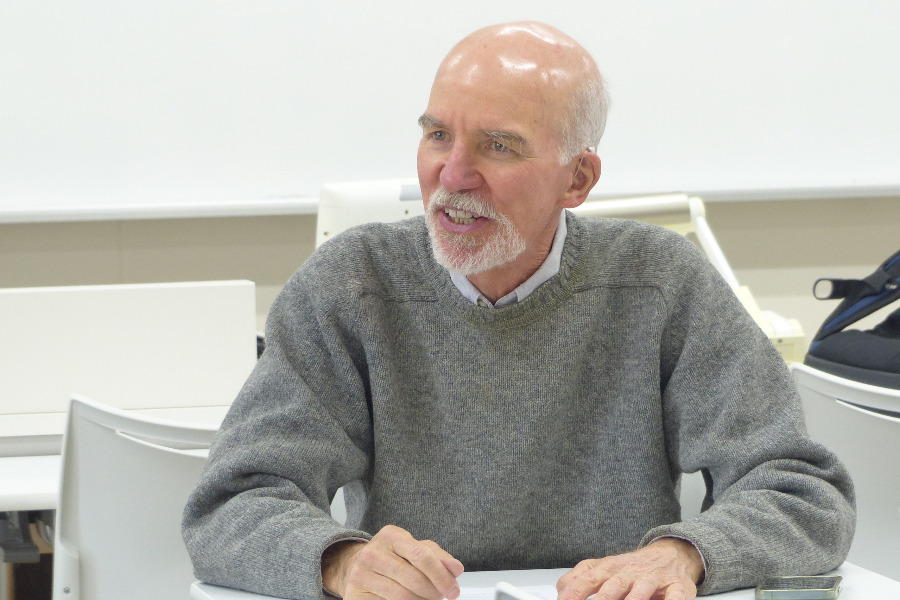
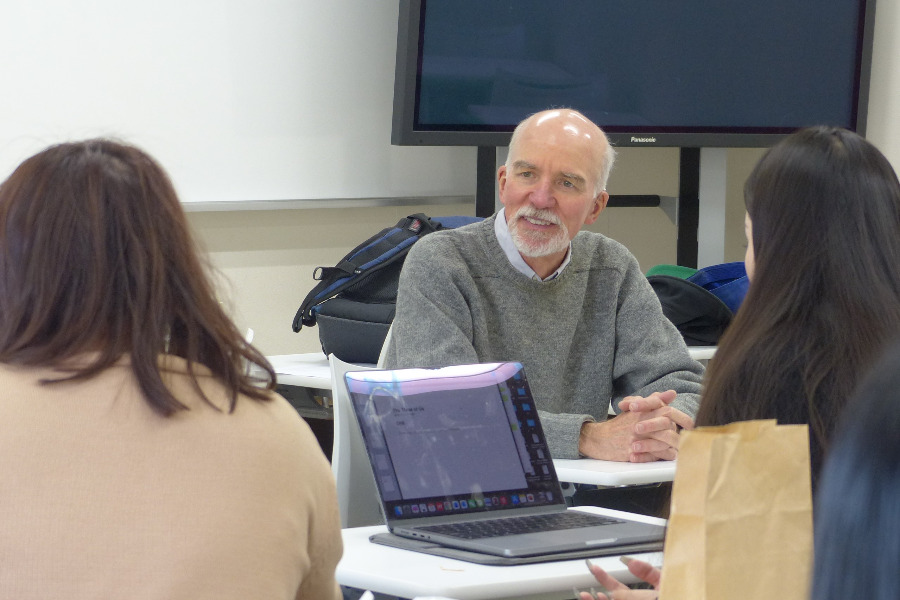
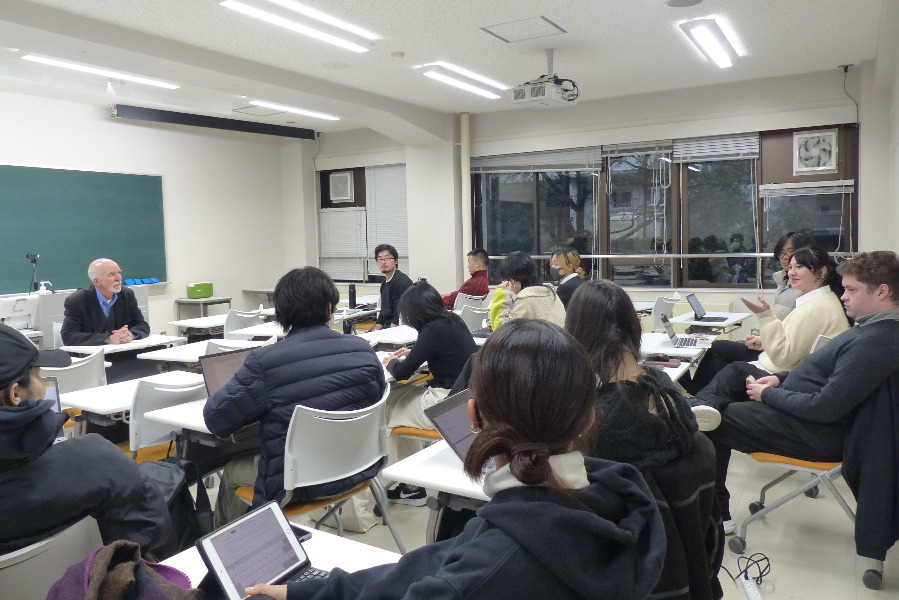
Dr. Ian, a guest speaker from Uganda who teaches at the National Graduate Institute for Policy Studies in Japan met Ritsumeikan University students for the first time. (English class: led by Pr. Mayumi Yamada).
At first, both sides seemed a little nervous.

In this workshop, there were only three students who had met a professor from the African continent in their student life. Also, most of the students didn’t have an accurate understanding of Uganda's geography and surrounding countries.
Dr. Ian's lecture began with a talk from his student days at Makerere University in the capital of Uganda. Dr. Ian began by explaining that lectures at Ugandan universities are always crowded with more than 1,000 students, and it is not uncommon for professors to be too far away to hear or see professors. Still, he says he believed that by passing the exams and graduating from college, he would be able to take the next step.
In addition, Dr. Ian had a total of 10 brothers and sisters, and since he was the youngest child, it was assumed that he would pay for his own tuition. First of all, the students listened attentively to his background as a police officer, where he received training while working, and obtained master's and doctoral degrees in Japan. Also, while there is a belief in Uganda that it is better to study natural sciences and economics than social sciences, Dr. Ian said, "I chose what I wanted to do because I cherished it". It conveyed to students the interdisciplinary appeal and flexibility of the social sciences.
Currently, Dr. Ian was also conducting research analyzing the careers of friends who studied at the same university as him, and each person is not necessarily tied to the degree they have earned to their current profession. He told students that a career doesn't necessarily end with a single goal, and it doesn't have to be set that way, as well as examples of successful sociological experts running clinics. Dr. Ian himself said, "I'm a university professor now, but my original goal is to be president of Uganda."
The dialogue continued with many questions from the students, such as whether they were confused about Japan or if they had any problems due to cultural differences. Through these workshops, the students and Dr. Ian seemed to be able to get to know each other. After the lecture, the students and Dr. Ian continued to have a pleasant dialogue at Tully's Coffee. As for the second workshop, I was very happy to see the students voluntarily interacting with the guest speakers after the workshop.

more
At first, both sides seemed a little nervous.
Dr. Ian's lecture began with a talk from his student days at Makerere University in the capital of Uganda. Dr. Ian began by explaining that lectures at Ugandan universities are always crowded with more than 1,000 students, and it is not uncommon for professors to be too far away to hear or see professors. Still, he says he believed that by passing the exams and graduating from college, he would be able to take the next step.
In addition, Dr. Ian had a total of 10 brothers and sisters, and since he was the youngest child, it was assumed that he would pay for his own tuition. First of all, the students listened attentively to his background as a police officer, where he received training while working, and obtained master's and doctoral degrees in Japan. Also, while there is a belief in Uganda that it is better to study natural sciences and economics than social sciences, Dr. Ian said, "I chose what I wanted to do because I cherished it". It conveyed to students the interdisciplinary appeal and flexibility of the social sciences.
Currently, Dr. Ian was also conducting research analyzing the careers of friends who studied at the same university as him, and each person is not necessarily tied to the degree they have earned to their current profession. He told students that a career doesn't necessarily end with a single goal, and it doesn't have to be set that way, as well as examples of successful sociological experts running clinics. Dr. Ian himself said, "I'm a university professor now, but my original goal is to be president of Uganda."
The dialogue continued with many questions from the students, such as whether they were confused about Japan or if they had any problems due to cultural differences. Through these workshops, the students and Dr. Ian seemed to be able to get to know each other. After the lecture, the students and Dr. Ian continued to have a pleasant dialogue at Tully's Coffee. As for the second workshop, I was very happy to see the students voluntarily interacting with the guest speakers after the workshop.
2023.04.18


During the coffee break, students finally realized that Dr. Sopaj didn’t drink anything until the time came, as it was during Ramadan, which was a great learning opportunity. After the talk session, the students received a business card from her. They were very happy as it was the first time for them to experience this. She commented, "It's rare to find a class with this much diversity, and the students are excellent, so I'm looking forward to the future." As a teacher, I was a little worried about how the students would react, but it turned out to be a fun workshop filled with laughter.
more
Report on the guest lecture (Ms. Arbenita Sopaj, Global Japan Peacebuilding Association)
Arbenita Sopaj, from Global Japan Peacebuilding Association, was invited as guest lecturer at the Professional Workshop (English class: led by Pr. Mayumi Yamada).
The class was very excited by encounter with a relatively rare guest from the Republic of Kosovo. Recognizing that it is not easy to meet people from Kosovo and that they have heard the name but have no information or knowledge about the country, the students studied a lot about Kosovo before the lecture.
Dr. Sopaj talked about her upbringing, her experiences pursuing two master's degrees in Poland and Kobe University and a PhD at Kobe University, why she decided to pursue a PhD at a university in Japan and the influence of her life in Japan. The young students also talked about their lives and families and actively asked questions about what they are learning in Japan, their dreams and worries for the future.
Dr. Sopaj also kindly and politely answered personal questions from the students, such as the timing and significance of pursuing a master's or doctoral degree, tips on balancing marriage and study. She candidly talked about her family's reaction when she decided to leave her homeland and her own inner conflicts. In this way, Dr. Sopaj, who believed in the importance of education and seeing the wider world, impressed the students.
2023.04.11

more
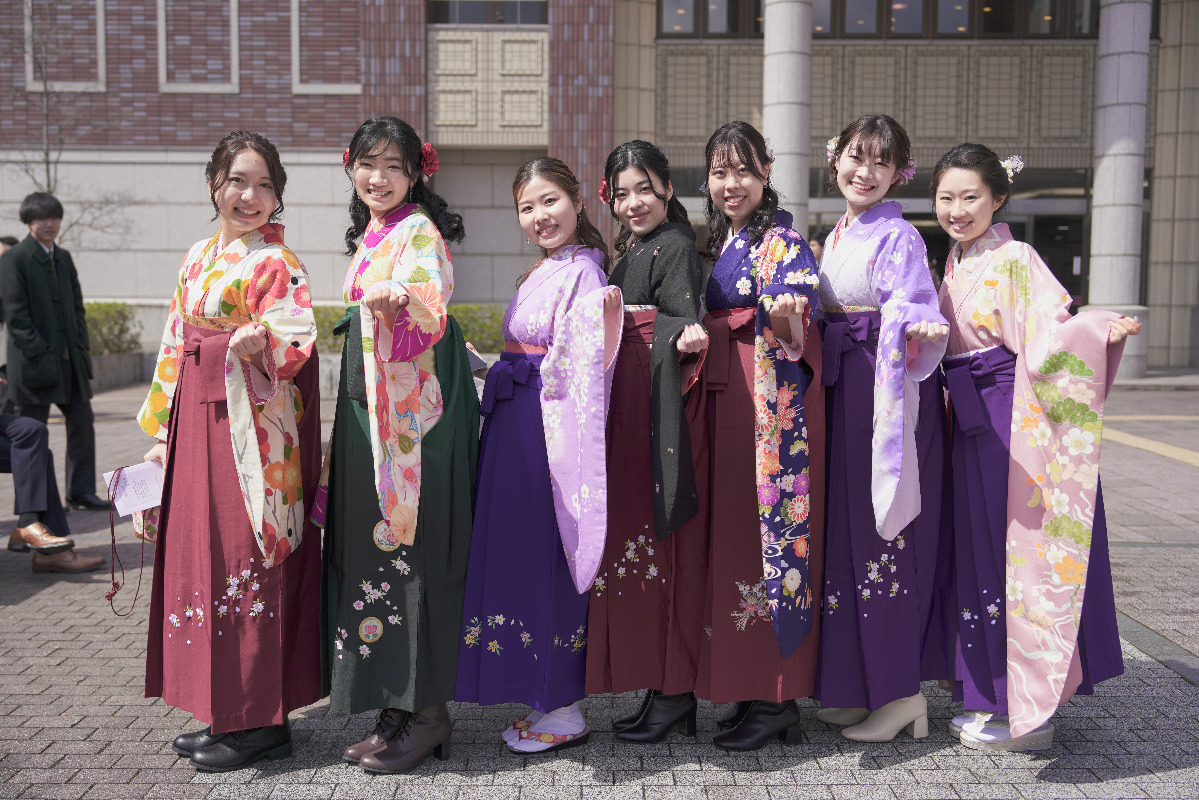
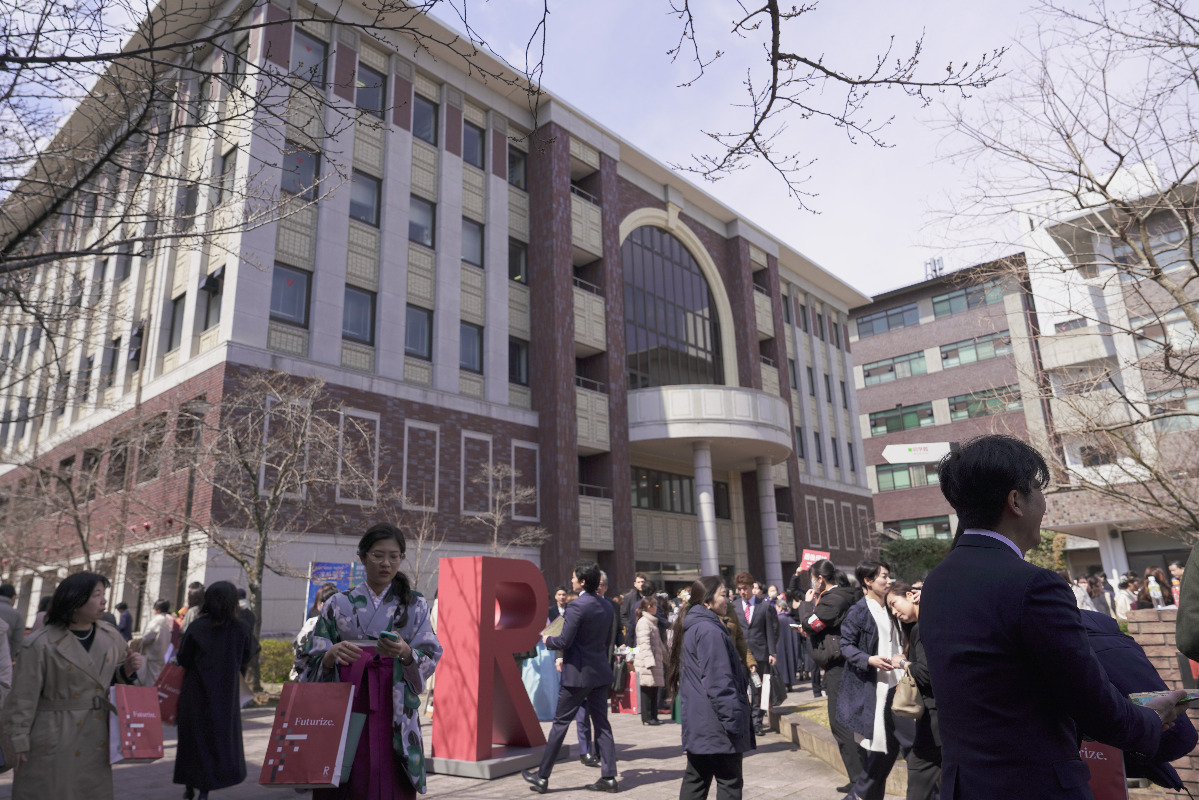
We welcomed new students for April 2023 enrollment.
In April 2023, the
College of International Relations welcomed 299 new students.
Congratulations on your enrollment!
Classes will begin on April 6.