1. Progress Made in Academy Co-creation and the Expanding Dialogue
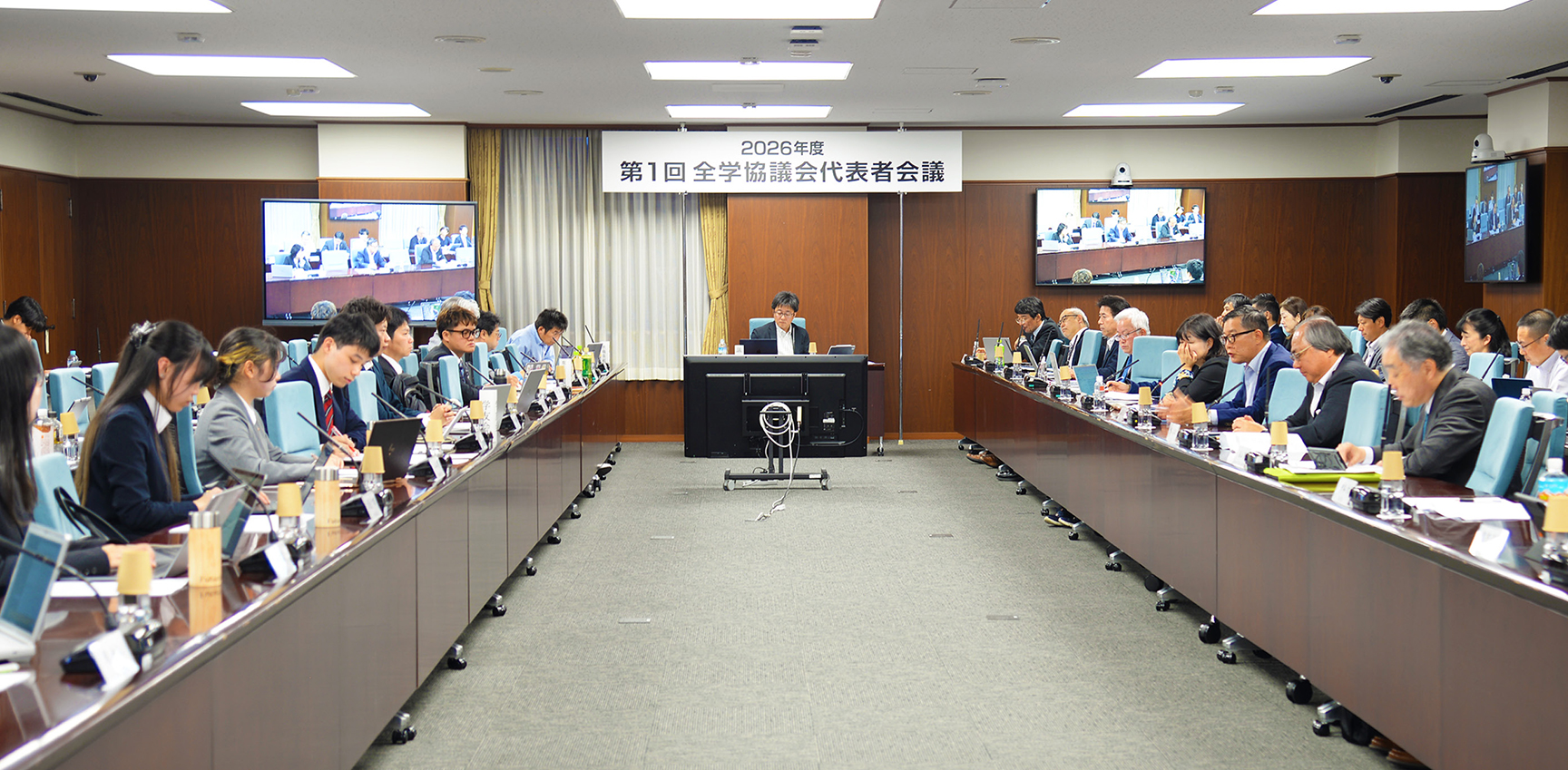
Ever since the open session of the Plenary Council in AY 2022, opportunities for dialogue have been steadily expanding on multiple levels, including the Plenary Council Representatives’ meeting as well as five-party discussion meetings within each college, consultations at the departmental and campus levels involving the Student Union and student associations, discussions focused on specific topics with various University offices, and dialogue between the Graduate Student Council and the University.
Within these frameworks, the Student Union and student associations have gathered feedback from students, and brought up issues related to education, research, student life, student-led extracurricular activities, the campus environment, and other matters during consultations and discussions with the University. In addition, the Graduate Student Council has identified issues relating to the research and learning environment, financial support, career development, and other matters for graduate students in order to make further improvements through dialogue with the University.
These efforts have provided opportunities for undergraduate and graduate students to participate in developing the University, and have formed a foundation for the University to pursue improvements and pilot new initiatives related to the learning environment, student life, and the research environment while taking student feedback and their actual circumstances into account.
A similarly diverse and multilayered process of dialogue and collaboration also took place while revising the Ritsumeikan Charter, which sets out the philosophy and future direction of the Academy and is closely connected to students’ daily learning and campus life. Beginning from the earliest stages of the review process, discussions were repeatedly held with the Student Union and the Graduate Student Council, including meetings on the drafting of the proposed revisions and explanations of the underlying policy. Even after the proposed revisions had been submitted, discussions were held with the Student Union and Graduate Student Council, along with additional explanations (both in person and via video streaming). Thereafter, the review process continued in a collaborative manner, drawing on the results of multiple rounds of collecting feedback from across the University. In addition to revising the content of the Ritsumeikan Charter, this process also served as an opportunity to reexamine its significance together with undergraduate and graduate students.
At the same time, however, it would not be appropriate to claim that all undergraduate and graduate students are adequately aware of the achievements and challenges arising from these initiatives. There is a need to work together with undergraduate and graduate students to identify what information is not reaching them and determine how to communicate issues in a way that makes them feel more personally relevant.
It is also true that perceptions of and responses to these changes vary across colleges, graduate schools, and campuses. To make Academy co-creation efforts more impactful, it is important not only to provide opportunities for dialogue but also to make it easier to understand what was discussed, what issues were shared, and to what specific improvements or considerations the dialogue has led.
Contents
-
Chapter Ⅰ
Significance and Positioning of the AY 2026 Plenary Council
To consider the future direction of Ritsumeikan University
- 1. Changes in the social and higher education environment surrounding universities
- 2. What changes in the social and university environment have asked about undergraduate and graduate student learning
- 3. The types of undergraduate and graduate students Ritsumeikan seeks to produce in light of changes in the social and university environment
- 4. As we enter the second half of R2030
- 5. The Role of the AY 2026 Plenary Council
- 6. List of key themes and annual schedule for AY 2026
-
Chapter ⅡThe Plenary Council as a Process of Academy Co-creation
—Building on Discussions Since AY 2022—
- 1. Progress Made in Academy Co-creation and the Expanding Dialogue
- 2. Division of Roles and Coordination Between the Plenary Council and Plenary Council Representatives’ Meeting
- 3. Specific Examples of Advancements in Academy Co-creation
- 4. Less Visible Issues and the Expected Role of Five-Party Discussion Meetings
- 5. Context Leading Up the AY 2026 Plenary Council
-
Chapter ⅢRitsumeikan University’s Initiatives from AY 2022 to AY 2025
—Progress in the First Half of R2030 Toward Enriching Education, Research, and Student Life—
- 1. Development of the Learning Environment and Academic Reform
- 2. Advancing Research and Supporting Graduate Students and Early-Career Researchers
- 3. Expansion of International Learning and Multicultural Collaborative Learning
- 4. Enhancing Student Support Services to Support Student Life and Extracurricular Activities
- 5. Career Development Support to Foster Independent Career Choices
- 6. Developing the Infrastructure to Support the Visualization of Learning and Growth
-
7. Campus Development and Initiatives to Support Education, Research, and Student Life
- (1) Campus Development Centered on Social Co-creation (OIC)
- (2) Initiatives Linking the Humanities and Social Sciences with Creativity (Kinugasa)
- (3) Initiatives Supporting Cutting-Edge Research and Science and Engineering Education (BKC)
- (4) Development of a Common Infrastructure to Support Student Life
-
Chapter ⅣKey Educational, Research, and Student Life Initiatives for the Second Half of R2030
Building on Dialogue with Undergraduate and Graduate Students to Enrich the Present While Envisioning Future Developments
-
1. Directions for Academic Reform in the Second Half of R2030
- (1) Articulating Integrated Education and Connecting Inquiry to Research
- (2) Reform of University-Wide Education and the Development of Learning that Connects with Society
- (3) Internationalization of Education and the Development of Multicultural Collaborative Learning
- (4) Educational DX and the Visualization of Learning
- 2. Enhancing Graduate Education, the Research Environment, and Career Support
- 3. Creating an Environment That Supports Student Life, Extracurricular Activities, and International Learning
- 4. Connecting Experiences to Meaning-Making and Career Development
-
1. Directions for Academic Reform in the Second Half of R2030
-
Chapter ⅤFinancial Management during the R2030 Period and Ritsumeikan University’s Student Fees and Finance Policy for AY 2027 and Beyond
- 1. Financial Structure of Private Universities and Ritsumeikan University’s Basic Approach
- 2. Financial Management from R2020 Through the First Half of R2030 and Achievements to Date
- 3. Financial Management in the Second Half of R2030
- 4. Student-Fee Policy for AY 2027 and Beyond and AY 2027 Tuition and Other Fees
- ConclusionToward the open session of the Plenary Council to Be Held in October 2026