4. Enhancing Student Support Services to Support Student Life and Extracurricular Activities
In the first half of the R2030 academic year, Ritsumeikan University has worked to enhance its student support systems and opportunities in various areas, including career development, international exchange and study abroad, and support for extracurricular activities. The fact that more students are utilizing these resources to gain diverse experiences and to learn and grow represents a significant achievement. However, challenges remain in terms of fully demonstrating how these initiatives have transformed students’ own experiences of university life.
This stems from the fact that the very nature of student life has undergone significant changes due to the COVID-19 pandemic and the subsequent societal transformations. The ways in which students engage with academic studies and extracurricular activities have become more diverse; in addition to the traditional model of student life based on membership and sustained participation, forms of engagement centered on specific themes or limited timeframes are also becoming more widespread. Furthermore, while the widespread adoption of online tools has increased convenience, it has also reduced opportunities for spontaneous encounters and relationship-building among students and with faculty and staff, creating a situation where it is difficult to feel a sense of belonging or connection to the university.
These changes are also reflected in specific behavioral indicators. The participation rate in extracurricular activities and the rate of membership in groups such as clubs, circles, and peer support groups, which had remained in the 60–70% range from AY 2015 to AY 2019, dropped to the 50% range from AY 2020, reaching 55.4% in AY 2025. The decline in participation rates has been most pronounced among third-year students. On the other hand, the number of students taking on new challenges that extend beyond traditional areas of activity, such as entrepreneurship and social co-creation through initiatives like RIMIX and SEEDS, has been increasing year by year.
As such, the scope of student activities has expanded beyond ongoing membership-based activities such as clubs and circles to include a wide range of initiatives, including entrepreneurship, social co-creation, and project-based learning. These activities are not mutually exclusive; rather, they coexist in accordance with students’ interests, developmental stages, and lifestyles. On the other hand, it is difficult to say that there is sufficient connection between traditional activities and those in new domains. This has created a situation where it is hard to foresee how students will relate these various activities to one another, give them meaning as part of their own learning, and move forward from there.
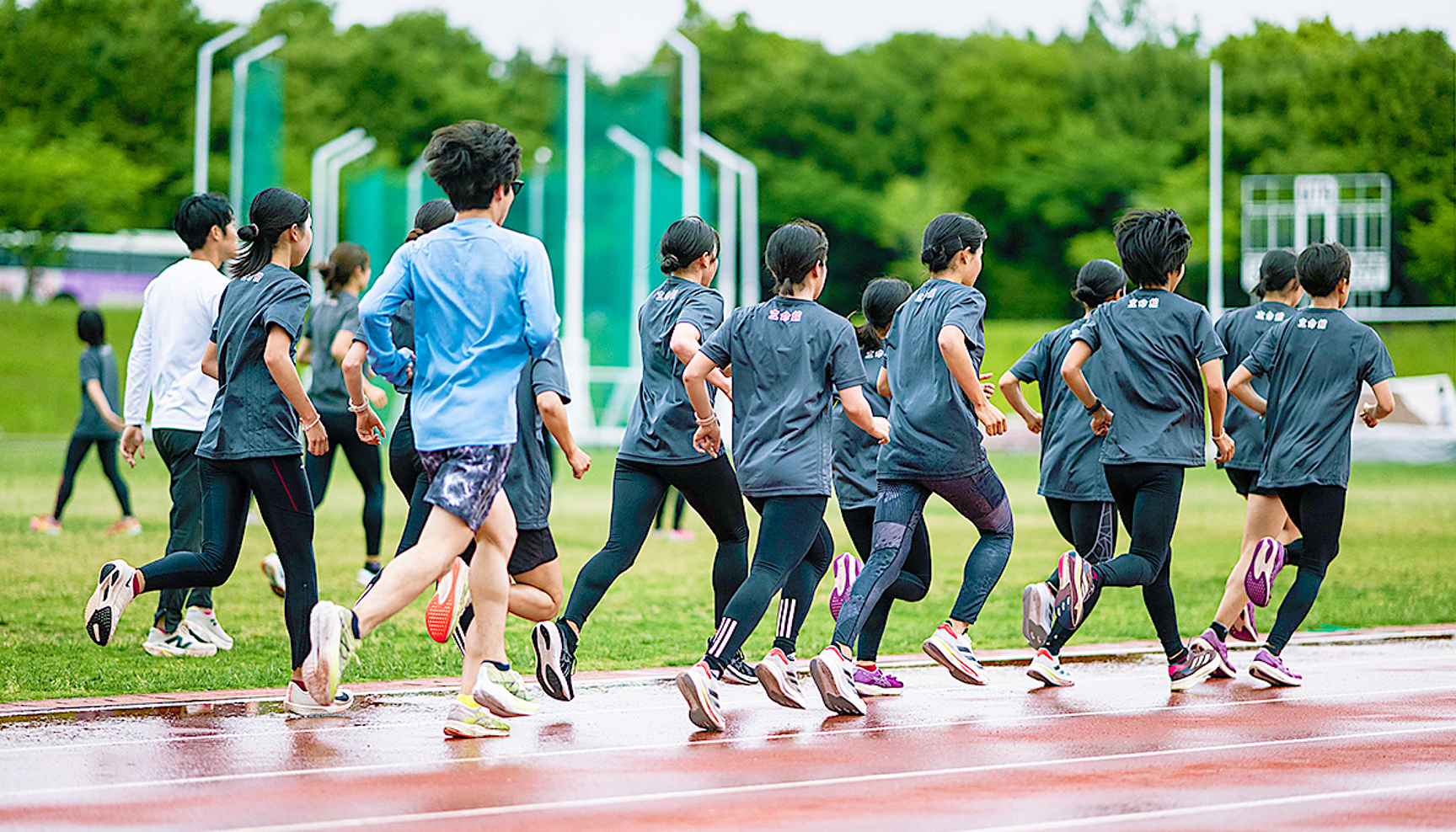
Meanwhile, the university has been reevaluating the educational value of extracurricular activities. As part of its efforts to realize the educational value of these activities, it has been advancing a Priority Club Development Policy.
Under this policy, clubs that “engage in activities at the top national level, inspire the entire academy, and contribute to the cultivation of identity” are designated as Priority Clubs. The policy aims to contribute to students’ learning and growth through sports and cultural and artistic activities, thereby embodying the ideal of human development that the university strives to achieve. Furthermore, in addition to achieving top-level national performance and success at international competitions, the Priority Club Development Policy requires Priority Clubs to maintain high standards in both academic and extracurricular activities, contribute to the local community and society, integrate with the university’s integrated education system, promote internationalization, and operate independently.
Through these initiatives, the Priority Clubs have generated a wide range of value that goes beyond simply achieving results in competitions and activities, including balancing academic and extracurricular commitments, collaborating with affiliated schools, working together with the local community and society, and engaging in international exchange and challenges. In addition, it provides opportunities for students to think independently and grow in collaboration with peers, and new initiatives based on collaboration with research and education are expanding. These results demonstrate that extracurricular voluntary activities are an important learning platform that supports student growth.
In addition, activities based on interdisciplinary collaboration are gaining momentum, with graduate students’ research activities and extracurricular initiatives becoming increasingly interconnected, leading to the emergence of new platforms for learning. These initiatives not only provide opportunities to enhance learning through engagement with others from various backgrounds and fields of expertise, but also hold the potential to translate extracurricular activities into the creation of new knowledge and social value.
Regarding changes in student life and the nature of student support, at the university-wide council meeting for the AY 2022 Plenary Council, the Student Union pointed out several issues, including a lack of a “sense of growth” in university studies and student life, the complexity of student support systems and mechanisms, the lack of transparency regarding the relationship between the value of education and student fees and financial aid, and the fact that students are not sufficiently involved in discussions regarding university development and student support.
With these issues in mind, in AY 2023, the Career Center, the International Affairs Office, and the Student Affairs Office — the three departments responsible for student support — joined forces to launch the “Student Support Operations Reform Project.” During the deliberations, it was concluded that rather than simply increasing the number of individual initiatives, a shared perspective that takes into account the entire process of student growth and development was necessary, leading to a focus on the concept of “self-authorship.”
Self-authorship is the ability to continually shape for oneself what one values, how one thinks, and how one acts, rather than simply following the “correct answers” or assessments dictated by others. This perspective serves as a framework for reorganizing student support, which has tended to be broken up across different fields, in a way that aligns with students’ growth processes. It is also positioned as a foundation for the development of emergent human resources, as set forth in the R2030 Challenge Design.
Through our efforts to date, we have steadily developed systems and opportunities for student support, giving students a wider range of options to choose from based on their individual circumstances. However, only a small number of students are aware of these support services and actually utilize them. Consequently, a key challenge has emerged: how to establish meaningful connections with students who are just beginning their university experience and with those who find it difficult to voice their concerns. Taking these achievements and challenges into account, Chapter 4 outlines how universities can engage with students at different stages of their development in order to support their growth.
Contents
-
Chapter Ⅰ
Significance and Positioning of the AY 2026 Plenary Council
To consider the future direction of Ritsumeikan University
- 1. Changes in the social and higher education environment surrounding universities
- 2. What changes in the social and university environment have asked about undergraduate and graduate student learning
- 3. The types of undergraduate and graduate students Ritsumeikan seeks to produce in light of changes in the social and university environment
- 4. As we enter the second half of R2030
- 5. The Role of the AY 2026 Plenary Council
- 6. List of key themes and annual schedule for AY 2026
-
Chapter ⅡThe Plenary Council as a Process of Academy Co-creation
—Building on Discussions Since AY 2022—
- 1. Progress Made in Academy Co-creation and the Expanding Dialogue
- 2. Division of Roles and Coordination Between the Plenary Council and Plenary Council Representatives’ Meeting
- 3. Specific Examples of Advancements in Academy Co-creation
- 4. Less Visible Issues and the Expected Role of Five-Party Discussion Meetings
- 5. Context Leading Up the AY 2026 Plenary Council
-
Chapter ⅢRitsumeikan University’s Initiatives from AY 2022 to AY 2025
—Progress in the First Half of R2030 Toward Enriching Education, Research, and Student Life—
- 1. Development of the Learning Environment and Academic Reform
- 2. Advancing Research and Supporting Graduate Students and Early-Career Researchers
- 3. Expansion of International Learning and Multicultural Collaborative Learning
- 4. Enhancing Student Support Services to Support Student Life and Extracurricular Activities
- 5. Career Development Support to Foster Independent Career Choices
- 6. Developing the Infrastructure to Support the Visualization of Learning and Growth
-
7. Campus Development and Initiatives to Support Education, Research, and Student Life
- (1) Campus Development Centered on Social Co-creation (OIC)
- (2) Initiatives Linking the Humanities and Social Sciences with Creativity (Kinugasa)
- (3) Initiatives Supporting Cutting-Edge Research and Science and Engineering Education (BKC)
- (4) Development of a Common Infrastructure to Support Student Life
-
Chapter ⅣKey Educational, Research, and Student Life Initiatives for the Second Half of R2030
Building on Dialogue with Undergraduate and Graduate Students to Enrich the Present While Envisioning Future Developments
-
1. Directions for Academic Reform in the Second Half of R2030
- (1) Articulating Integrated Education and Connecting Inquiry to Research
- (2) Reform of University-Wide Education and the Development of Learning that Connects with Society
- (3) Internationalization of Education and the Development of Multicultural Collaborative Learning
- (4) Educational DX and the Visualization of Learning
- 2. Enhancing Graduate Education, the Research Environment, and Career Support
- 3. Creating an Environment That Supports Student Life, Extracurricular Activities, and International Learning
- 4. Connecting Experiences to Meaning-Making and Career Development
-
1. Directions for Academic Reform in the Second Half of R2030
-
Chapter ⅤFinancial Management during the R2030 Period and Ritsumeikan University’s Student Fees and Finance Policy for AY 2027 and Beyond
- 1. Financial Structure of Private Universities and Ritsumeikan University’s Basic Approach
- 2. Financial Management from R2020 Through the First Half of R2030 and Achievements to Date
- 3. Financial Management in the Second Half of R2030
- 4. Student-Fee Policy for AY 2027 and Beyond and AY 2027 Tuition and Other Fees
- ConclusionToward the open session of the Plenary Council to Be Held in October 2026