2. Enhancing Graduate Education, the Research Environment, and Career Support
To realize the “next-generation research university” envisioned in the R2030 Challenge Design, it is important to advance the enhancement of graduate education, the advancement of the research environment, career development support for graduate students, and financial support in an integrated manner. This does not mean strengthening graduate schools in isolation. Rather, it is an initiative that connects undergraduate learning, graduate-level research, and practice in society, and supports the growth of each undergraduate and graduate student and their contributions to society through a higher level of reintegration between research and education.
This section outlines the direction of graduate school policy from four perspectives: articulating undergraduate and graduate education, diversifying career paths for doctoral talent, enhancing the research environment, and strengthening financial support and support for research activities.
Another issue that we would like to discuss with undergraduate and graduate students as we move into the second half of R2030 is whether these initiatives should be viewed not as separate support measures considered in parallel, but rather as interrelated conditions for making learning and research in graduate school more enriching and fulfilling. For example, improving the research environment contributes to enhancing the quality of research, while financial support provides the time and conditions necessary for students to devote themselves to research. In addition, research communities and opportunities for exchange provide students with opportunities to broaden their perspectives and deepen their understanding of the significance of their own research. Career development support, meanwhile, plays a role in connecting the competencies acquired through research to a wide range of settings, including academia, industry, government, local communities, and international society.
From this perspective, we would also like to identify, as one of the points for discussion leading up to the Plenary Council, how strengthening the interconnections among the research environment, financial support, research communities, and career development support can further enhance both the research capabilities of a next-generation research university and the foundation that enables undergraduate and graduate students to grow through research and apply their abilities in diverse areas of society.
(1) Strengthening the Connection Between Undergraduate and Graduate Educatio
When considering progression to graduate school, it is important for students to gain a concrete understanding at an early stage of how undergraduate learning connects to graduate-level research and how pursuing graduate studies can expand their expertise and career possibilities. To this end, the university will expand opportunities for students to engage with graduate-level research activities during their undergraduate studies, as well as opportunities for interaction between undergraduate and graduate students, thereby creating an environment in which students can seriously consider graduate school as a future option.
As a mechanism for creating a smoother transition from undergraduate to graduate education, the university will consider introducing “4+1 Programs” and “3+2 Programs,” which integrate undergraduate and graduate education into a unified framework. These programs combine four years of undergraduate study with one year of a master’s program, or three years of undergraduate study with two years of a master’s program, enabling students to transition seamlessly from undergraduate learning to graduate-level research without interruption. Such programs may offer advantages in both time and cost for students who wish to pursue research more deeply or further develop their expertise.
In addition, depending on the future plans of individual graduate schools, consideration is being given to establishing new interdisciplinary academic programs utilizing cooperative degree programs among graduate schools. These would take the form of interdisciplinary doctoral degree programs that transcend the boundaries of individual graduate schools. This will expand opportunities for students to pursue degree programs and research activities in emerging fields of study that have been difficult to accommodate within the framework of traditional graduate schools.
(2) Career Development That Connects Research Experience to Society
Providing a concrete picture of the career paths available after progressing to graduate school and earning a master’s or doctoral degree is important both for students considering graduate studies and for graduate students currently engaged in research. Opportunities for doctoral talent extend beyond universities and research institutions to include industry, government, international organizations, and local communities. In the second half of R2030, support will be needed to help undergraduate and graduate students gain a concrete understanding of these diverse career paths and consider how they can apply their research and expertise in society.
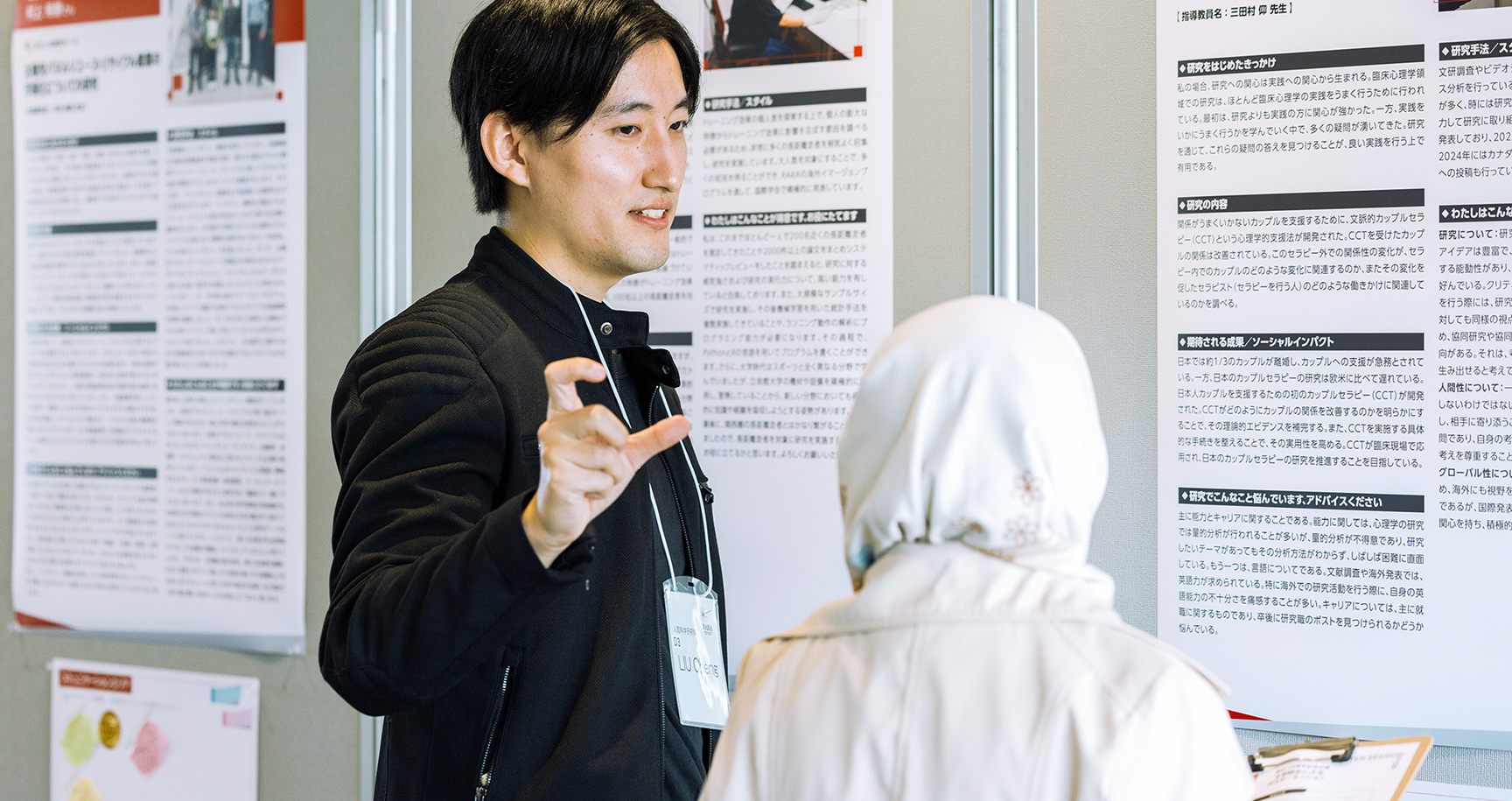
The University’s Graduate School Career Path Promotion Office is advancing initiatives aimed at diversifying the career paths of graduate school graduates. Through individual visits and exchanges with leading domestic and international companies, as well as national research institutions such as the National Institute of Advanced Industrial Science and Technology (AIST), the office has worked to understand the qualities and capabilities sought by industry and society. Among these initiatives, the Corporate-Sponsored Doctoral Internship Program with Kampo Life Insurance is a pioneering example. Based on proposals from the university, the company also established a new salary system for doctoral degree holders.
In collaboration with government agencies, a roundtable discussion was held in AY 2025 with the cooperation of the Kansai Bureau of Economy, Trade and Industry, bringing together companies from the Kyoto-Osaka-Kobe region and helping to build momentum for supporting the active participation of doctoral talent. In addition, the Kyoto Qualia Forum (KQF), which consists of leading Kyoto-based companies and universities, holds the Doctoral Career Fair twice a year, where doctoral students interact with corporate human resources personnel and research and development staff. In AY 2025, a doctoral student from the university received the Horiba Award, demonstrating tangible outcomes from these efforts.
Furthermore, initiatives such as the KQF Doctoral Training Camp, where corporate researchers holding doctoral degrees and doctoral students engage in intensive discussions in a retreat-style setting, are also conducted at corporate training centers. By expanding these points of contact with industry, government, and research institutions, institutionalizing individual career consultations beginning at the time of graduate school enrollment, and increasing opportunities for engagement with companies, the university will support the development of diverse career paths for doctoral talent.
(3) Creating an Environment That Enables Graduate Students to Focus on Research
Conducting high-quality research in graduate school requires a range of conditions to be in place, including sufficient research time, research funding, research space, supervisory support, and opportunities for interaction among researchers. In particular, at a time when interdisciplinary perspectives and connections to social issues are increasingly important, it is essential to provide an environment in which graduate students can engage with and exchange ideas with diverse researchers and graduate students beyond the boundaries of their own graduate schools.
Research communities and opportunities for exchange are not merely occasions for people to meet. They also provide opportunities to engage with different fields of research and research methodologies, to relativize the position of one’s own research, and to consider how research outcomes can be communicated and connected to society and other disciplines. When graduate students engage in discussion with diverse researchers and fellow graduate students beyond the boundaries of their own graduate schools, it not only enhances the quality of their research but also helps them place the competencies gained through research within a broader context.
At the university, opportunities for graduate students to actively participate in projects conducted by on-campus research laboratories and research centers are being expanded. In AY 2023, approximately 260 doctoral students participated in a variety of research projects. Shared laboratories and research hubs also serve as spaces where graduate students from different graduate schools and disciplines come together, fostering interdisciplinary knowledge exchange and international networks.
In the second half of R2030, the university will further strengthen these research environments by expanding employment opportunities for RAs (Research Assistants) and considering the introduction of a Doctoral Assistant system, alongside continued improvements to research facilities. It is important to create an environment in which graduate students can concentrate on research, deepen their expertise, and expand the possibilities of their research through engagement with knowledge from other disciplines and connections with society.
(4) Enhancing Financial Support and Support for Research Activiti
Research life in graduate school requires sustained concentration and continuous effort over an extended period. For this reason, mechanisms that reduce financial concerns and support the costs and opportunities necessary for research serve as an important foundation for graduate students to deepen their research.
At the university, through the Ritsumeikan Advanced Research Academy Student Fellowship Program (RARA × SPRING), a university-specific initiative based on the Ministry of Education, Culture, Sports, Science and Technology’s Support for Pioneering Research Initiated by the Next Generation (SPRING) program, doctoral students receive a monthly research incentive grant and living allowance equivalent of 185,000 yen, in addition to annual research funding of 340,000 yen.
For doctoral students engaged in research in next-generation AI fields, the Ritsumeikan Advanced Research Academy Student Fellowship Program for Next-Generation AI Fields (RARA × BOOST) provides a monthly research incentive grant of 200,000 yen and annual research funding of 1.5 million yen. In AY 2025, 125 doctoral students benefited from support through these two programs. In addition, the university has introduced support funded through industry-academia collaboration with companies and grants from private foundations. Going forward, it will further expand financial support utilizing such external funding sources in order to create an environment in which graduate students can devote themselves to research.
The Doctoral Student Research Support Scholarship is another program designed to reduce the financial burden on doctoral students with outstanding research plans and to support the early completion of their doctoral dissertations. To support conference presentations, the university also provides grant programs that encourage master’s and doctoral students to present their research at academic conferences in Japan and abroad, thereby offering financial support for the active dissemination of research results. By making use of support programs for publishing papers in foreign languages and for research group activities, graduate students can further enhance their international research activities.
Information on these support programs will be consolidated and made available, together with annual schedules, through the website of the Graduate School Career Path Promotion Office and other channels, making it easier for graduate students to access the support they need at the appropriate time.
In this way, it is important to enhance graduate education, the research environment, and career support by advancing them in an integrated manner while strengthening the connections among the research environment, financial support, research communities, and career development support. By reinforcing these interconnections, the university aims not only to increase the number of graduate students quantitatively, but also to strengthen both the research capabilities of a next-generation research university and the foundation that enables undergraduate and graduate students to grow through research and apply their abilities in diverse areas of society.
Enhancing graduate education, the research environment, and career support is important not only for graduate students but also for helping undergraduate students develop a concrete vision of their future learning and research opportunities. The next section broadens the focus to student life as a whole, including both undergraduate and graduate students, and examines early experiences after enrollment, student-led extracurricular activities, international learning opportunities, and the foundations that enable students to take on challenges with confidence and security.
Contents
-
Chapter Ⅰ
Significance and Positioning of the AY 2026 Plenary Council
To consider the future direction of Ritsumeikan University
- 1. Changes in the social and higher education environment surrounding universities
- 2. What changes in the social and university environment have asked about undergraduate and graduate student learning
- 3. The types of undergraduate and graduate students Ritsumeikan seeks to produce in light of changes in the social and university environment
- 4. As we enter the second half of R2030
- 5. The Role of the AY 2026 Plenary Council
- 6. List of key themes and annual schedule for AY 2026
-
Chapter ⅡThe Plenary Council as a Process of Academy Co-creation
—Building on Discussions Since AY 2022—
- 1. Progress Made in Academy Co-creation and the Expanding Dialogue
- 2. Division of Roles and Coordination Between the Plenary Council and Plenary Council Representatives’ Meeting
- 3. Specific Examples of Advancements in Academy Co-creation
- 4. Less Visible Issues and the Expected Role of Five-Party Discussion Meetings
- 5. Context Leading Up the AY 2026 Plenary Council
-
Chapter ⅢRitsumeikan University’s Initiatives from AY 2022 to AY 2025
—Progress in the First Half of R2030 Toward Enriching Education, Research, and Student Life—
- 1. Development of the Learning Environment and Academic Reform
- 2. Advancing Research and Supporting Graduate Students and Early-Career Researchers
- 3. Expansion of International Learning and Multicultural Collaborative Learning
- 4. Enhancing Student Support Services to Support Student Life and Extracurricular Activities
- 5. Career Development Support to Foster Independent Career Choices
- 6. Developing the Infrastructure to Support the Visualization of Learning and Growth
-
7. Campus Development and Initiatives to Support Education, Research, and Student Life
- (1) Campus Development Centered on Social Co-creation (OIC)
- (2) Initiatives Linking the Humanities and Social Sciences with Creativity (Kinugasa)
- (3) Initiatives Supporting Cutting-Edge Research and Science and Engineering Education (BKC)
- (4) Development of a Common Infrastructure to Support Student Life
-
Chapter ⅣKey Educational, Research, and Student Life Initiatives for the Second Half of R2030
Building on Dialogue with Undergraduate and Graduate Students to Enrich the Present While Envisioning Future Developments
-
1. Directions for Academic Reform in the Second Half of R2030
- (1) Articulating Integrated Education and Connecting Inquiry to Research
- (2) Reform of University-Wide Education and the Development of Learning that Connects with Society
- (3) Internationalization of Education and the Development of Multicultural Collaborative Learning
- (4) Educational DX and the Visualization of Learning
- 2. Enhancing Graduate Education, the Research Environment, and Career Support
- 3. Creating an Environment That Supports Student Life, Extracurricular Activities, and International Learning
- 4. Connecting Experiences to Meaning-Making and Career Development
-
1. Directions for Academic Reform in the Second Half of R2030
-
Chapter ⅤFinancial Management during the R2030 Period and Ritsumeikan University’s Student Fees and Finance Policy for AY 2027 and Beyond
- 1. Financial Structure of Private Universities and Ritsumeikan University’s Basic Approach
- 2. Financial Management from R2020 Through the First Half of R2030 and Achievements to Date
- 3. Financial Management in the Second Half of R2030
- 4. Student-Fee Policy for AY 2027 and Beyond and AY 2027 Tuition and Other Fees
- ConclusionToward the open session of the Plenary Council to Be Held in October 2026