Chapter Ⅱ
The Plenary Council
as a Process of Academy Co-creation
—Building on Discussions Since AY 2022—
Chapter 1 covered the significance and role of the Plenary Council in AY 2026 in light of changes in the social and higher education landscapes, the circumstances surrounding undergraduate and graduate learning, and the milestone marking the latter half of the R2030 period.
Building on discussions that have taken place since the open session of the Plenary Council in AY 2022, this chapter examines specifically how Academy co-creation has been implemented as a collaborative process in which undergraduate students, graduate students, and the University engage as equal partners in discussions on the University’s present and future, while recognizing their respective positions and roles, to enhance academic affairs and further develop the University. The chapter then examines the respective roles of the Plenary Council, Plenary Council Representatives’ Meeting, five-way discussion meetings, and various other forums, as well as how they have functioned in coordination with one another.
Before turning to the main discussion of this chapter, the following clarifies the relationship between the term “Academy co-creation” as used here and the “Academy co-creation activities” advocated and promoted by the Student Union. The term “Academy co-creation” as used here refers to an approach in which the University advances improvements and reforms in education and research, student life, and student-led extracurricular activities through dialogue and collaboration with students. In contrast, the “Academy co-creation activities” advocated and promoted by the Student Union are means through which the Student Union has gathered feedback from students and contributed to enhancing academic affairs and developing the University through consultations and discussions with the University. The relationship between the two is outlined below in light of discussions that have taken place since AY 2022.
At the Plenary Council in AY 2022, discussions on student fees and finance policy identified the question of how undergraduate and graduate students should participate in enhancing academic affairs and developing the University as a central issue. The Student Union argued that discussions should extend beyond merely the appropriateness of student fee amounts, and called for the ongoing establishment of forums where information could be shared and discussions held on policies and measures related to enhancing academic affairs and developing the University—the purposes for which tuition is used—not to obtain consent for decisions but rather to provide opportunities for the Student Union to participate in the decision-making process. In response, the University announced that, in addition to establishing forums for discussing student fees and finance policy with the Student Union, it would also create opportunities for multilevel discussions with undergraduate and graduate students on enhancing academic affairs and developing the University.
Dialogue on this topic moved beyond the traditional relationship in which students, as those who bear the fees, simply present their demands to the University. Instead, it encompassed discussions on a model in which students themselves, as active participants in shaping the University, consider how student fee revenue should be used to improve academic conditions and the student living environment, and how the University should be developed to benefit both current and future students. A significant outcome of the AY 2022 discussions was recognition of the need for a process in which the University and students exchange ideas and perspectives on a more equal footing when determining and implementing policies, rather than the University presenting predetermined solutions for the students to consider.
Building on this, at the first Plenary Council Representatives’ Meeting in AY 2023, the Student Union announced a shift in the focus of its activities from traditional efforts to meet student demands to Academy co-creation activities. The Student Union also expressed its intention to evolve beyond discussions on the appropriateness of student fee amounts and engage in dialogue on how student fee revenue should be used to support education and other initiatives, as well as on the nature of its involvement in education and research.
The Academy co-creation activities referred to here are means through which the Student Union has gathered feedback from students and contributed to enhancing academic affairs and developing the University through consultations and discussions with the University. The great significance of these activities lies in the fact that the issues to be addressed are identified by the students based on their concerns—encompassing not only immediate issues affecting their lives but also approaches to learning, student life, student-led extracurricular activities, the campus environment, and even the enhancement of academic affairs and development of the University in consideration of future students—as well as in the fact that the Student Union has continually presented the University with student feedback through ongoing dialogue.
In AY 2024, it was confirmed that the Student Union’s Academy co-creation activities had expanded to cover both specific, individual issues as well as longer-term challenges through five-party discussion meetings with the student associations of each college, campus discussion meetings, and discussions with the Office of Academic Affairs, Office of Student Affairs, Office of Finance and Accounting, and other administrative offices. The University has expressed its high regard for the Student Union’s efforts and recognizes that putting the R2030 Challenge Design into practice will require increasing the impact of student participation, including in Academy co-creation activities, through collaboration with the Student Union and the Graduate Student Council from the earliest stages and discussions on how issues identified by students relate to the University’s policies and plans.
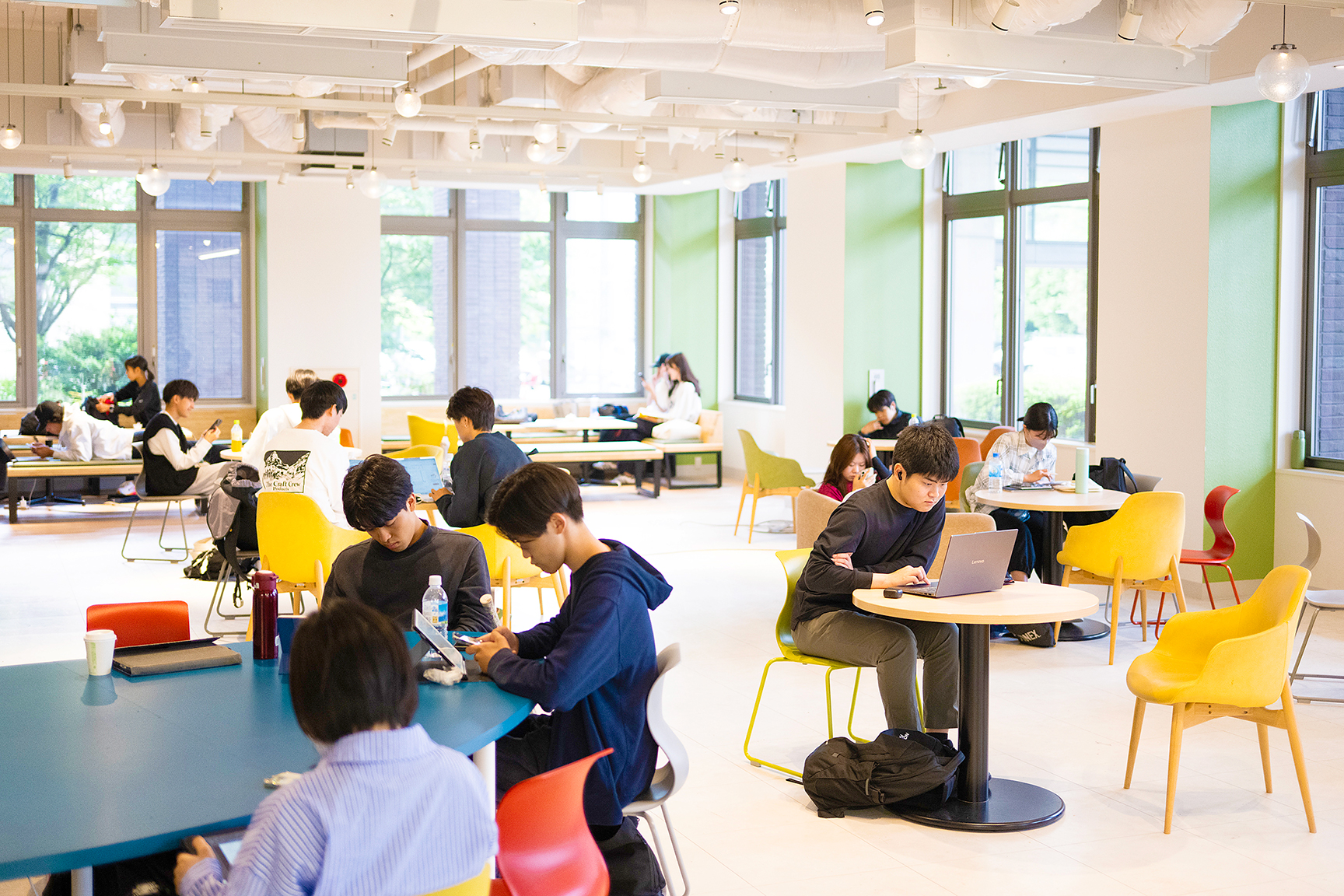
In addition, the Graduate Student Council has continued to poll graduate students to identify their views on issues such as the research and learning environment, financial support, and post-graduation career development in order to make further improvements through dialogue with the University. Since AY 2024, the Graduate Student Council has strengthened the foundation for identifying the actual circumstances and challenges facing graduate students and for considering improvement measures together with the University through efforts such as bolstering its organizational structure, enhancing collaboration with the councils of individual graduate schools, holding campus exchange events, and conducting university-wide surveys of graduate students.
While the Graduate Student Council’s efforts are not identical to the Student Union’s Academy co-creation activities, they nevertheless represent important practices that embody the concept of “Academy co-creation activities” as used here. Graduate students themselves have worked to identify issues related to their research environment and career development, seeking to bring about improvements through dialogue with the University, and their participation is particularly impactful in the course of realizing a next-generation research university.
Conceptually, the term “Academy co-creation activities” as used here is broader in scope, encompassing not only the Student Union’s Academy co-creation activities but also the Graduate Student Council’s efforts to gather feedback from graduate students and work with the University to address issues related to the research environment, financial support, career development, and other matters. The independent activities of the Student Union and the Graduate Student Council should, however, not be regarded as measures set forth by the University itself. The Student Union’s Academy co-creation activities and the Graduate Student Council’s efforts to promote graduate student self-governance and participation are both independently and autonomously led by their respective members. While they are closely related to the University’s concept of Academy co-creation, they are not one and the same.
Accordingly, this chapter distinguishes between the Student Union’s Academy co-creation activities and the Graduate Student Council’s efforts to gather feedback from graduate students and to engage in discussions and propose improvements regarding the research environment, financial support, and career development, with the recognition that all such activities are autonomously led by their respective organization. At the same time, the University recognizes that these initiatives comprise an important foundation for Academy co-creation activities, through which improvements and reforms in education, research, student life, student-led extracurricular activities, and other areas are advanced through dialogue and collaboration with undergraduate and graduate students.
Going forward, it will be necessary to periodically review and refine the usage and shared understanding of the terms “Academy co-creation” and “Academy co-creation activities” through discussions between the Student Union, the Graduate Student Council, the University, and other stakeholders, as well as through future deliberations by the Plenary Council. The framework presented here should therefore be understood as a representation of the current stage of that ongoing discussion.
In light of that, this chapter presents Academy co-creation as a process of dialogue and collaboration through which undergraduate students, graduate students, faculty, and staff each leverage their own perspectives and experiences to create opportunities to consider the University’s present and future. Building on the progress made through the Plenary Council, the Plenary Council Representatives’ Meeting, five-party discussion meetings, discussions focused on specific topics, campus discussion meetings, and dialogue at the graduate school level, this chapter reviews the achievements of these efforts as well as the remaining challenges, and clarifies the role that the AY 2026 Plenary Council should fill.
Contents
-
Chapter Ⅰ
Significance and Positioning of the AY 2026 Plenary Council
To consider the future direction of Ritsumeikan University
- 1. Changes in the social and higher education environment surrounding universities
- 2. What changes in the social and university environment have asked about undergraduate and graduate student learning
- 3. The types of undergraduate and graduate students Ritsumeikan seeks to produce in light of changes in the social and university environment
- 4. As we enter the second half of R2030
- 5. The Role of the AY 2026 Plenary Council
- 6. List of key themes and annual schedule for AY 2026
-
Chapter ⅡThe Plenary Council as a Process of Academy Co-creation
—Building on Discussions Since AY 2022—
- 1. Progress Made in Academy Co-creation and the Expanding Dialogue
- 2. Division of Roles and Coordination Between the Plenary Council and Plenary Council Representatives’ Meeting
- 3. Specific Examples of Advancements in Academy Co-creation
- 4. Less Visible Issues and the Expected Role of Five-Party Discussion Meetings
- 5. Context Leading Up the AY 2026 Plenary Council
-
Chapter ⅢRitsumeikan University’s Initiatives from AY 2022 to AY 2025
—Progress in the First Half of R2030 Toward Enriching Education, Research, and Student Life—
- 1. Development of the Learning Environment and Academic Reform
- 2. Advancing Research and Supporting Graduate Students and Early-Career Researchers
- 3. Expansion of International Learning and Multicultural Collaborative Learning
- 4. Enhancing Student Support Services to Support Student Life and Extracurricular Activities
- 5. Career Development Support to Foster Independent Career Choices
- 6. Developing the Infrastructure to Support the Visualization of Learning and Growth
-
7. Campus Development and Initiatives to Support Education, Research, and Student Life
- (1) Campus Development Centered on Social Co-creation (OIC)
- (2) Initiatives Linking the Humanities and Social Sciences with Creativity (Kinugasa)
- (3) Initiatives Supporting Cutting-Edge Research and Science and Engineering Education (BKC)
- (4) Development of a Common Infrastructure to Support Student Life
-
Chapter ⅣKey Educational, Research, and Student Life Initiatives for the Second Half of R2030
Building on Dialogue with Undergraduate and Graduate Students to Enrich the Present While Envisioning Future Developments
-
1. Directions for Academic Reform in the Second Half of R2030
- (1) Articulating Integrated Education and Connecting Inquiry to Research
- (2) Reform of University-Wide Education and the Development of Learning that Connects with Society
- (3) Internationalization of Education and the Development of Multicultural Collaborative Learning
- (4) Educational DX and the Visualization of Learning
- 2. Enhancing Graduate Education, the Research Environment, and Career Support
- 3. Creating an Environment That Supports Student Life, Extracurricular Activities, and International Learning
- 4. Connecting Experiences to Meaning-Making and Career Development
-
1. Directions for Academic Reform in the Second Half of R2030
-
Chapter ⅤFinancial Management during the R2030 Period and Ritsumeikan University’s Student Fees and Finance Policy for AY 2027 and Beyond
- 1. Financial Structure of Private Universities and Ritsumeikan University’s Basic Approach
- 2. Financial Management from R2020 Through the First Half of R2030 and Achievements to Date
- 3. Financial Management in the Second Half of R2030
- 4. Student-Fee Policy for AY 2027 and Beyond and AY 2027 Tuition and Other Fees
- ConclusionToward the open session of the Plenary Council to Be Held in October 2026