1. Directions for Academic Reform in the Second Half of R2030
To realize the “next-generation research university” and foster “innovative and creative talent” as set forth in the R2030 Challenge Design, academic reform in the second half of R2030 will emphasize enabling undergraduate and graduate students to formulate their own questions, deepen their expertise, and expand their learning through engagement with different fields and society.
To this end, the university will promote a series of interconnected initiatives, including the seamless connection of learning from primary and secondary education through university, graduate school, and society; the development of university-wide education that encompasses interdisciplinary learning across the humanities and sciences, interdisciplinary integration, and collaboration with society; the internationalization of education; and educational DX that supports the visualization of learning and personalized learning support.
These efforts cannot be completed simply by the university unilaterally establishing systems and frameworks. It is important to further develop these initiatives through the process of co-creation across the Ritsumeikan Academy while confirming what kinds of learning undergraduate and graduate students actually need and through what kinds of experiences they can feel their own growth.
(1) Articulating Integrated Education and Connecting Inquiry to Research
In the second half of R2030, it will be important to leverage the framework of integrated education spanning from elementary school through graduate school and connect inquiry-based learning to specialized study and research at the university and graduate-school levels. Rather than separating the inquiry-based learning that is expanding at the high school level from learning after university enrollment, it is necessary to view it as a continuous process of learning in which students formulate their own questions, think based on materials and data, and deepen their understanding through dialogue with diverse others.
To support this, the university will consider introducing a Life & Career Review system that utilizes the Ritsumeikan Academy Competency Framework, enabling pupils, students, undergraduate students, and graduate students to reflect on their learning and growth over the long term. In addition, the university will enhance educational programs in collaboration with research laboratories and research centers, expanding opportunities for undergraduate students to engage with the appeal and methods of research at an early stage and to develop a concrete vision of research activities in graduate school.
Through these initiatives, the strengths of integrated education will be developed beyond simply connecting different stages of schooling and will be realized as a growth process that links inquiry to research and learning to careers.
(2) Reform of University-Wide Education and the Development of Learning that Connects with Society
In the academic reforms of the second half of R2030, the role of university-wide education that supports student learning across colleges and disciplines will become even more important, in addition to specialized education. As social issues become increasingly complex and the use of AI and data science continues to expand, students are expected not only to deepen their own expertise but also to engage with knowledge and methodologies from different fields and develop the ability to reexamine questions through their interactions with society.
To this end, in preparation for Liberal Arts Education Reform 2028, the university will renew liberal arts education in undergraduate programs and enhance programs that enable students to learn through engagement with society, including service learning, career education, international education and research, and project-based learning (PBL) conducted in collaboration with companies and international partners. These forms of learning are intended not merely to broaden students’ knowledge, but also to provide experiences through which they can relativize their own fields of specialization and address challenges collaboratively with others.
Furthermore, the ability to formulate questions, think logically, and collaborate with others, cultivated through undergraduate education, provides a foundation for research in graduate school and for a wide range of career paths after graduation. The development of transferable skills in graduate programs will be further examined in conjunction with graduate school policy.
(3) Internationalization of Education and the Development of Multicultural Collaborative Learning
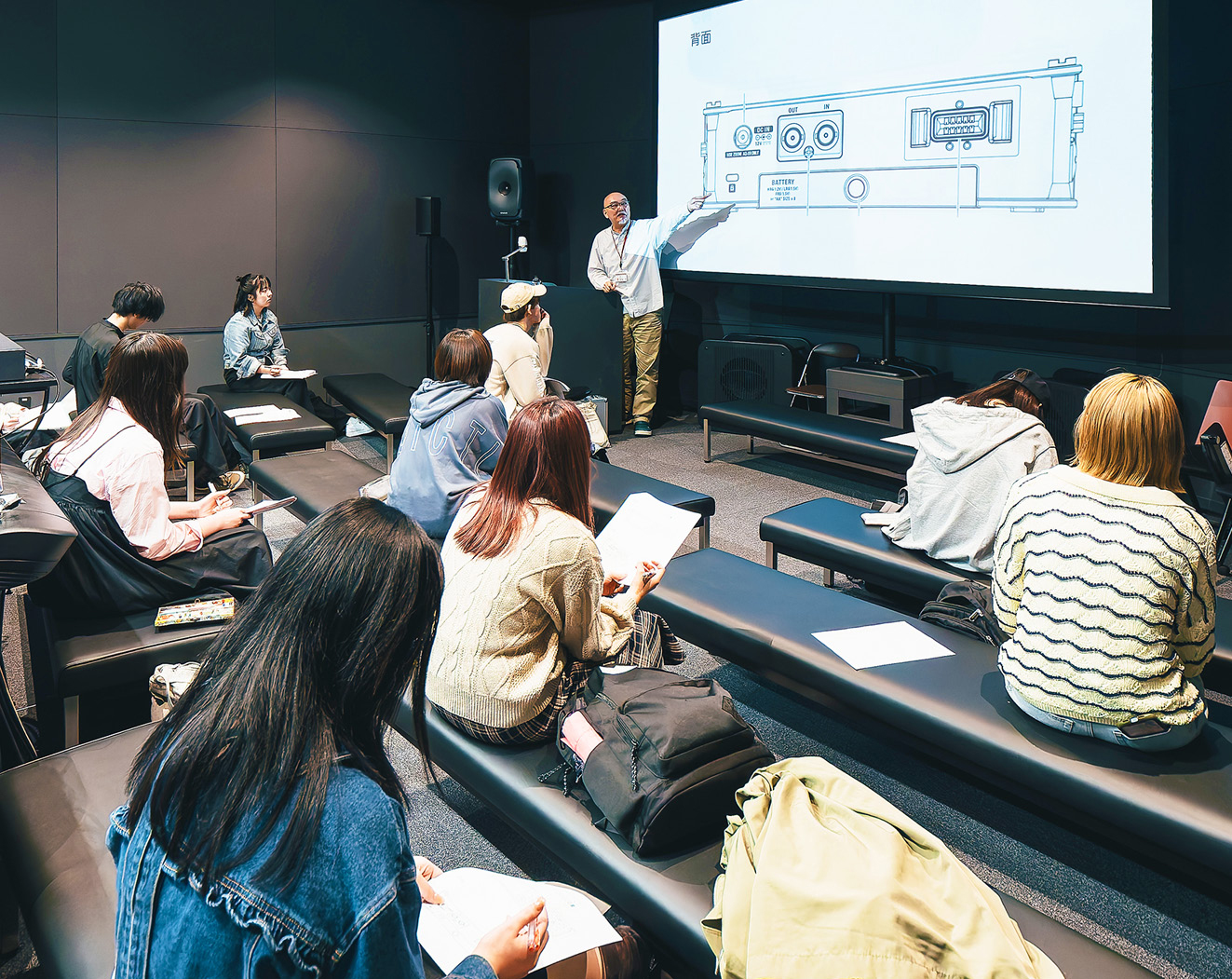
The internationalization of education should not be limited to students who study abroad. Rather, it is important that all students have opportunities to engage with diverse languages, cultures, and values through both their academic disciplines and their daily student life. As discussed in Chapter 3, opportunities such as study abroad programs, the BBP, multicultural collaborative learning, and international dormitories have expanded. In the second half of R2030, however, a key challenge will be how to connect these opportunities with the curriculum and specialized learning.
In conjunction with curriculum reforms in each college and graduate school, the university will further expand its research- and discipline-bridging English education programs and consider developing an environment in which students can engage in advanced study in their fields of specialization in English. In addition, the university will further develop plans for new degree programs based on English-language standards and expand opportunities for students from Japan and abroad to learn, discuss, and collaborate together.
At the same time, it is important to connect learning inside and outside the classroom through new developments in the BBP and the creation of international collaborative community hubs, ensuring that international experiences do not remain one-time events but instead contribute to students’ expertise and career development.
(4) Educational DX and the Visualization of Learning
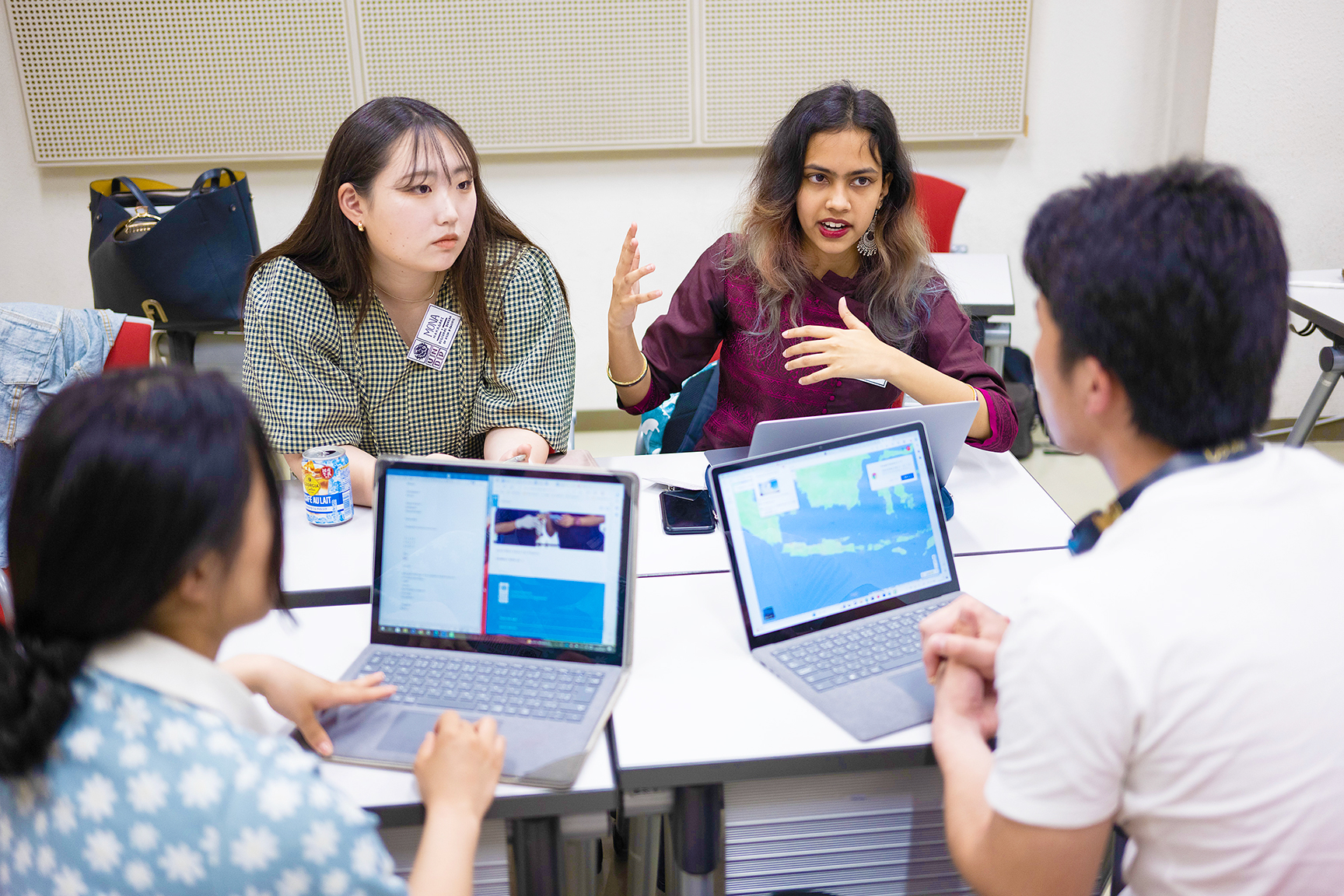
As learning opportunities become increasingly diverse, it is important to enable undergraduate and graduate students to understand their own learning progress and growth processes and to access information that connects them with the support and future learning opportunities they need. Digital transformation in education is positioned not merely as the digitalization of procedures, but as a foundation for visualizing student learning and connecting it to academic improvement and learning support.
To this end, the university will comprehensively promote educational DX centered on the Education AI Platform, including the deployment of AI-powered learning support and Institutional Research (IR) for education and research, the introduction of digital student IDs, the development of Learning Pathway Management (LPM), and course development utilizing LinkedIn Learning and VR technologies. By integrating, accumulating, and visualizing learning data, the university will create an environment in which undergraduate and graduate students can reflect on their own learning and connect with the learning opportunities and support they need.
At the same time, when utilizing learning data and AI, it is important to consider not only convenience for students but also the handling of data, accountability, and systems that can be used with confidence and peace of mind. Questions regarding what information should be used, for what purposes it should be used, and how it should be returned to support student learning must be carefully considered through dialogue with undergraduate and graduate students.
The academic reforms described above are intended not only to enrich learning in undergraduate programs but also to contribute to research in graduate school and to students’ development as highly skilled professionals. The next section outlines the directions for graduate education, the research environment, career paths, and financial support in the second half of R2030.
Contents
-
Chapter Ⅰ
Significance and Positioning of the AY 2026 Plenary Council
To consider the future direction of Ritsumeikan University
- 1. Changes in the social and higher education environment surrounding universities
- 2. What changes in the social and university environment have asked about undergraduate and graduate student learning
- 3. The types of undergraduate and graduate students Ritsumeikan seeks to produce in light of changes in the social and university environment
- 4. As we enter the second half of R2030
- 5. The Role of the AY 2026 Plenary Council
- 6. List of key themes and annual schedule for AY 2026
-
Chapter ⅡThe Plenary Council as a Process of Academy Co-creation
—Building on Discussions Since AY 2022—
- 1. Progress Made in Academy Co-creation and the Expanding Dialogue
- 2. Division of Roles and Coordination Between the Plenary Council and Plenary Council Representatives’ Meeting
- 3. Specific Examples of Advancements in Academy Co-creation
- 4. Less Visible Issues and the Expected Role of Five-Party Discussion Meetings
- 5. Context Leading Up the AY 2026 Plenary Council
-
Chapter ⅢRitsumeikan University’s Initiatives from AY 2022 to AY 2025
—Progress in the First Half of R2030 Toward Enriching Education, Research, and Student Life—
- 1. Development of the Learning Environment and Academic Reform
- 2. Advancing Research and Supporting Graduate Students and Early-Career Researchers
- 3. Expansion of International Learning and Multicultural Collaborative Learning
- 4. Enhancing Student Support Services to Support Student Life and Extracurricular Activities
- 5. Career Development Support to Foster Independent Career Choices
- 6. Developing the Infrastructure to Support the Visualization of Learning and Growth
-
7. Campus Development and Initiatives to Support Education, Research, and Student Life
- (1) Campus Development Centered on Social Co-creation (OIC)
- (2) Initiatives Linking the Humanities and Social Sciences with Creativity (Kinugasa)
- (3) Initiatives Supporting Cutting-Edge Research and Science and Engineering Education (BKC)
- (4) Development of a Common Infrastructure to Support Student Life
-
Chapter ⅣKey Educational, Research, and Student Life Initiatives for the Second Half of R2030
Building on Dialogue with Undergraduate and Graduate Students to Enrich the Present While Envisioning Future Developments
-
1. Directions for Academic Reform in the Second Half of R2030
- (1) Articulating Integrated Education and Connecting Inquiry to Research
- (2) Reform of University-Wide Education and the Development of Learning that Connects with Society
- (3) Internationalization of Education and the Development of Multicultural Collaborative Learning
- (4) Educational DX and the Visualization of Learning
- 2. Enhancing Graduate Education, the Research Environment, and Career Support
- 3. Creating an Environment That Supports Student Life, Extracurricular Activities, and International Learning
- 4. Connecting Experiences to Meaning-Making and Career Development
-
1. Directions for Academic Reform in the Second Half of R2030
-
Chapter ⅤFinancial Management during the R2030 Period and Ritsumeikan University’s Student Fees and Finance Policy for AY 2027 and Beyond
- 1. Financial Structure of Private Universities and Ritsumeikan University’s Basic Approach
- 2. Financial Management from R2020 Through the First Half of R2030 and Achievements to Date
- 3. Financial Management in the Second Half of R2030
- 4. Student-Fee Policy for AY 2027 and Beyond and AY 2027 Tuition and Other Fees
- ConclusionToward the open session of the Plenary Council to Be Held in October 2026